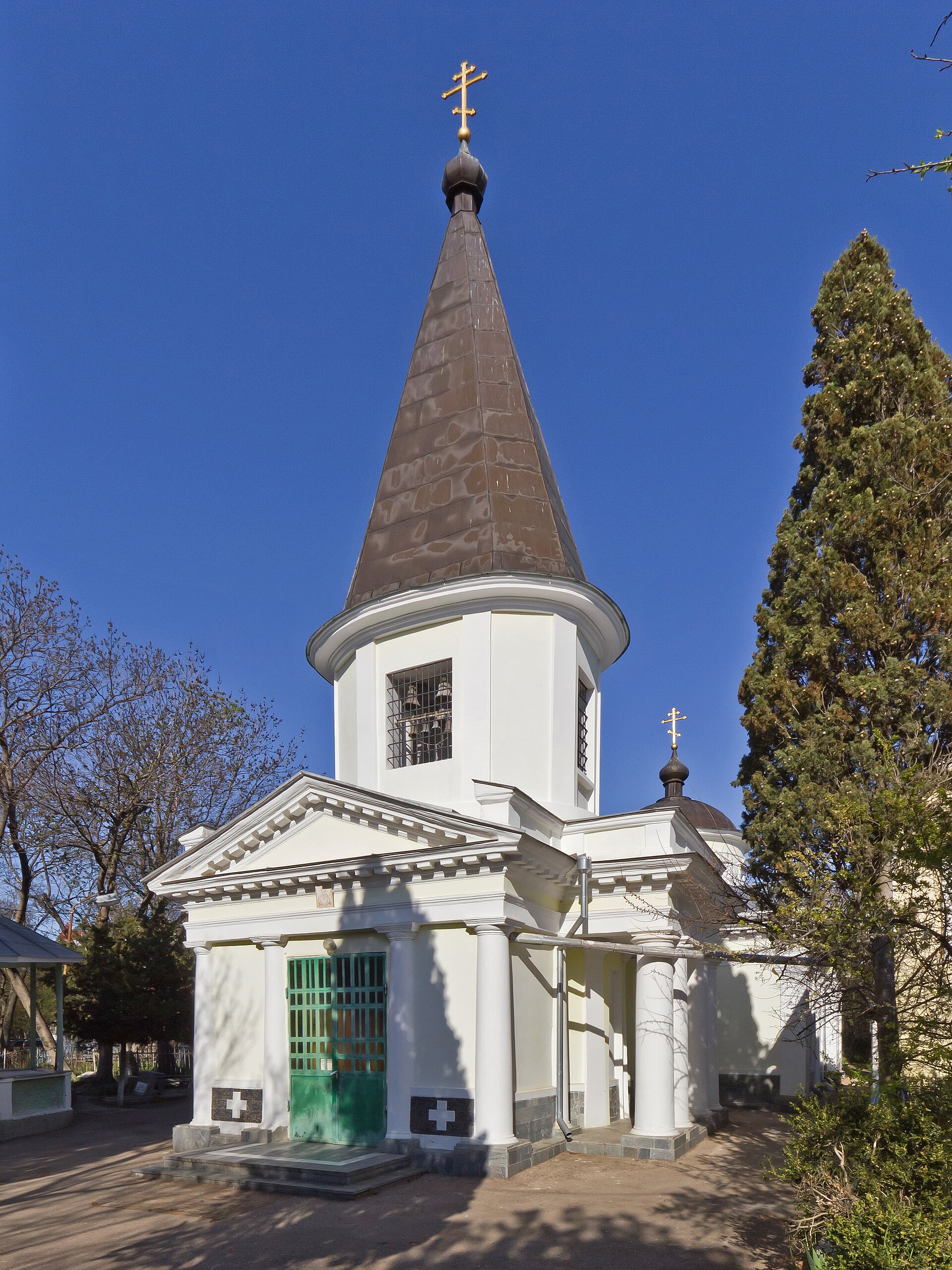
Perched on a quiet hill overlooking Sevastopol’s sweeping bay, the Church of All Saints is one of those places that lingers in the mind long after you’ve left. It doesn’t demand attention like the grand monuments along the waterfront, nor does it overwhelm with size or ornamentation. Instead, it offers something subtler—a sense of stillness, a pause in the city’s constant hum of history and sea winds. The church is small, almost unassuming, yet its presence carries weight, woven into the fabric of Sevastopol’s past and present.
The story of this place begins with loss. In the mid-19th century, during the brutal siege of Sevastopol in the Crimean War, this hill became a burial ground for thousands—soldiers, sailors, and civilians who perished in the fighting or from disease. The original church was built later, in the 1880s, as a memorial to those who had fallen. For decades, it stood as a quiet witness to remembrance, until the Soviet era brought destruction. The cemetery was leveled, the church closed, and its purpose erased. It wasn’t until the early 2000s that the building was restored, not just as a place of worship, but as a living connection to the city’s layered history.
Architecturally, the church is simple, almost austere—a fitting choice for a memorial. Its white stone walls and single dome follow the traditions of Russian Orthodox design, but without the elaborate frescoes or gilded icons found in larger cathedrals. Inside, the space feels intimate, bathed in soft light that filters through narrow windows. There’s no grandeur here, only a quiet dignity, as if the building itself understands its role as a keeper of memory rather than a display of faith.
Sevastopol’s history is one of resilience, and the Church of All Saints has stood through it all. During World War II, the city endured another devastating siege, and the church, like much of Sevastopol, was damaged. After the war, it was repaired, but not as a functioning place of worship. Instead, it became part of the city’s memorial landscape, a silent monument to those who had fought and died. Only in the post-Soviet years did it regain its religious purpose, with services held once again beneath its dome. Today, it serves as both a church and a memorial, a place where the past and present intersect.
One of the most moving aspects of the church is its role in remembrance. Inside, plaques list the names of fallen soldiers, while outside, in the small park nearby, stands a monument to those who died in the Crimean War. Every May, on the anniversary of Sevastopol’s defense, people gather here—veterans, families, visitors—to honor the dead. It’s not just a formal observance; it’s a living tradition, a way for each generation to acknowledge the sacrifices that shaped the city. The church doesn’t just commemorate history; it keeps it alive.
From the hill where the church stands, the view of Sevastopol is striking. The bay stretches out below, dotted with ships, while the city’s mix of old and new buildings tells its own story of survival and change. The church seems to watch over it all, a quiet guardian of memory. Standing here, it’s easy to imagine the 19th-century mourners who once came to pray for their lost loved ones, or the modern visitors who pause to reflect on the city’s enduring spirit.
Visiting the Church of All Saints is more than just seeing a historic building. It’s a chance to step into the layers of Sevastopol’s past, to feel the weight of its history without the noise of tourist crowds. There’s no fanfare here, no guided tours rushing through—just the quiet hum of the wind and the occasional chime of a bell. The church doesn’t offer answers, but it invites contemplation, a moment to consider what it means to be part of a place shaped by war, loss, and resilience.
In a city where history is never far from the surface, the Church of All Saints stands as a reminder that the past isn’t just something to be remembered—it’s something that lives on. It’s in the stones of the building, in the names on the plaques, in the stories passed down through generations. And for those who take the time to visit, it offers a quiet space to reflect on what it means to carry that history forward.