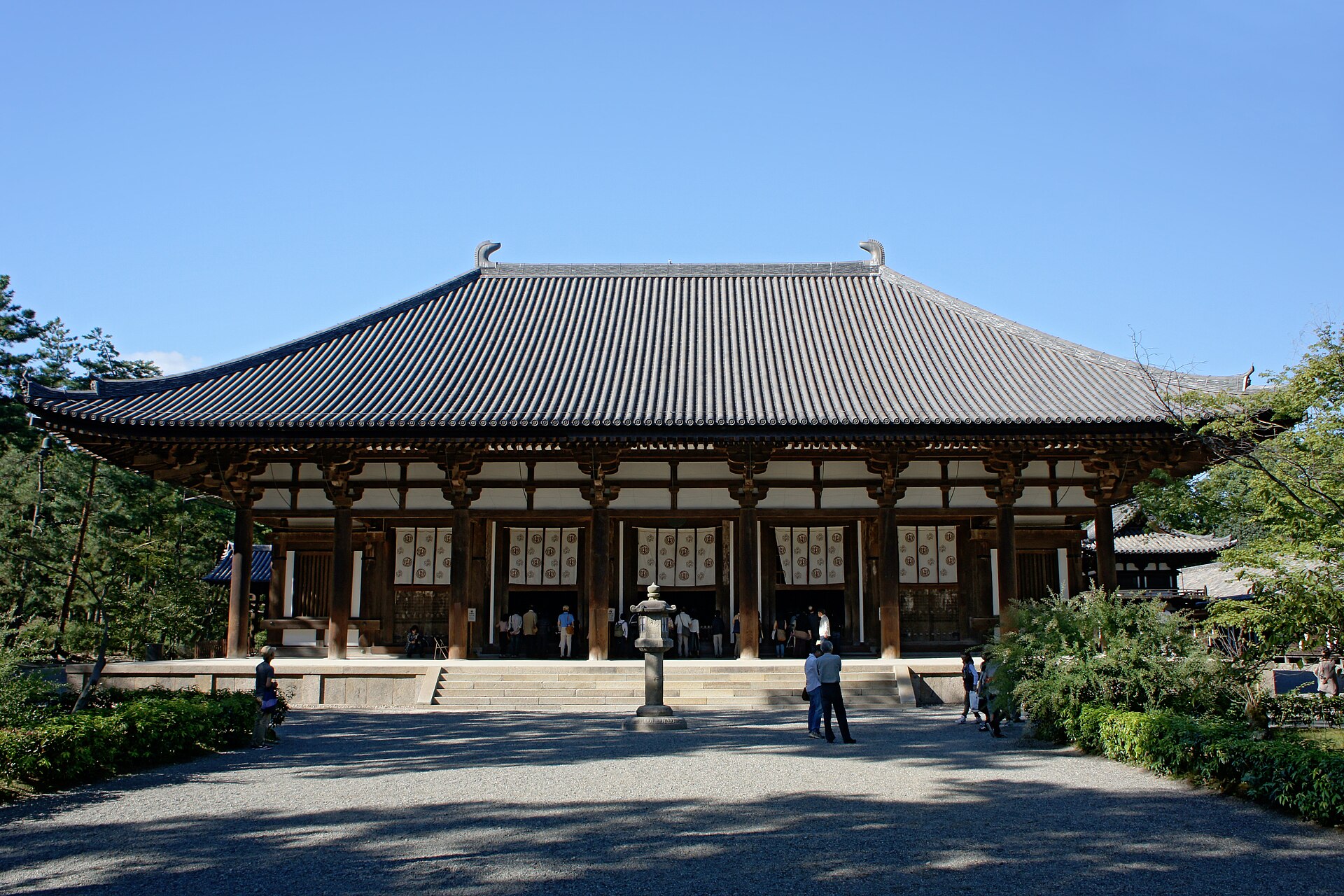
Toshodai-ji sits on the outskirts of Nara, away from the paths that lead to the city’s more famous temples. Founded in the eighth century by the Chinese monk Ganjin, the temple was one of the first Buddhist institutions in Japan. Ganjin’s journey to Japan followed multiple failed attempts to cross the sea. He arrived blind but continued his work. His story shows how people once bridged distances to shape a nation’s culture.
The main hall, the Kondo, is one of the few surviving wooden structures from that time. Its design is simple: sturdy columns, a gently sloping roof, and wide verandas. Inside, the space feels empty except for the altar with its gilded statues. Light filters through high windows, casting patterns on the wooden floor. The temple lacks the grandeur of Kyoto’s later structures, but its age is visible in every beam.
Beside the Kondo stands the lecture hall, the Kodo. This was where sutras were recited and monks trained. Today, visitors can enter. The hall’s high ceilings still seem to hold echoes of past debates. Toshodai-ji was never a place of mass pilgrimage. It was where the elite gathered, where decisions influenced the country. The temple’s restrained architecture reflects that role.
The gardens are understated. Gravel paths, ancient pines, and moss-covered stones surround the complex. On rainy days, the garden feels serene. In sunlight, light plays on damp leaves. Monks still tend to the grounds. Their care is visible in the way everything grows without pretense.
Toshodai-ji is called the cradle of Japanese Buddhism. Many schools that shaped the religion in Japan began here. The temple houses relics tied to Ganjin, including a statue believed to be one of the most accurate portraits of the time. Unlike idealized Buddhas, this figure shows individual traits: the lines on his face, his slightly hunched posture, his hands folded in a gesture of teaching.
Toshodai-ji remains an active temple. Services are held occasionally, filling the space with the sound of gongs and chanting. Even without such events, the atmosphere invites reflection. You can sit on the veranda of the Kondo and gaze at the garden. The temple has endured through wars and fires, and its quiet presence makes that endurance tangible.
Nara is a city where history exists alongside everyday life. Toshodai-ji doesn’t try to impress. It doesn’t need to. This is a place where you can touch the roots of Japanese culture—not through displays, but through the buildings and the land itself. Some return to Nara not for the grand sights, but for this quieter side of the city.