- Home
- Russia
- Sevastopol
- Church of Saints Peter and Paul
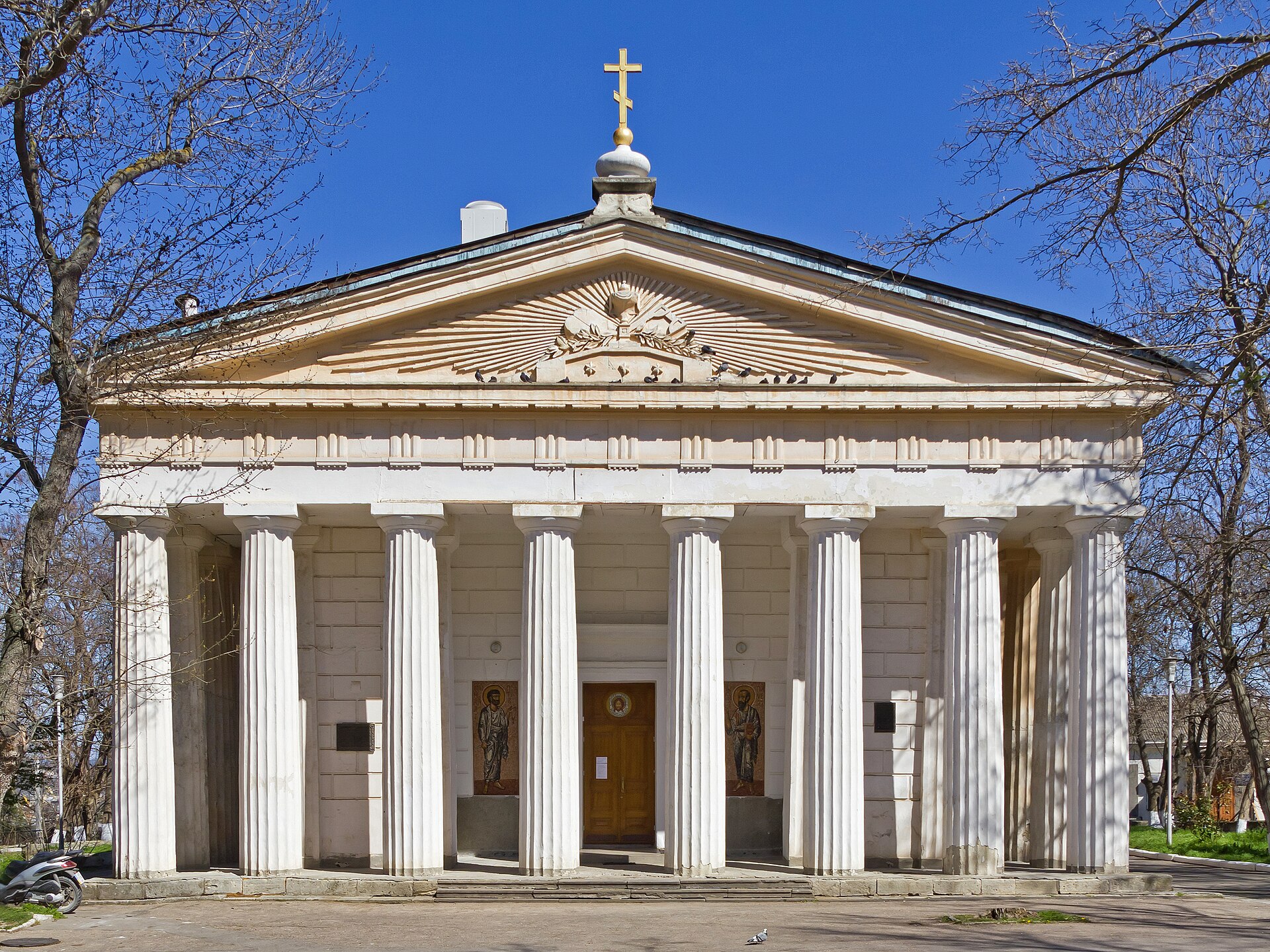
Photo: A.Savin, CC BY-SA 3.0
Church of Saints Peter and Paul
out of 5 0 ratingsThe Church of Saints Peter and Paul in Sevastopol is one of those places where the city’s layered history feels almost tangible. Tucked away in the Korabelnaya district, an area that was once the heart of naval life, it stands among narrow streets and old houses, blending seamlessly into the everyday fabric of the city. From a distance, its white walls and modest dome catch the eye, but its true significance reveals itself only when you step closer.
Built in the mid-19th century, when Sevastopol had already established itself as the primary base of the Black Sea Fleet, the church was part of a broader effort to shape the city’s identity. At the time, new buildings—especially places of worship—were erected not just for spiritual needs but as symbols of stability and order. The Church of Saints Peter and Paul, though small, became one such symbol for locals and sailors alike. Its architecture reflects the era’s restrained elegance: clean lines, balanced proportions, and minimal ornamentation. Inside, the space feels airy and uncluttered, with an iconostasis that, while not lavish, carries a quiet dignity.
Like much of Sevastopol, the church bore the scars of the Crimean War. The city endured relentless shelling, and the building suffered damage, though it was later restored. During the Soviet period, the church, like many others, was closed but not demolished—perhaps spared because of its location away from the city center, where demolitions were more common. In the 1990s, it was returned to the faithful and has since resumed its role as an active place of worship.
Today, the Church of Saints Peter and Paul is more than just a religious site; it’s a quiet refuge from the city’s hustle. There are no crowds of tourists here, which only adds to its charm. Locals often stop by—some to light a candle, others simply to sit on a bench in the courtyard. Inside, the scent of wax and incense lingers, and the stillness is broken only by the occasional footsteps or whispered prayers.
Visiting during a service offers a different experience. On weekdays, the church is quiet, but on Sundays and feast days, it fills with people. The choir’s singing, though soft, carries a depth that lingers in the air, drawing even first-time visitors into the moment. In these instances, the church feels alive, a place where the past and present intersect in a way that’s hard to describe but impossible to ignore.
While the exterior is unassuming, the interior holds a few details worth noticing. Some of the icons date back to pre-revolutionary times, their surfaces worn but still vibrant. The carved wooden elements of the iconostasis, some restored, others preserved in their original state, add to the sense of authenticity. It’s the kind of place where history isn’t just remembered—it’s still present.
The surrounding Korabelnaya district is just as intriguing. One of Sevastopol’s oldest areas, it retains much of its 19th-century character, with narrow streets, steep staircases, and houses that have stood for generations. Walking through these streets, it’s easy to imagine what the city looked like a century and a half ago. The Church of Saints Peter and Paul fits naturally into this setting, as if it has always been here, watching over the neighborhood.
If you find yourself in Sevastopol, this church is worth a visit—not just for its own sake, but for the glimpse it offers into the city’s soul. There’s no grandeur or forced nostalgia here, just a quiet, enduring presence. It’s a place where time moves at its own pace, untouched by the rush of the outside world, and where anyone can pause for a moment of reflection.
Day around this place
Where else to go on the same day
Building the day…
Where it is
44.60828, 33.52591