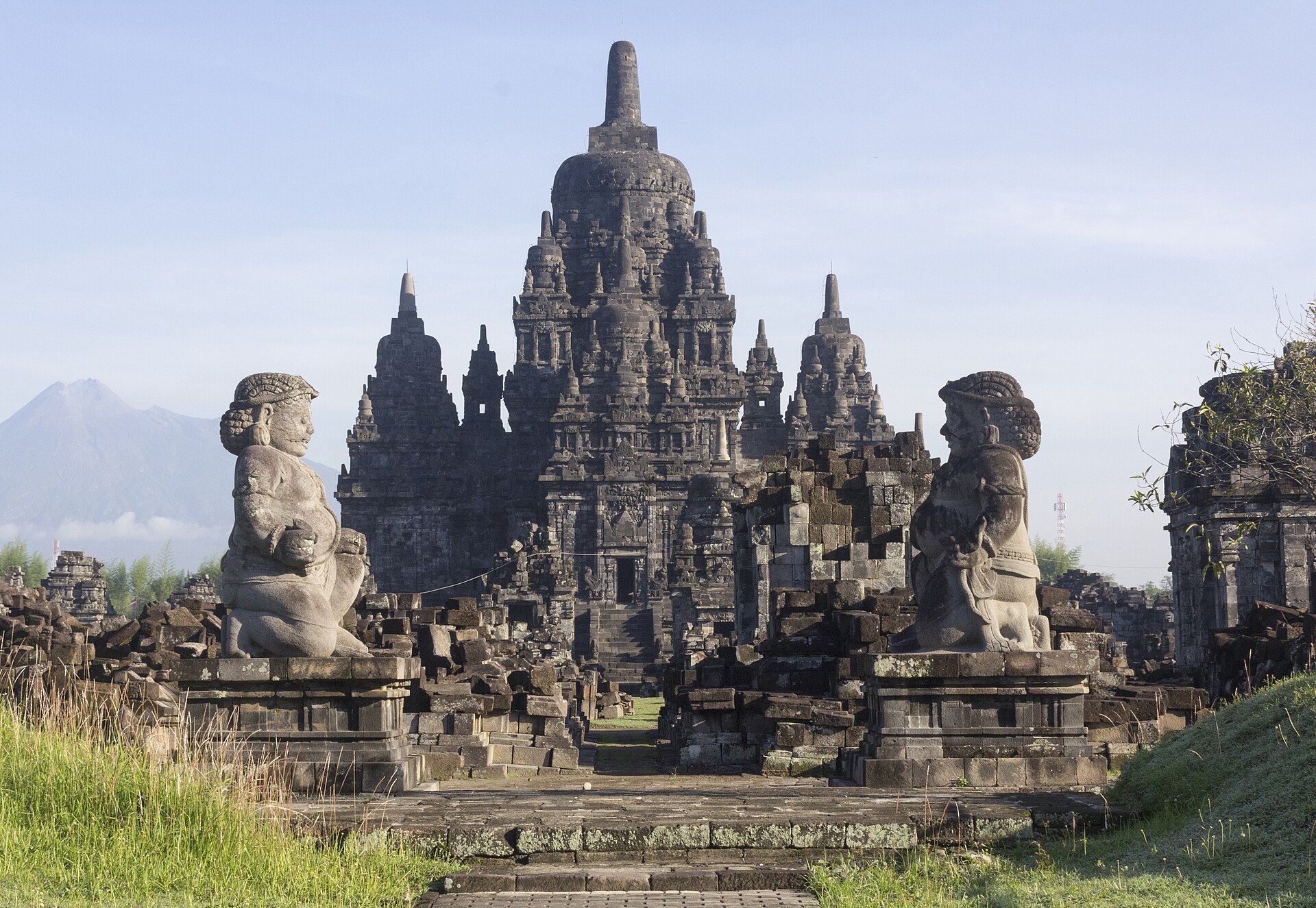
Candi Sewu stands apart from Java’s more famous temples, not because it lacks grandeur, but because it carries its history with quiet dignity. While Borobudur draws crowds with its towering stupas and intricate carvings, Sewu lingers in the background, a sprawling complex of weathered stone that feels more like an ancient puzzle than a conventional place of worship. Built in the 8th century, it was once the largest Buddhist temple on the island, though today its name—meaning "a thousand"—refers less to an exact count of structures and more to the impression of endless spires rising from the earth. In reality, around 250 smaller stupas encircle the central monument, their arrangement creating a sense of ordered chaos, as if the temple itself is a meditation on impermanence.
The architecture here is unlike anything else from its time. Where other Javanese temples boast soaring towers or elaborate reliefs, Sewu takes a different approach. Its design is geometric, almost austere, with concentric rings of stupas radiating outward from the central dome. The layout mirrors Buddhist cosmology, each layer symbolizing a step closer to enlightenment. The outermost rings are now mostly foundations, their statues long lost to time and earthquakes, but the symmetry remains striking. Even in ruin, the temple feels deliberate, as if every stone was placed with purpose. The few surviving figures of bodhisattvas, their features softened by centuries of wind and rain, hint at the craftsmanship that once defined the site.
Sewu was part of a larger religious landscape that included Prambanan and Plaosan, serving as a key pilgrimage site during the height of the Mataram Kingdom. This was a time when Buddhism and Hinduism coexisted on Java, and the temple’s design reflects that duality. Some scholars suggest it may have had royal connections, possibly used for coronations or state rituals, though much of its history remains speculative. What is certain is that after the kingdom’s decline, the temple was abandoned, swallowed by jungle, and forgotten until Dutch archaeologists rediscovered it in the 19th century. The slow process of excavation continues today, with some stupas still buried beneath the earth, waiting to be uncovered.
Visiting Sewu is a different experience from touring more polished sites. There are no crowds here, no guided tours rushing you along a set path. Instead, the temple invites exploration at your own pace. The air is still, broken only by the rustle of leaves or the distant call of a bird. In the early morning, when the light is soft and the shadows long, the stones seem to glow, their rough surfaces catching the sun in a way that makes them appear almost alive. By late afternoon, the setting sun casts everything in gold, deepening the textures of the carvings and making the ruins feel less like relics and more like something still breathing.
For those who make the journey, Sewu offers a chance to see Java’s history from a less polished angle. Unlike Borobudur or Prambanan, where every detail has been restored and explained, Sewu retains a sense of mystery. Some stupas are little more than outlines in the grass, their original forms lost to time. Others stand half-buried, as if the earth itself is reluctant to give them up. The central stupa, better preserved than most, gives a glimpse of what the temple might have looked like in its prime, though even here the passage of centuries is evident. The bodhisattva statues that once surrounded it are mostly gone, leaving only empty pedestals where figures of compassion and wisdom once stood.
Despite its state of ruin, Sewu remains a living place. Each year during Vesak, Buddhist pilgrims gather here to celebrate, filling the air with incense and chanting. For a brief time, the temple comes alive again, its stones resonating with the same energy that once drew worshippers centuries ago. Even outside of these festivals, the site carries a quiet power. Perhaps it’s the weight of history, or the way the wind moves through the ruins, but there’s a sense that this place is still holding onto something—memories, prayers, or simply the echo of footsteps long faded.
For travelers in Yogyakarta, Sewu is an ideal counterpoint to the more famous temples. While Prambanan dazzles with its towering spires and Borobudur overwhelms with its scale, Sewu offers something more intimate. There are no ropes keeping you on a set path, no signs dictating where to stand. You can wander between the stupas, tracing the outlines of carvings worn smooth by time, or sit on a low wall and watch the light shift across the stones. The lack of crowds makes it easy to imagine what the temple must have been like in its heyday, when it was a center of learning and devotion rather than a tourist attraction.
That said, Sewu’s fragility is part of its charm. The stones are brittle, the carvings eroded, and every year brings more wear. It’s a reminder that even the most enduring monuments are not immune to time. Visitors are asked to treat the site with care—no climbing on the stupas, no touching the delicate surfaces. In a way, this makes the experience more meaningful. The temple isn’t just a backdrop for photos; it’s a place that demands respect, a connection to a past that is slowly slipping away.
What makes Sewu special isn’t just its history or its architecture, but the way it makes you feel. There’s no grand spectacle here, no attempt to impress. Instead, the temple exists as it always has—quiet, unassuming, yet impossible to ignore. It doesn’t need to shout to be heard. The stones speak for themselves, their stories etched into every crack and crevice. And perhaps that’s the real magic of the place: it doesn’t try to be anything other than what it is. A ruin, yes, but also a testament to the enduring power of faith, art, and time.