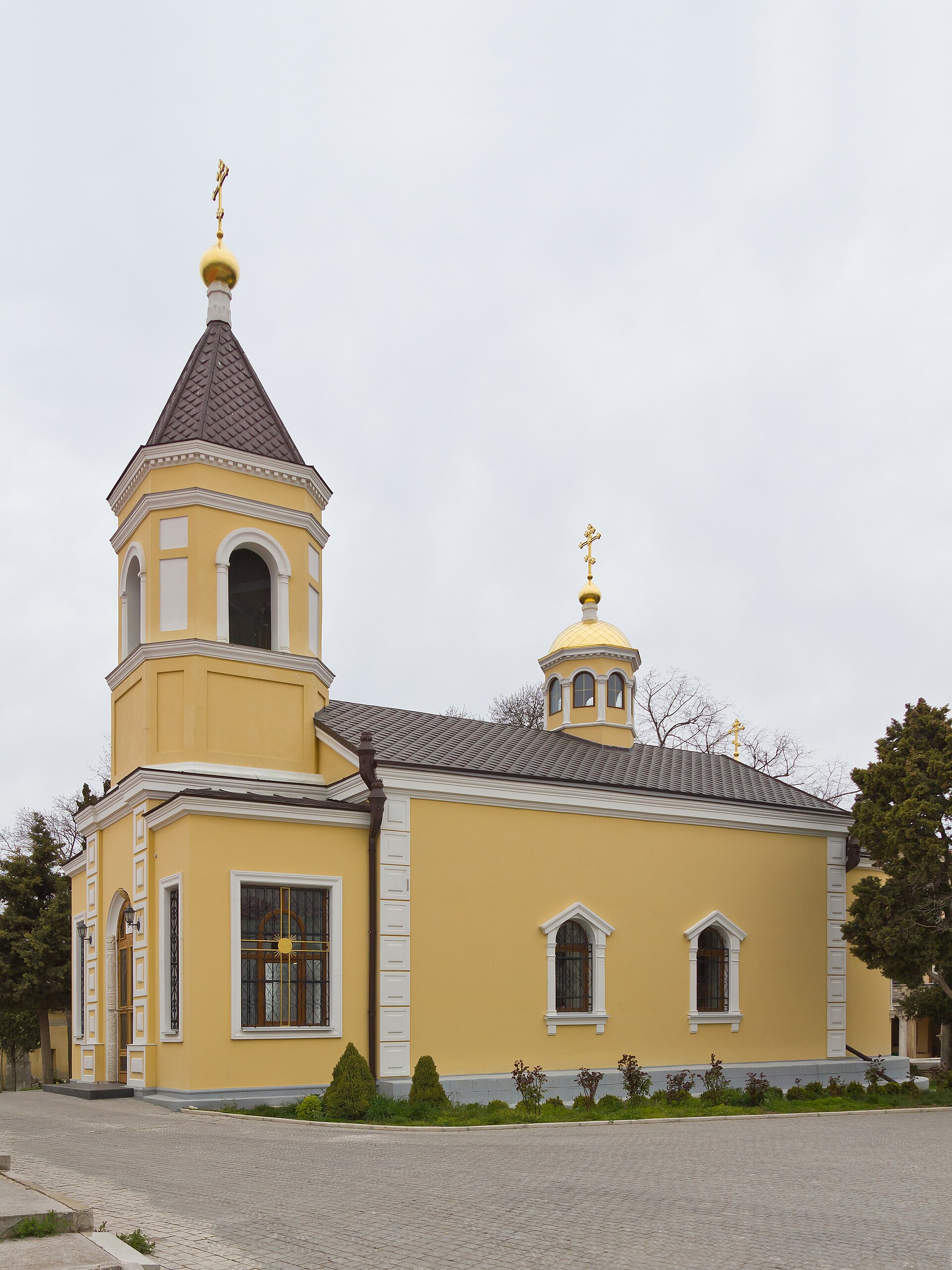
The Church of the Seven Holy Martyrs of Chersonesus stands where history and faith intersect in a way few places can claim. This is where, according to tradition, Prince Vladimir of Kiev was baptized in the late 10th century, an event that would shape the spiritual identity of an entire nation. The church itself is unassuming, a quiet presence among the ruins of ancient Chersonesus, yet its significance runs deep. For believers, it marks the birthplace of Orthodox Christianity in Rus; for historians, it’s a tangible link to a pivotal moment when the edges of the Byzantine world met the vast expanse of Slavic lands.
Construction began in the late 19th century, a time when Russia’s fascination with its Christian heritage was at its height. The driving force behind the project was Archbishop Innocent of Kherson and Odessa, who sought to honor the memory of Prince Vladimir’s baptism. The location was chosen deliberately—legend holds that the original basilica where the ceremony took place once stood here. Though the church was never fully completed, its unfinished state only adds to its resonance. The bare walls and unrealized details speak of a past that was never meant to be polished, a place where history remains raw and unvarnished.
The architecture blends Byzantine influences with the simpler lines of Russian ecclesiastical design. A modest dome rises above the structure, flanked by a small bell tower, while the interior is spare, almost austere. There are no grand frescoes or gilded icons, just the quiet dignity of stone and wood. Some elements, like the planned mosaic floors and carved iconostasis, were never realized, leaving the space with a sense of potential, as if the past is still unfolding. This restraint gives the church a meditative quality, a place where the weight of centuries is felt more than seen.
Set within the Chersonesus Taurica archaeological preserve, the church is part of a landscape where every stone tells a story. The ruins of ancient basilicas, defensive walls, and public buildings stretch around it, remnants of a city that was once a thriving center of trade, politics, and faith. Walking through the site, it’s easy to imagine the bustle of Chersonesus in its prime, when it served as a bridge between the Greek world and the steppe. The church doesn’t dominate the scene; it belongs to it, a quiet witness to the layers of history beneath the earth.
After the fall of the Soviet Union, the church took on new meaning as Russia’s interest in its Orthodox roots was rekindled. Today, it draws pilgrims and visitors seeking a connection to the origins of their faith. Services are held here, particularly on the feast days of the Seven Holy Martyrs of Chersonesus, the saints for whom the church is named. The atmosphere is one of reverence, a place where time seems to slow, allowing for reflection. There’s no grand spectacle here, just the quiet hum of history and the occasional murmur of prayer.
Unlike many historical sites, the Church of the Seven Holy Martyrs isn’t overrun with tourists. There are no souvenir stalls or guided tours clamoring for attention. Instead, it offers something rarer: a sense of stillness. The best times to visit are early morning, when the first light touches the ancient stones, or late afternoon, when the setting sun casts long shadows across the ruins. In these moments, the past feels almost tangible, as if the centuries between Prince Vladimir’s baptism and the present have collapsed into a single, continuous thread.
For Sevastopol, the church is a reminder that the city’s identity is woven from more than just its naval history or its role in modern conflicts. Here, away from the bustle of the port and the tourist crowds, the land itself seems to breathe with the weight of its own story. You can spend hours wandering the ruins, deciphering the faded inscriptions on weathered stones, then step into the church to sit in silence. It’s a place that demands patience, where the reward isn’t a photo opportunity but a deeper understanding of how the past shapes the present.
The church is more than a monument; it’s a symbol of continuity. It stands as proof that history doesn’t vanish—it lingers in the land, in the stones, in the people who come here seeking answers. Nothing about this place feels accidental. The foundations of the ancient basilica, the modern iconostasis, even the way the light filters through the narrow windows—all of it carries the echo of what came before. And perhaps that’s why it resonates so deeply. In a world that moves too fast, the Church of the Seven Holy Martyrs offers a rare chance to pause, to listen, and to remember.