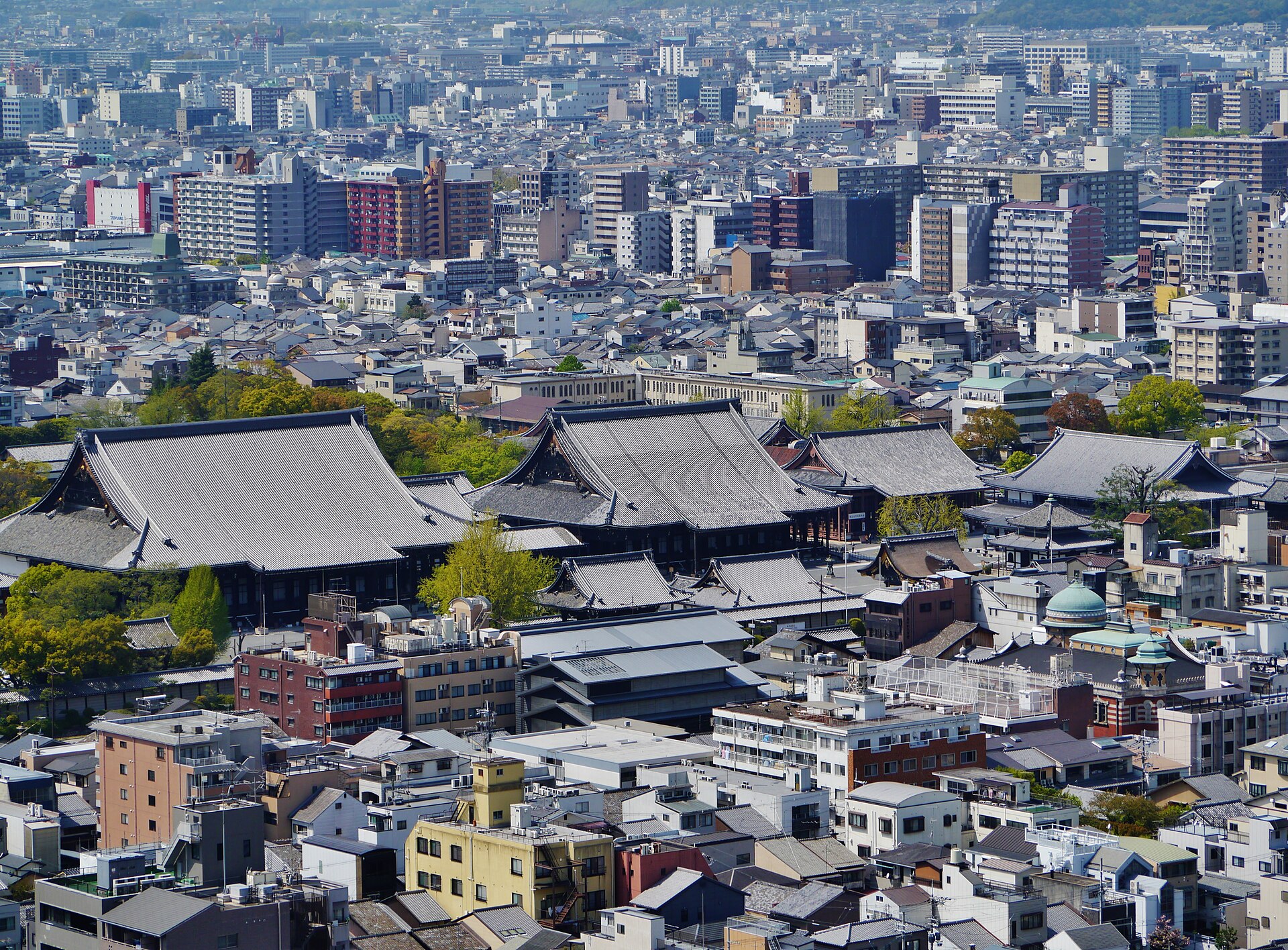
Nishi Honganji is one of those rare places in Kyoto where history isn’t just preserved—it lingers in the air, in the grain of the wood, in the quiet rustle of pine needles underfoot. This isn’t merely a temple; it’s a living heart of Jodo Shinshu Buddhism, a tradition that has shaped Japan’s spiritual landscape for centuries. Founded in the late 1500s, the temple owes its existence to Toyotomi Hideyoshi, the warlord who unified Japan. After consolidating power, he granted these lands to the religious community as a gesture of gratitude for their support, embedding Nishi Honganji into the fabric of the nation’s history as both a place of worship and a symbol of the intricate bond between faith and governance.
The architecture here is a study in contrasts—monumental yet refined, imposing yet harmonious. The first thing that strikes visitors is the Gokuromon Gate, a towering wooden structure adorned with intricate carvings that seem to tell stories of their own. Beyond it lies a vast courtyard, leading to the temple’s main halls. The Goeido, dedicated to Shinran, the founder of Jodo Shinshu, is particularly striking. Its interior is a masterpiece of craftsmanship, with dark lacquered wood and gold leaf creating an atmosphere of solemnity. Nearby, the Amidado houses a statue of Amida Buddha, its presence softened by the dim light filtering through the paper screens, inviting quiet reflection.
Nishi Honganji’s influence extends far beyond its walls. During the Edo period, it was one of Japan’s most powerful religious institutions, its abbots often acting as intermediaries in political matters. Diplomats were received here, important decisions were debated, and the temple’s design became a blueprint for others across the country. Even today, it remains a spiritual anchor for millions of Jodo Shinshu followers worldwide, a testament to its enduring significance.
Walking through the temple grounds feels like stepping into another era. Stone paths wind past centuries-old pines, leading to pavilions and gardens where every detail carries meaning. In one corner, a well is said to have been used by Shinran himself. In another, a small pond filled with koi carp symbolizes purity and longevity. The atmosphere is one of quiet reverence, a quality that defines many of Kyoto’s temples. Even without a deep understanding of Buddhism, it’s easy to sense the weight of history here, the layers of devotion that have accumulated over the centuries.
One of the temple’s most intriguing features is its library, home to ancient manuscripts and sacred texts. Among them are hand-copied sutras, painstakingly transcribed by monks over generations. These documents are more than historical artifacts; they represent a living tradition of faith passed down through the ages. While access to the library is restricted, the knowledge of its existence adds a layer of mystique to the temple, hinting at the depth of its spiritual heritage.
Nishi Honganji is far from a static monument. It’s an active place of worship, where daily rituals, meditations, and festivals continue to draw both locals and pilgrims. One of the most vibrant events is the Higashi Honganji festival, when the temple grounds come alive with music, dance, and traditional ceremonies. Even on an ordinary day, the sound of chanting monks or the sight of worshippers circling the sacred halls serves as a reminder that this is a place where faith is still very much alive.
For those curious about Japan’s cultural soul, Nishi Honganji offers more than just a glimpse into the past. It’s a place where the threads of history, religion, and tradition intertwine, revealing how deeply they’ve shaped the country. Unlike the crowded tourist spots, this temple moves at its own unhurried pace, each corner steeped in a quiet dignity. Whether you’re drawn to Buddhism or simply seeking a moment of reflection, the atmosphere here has a way of leaving a lasting impression—one that lingers long after you’ve left Kyoto behind.