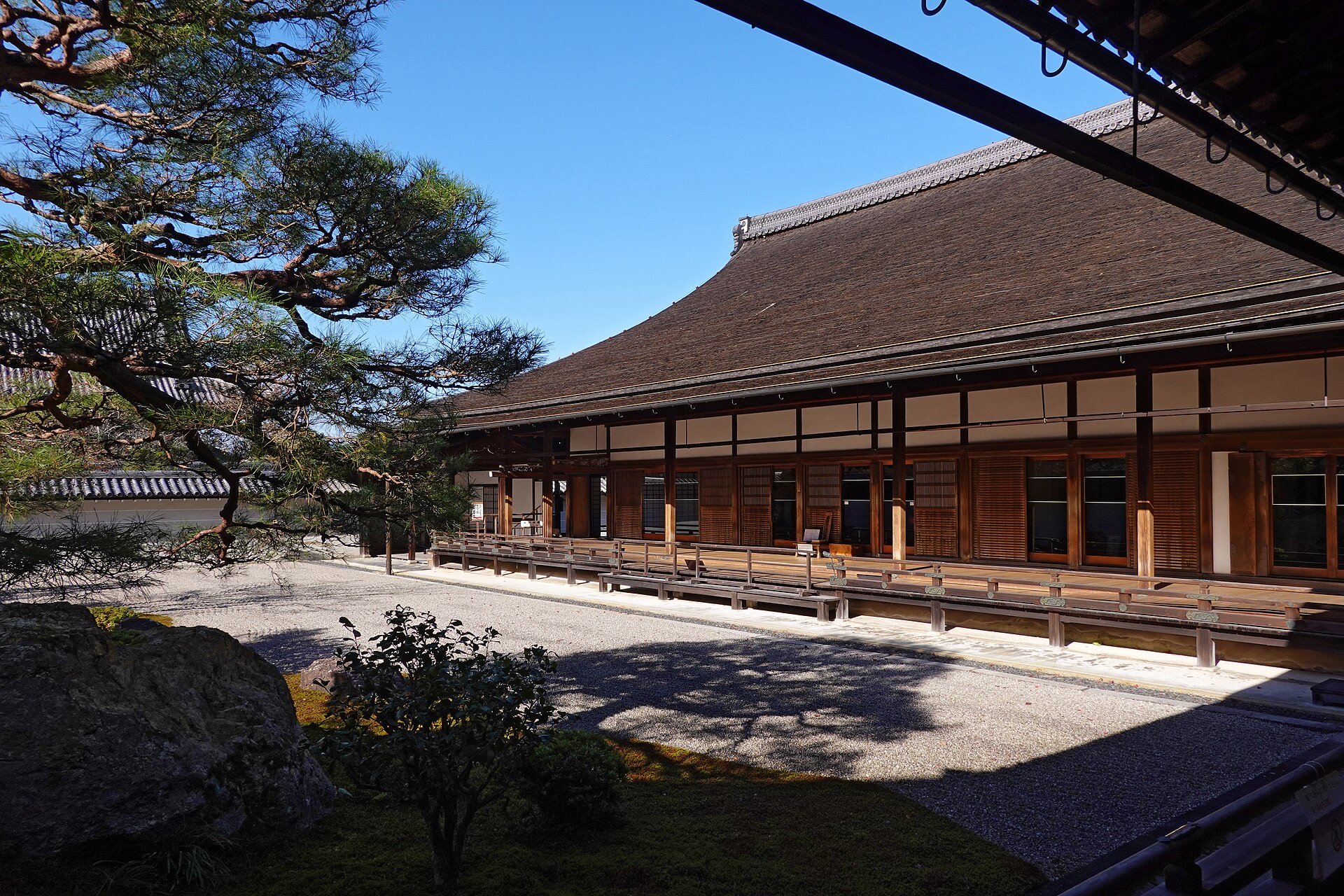
Nanzen-ji isn’t just another temple in Kyoto—it’s a place where the weight of centuries settles into the air like incense smoke, slow and deliberate. Tucked against the wooded slopes of the Higashiyama hills, it marks the edge of the city, where the urban sprawl gives way to quiet forests and winding paths. Unlike the crowded tourist circuits of central Kyoto, Nanzen-ji demands patience. Its sprawling grounds, the weathered wood of its gates, even the silence that lingers between the rustling of leaves—all of it asks for more than a passing glance. There’s no rush here, only the sense that time moves differently, shaped by the rituals and rhythms of a place that has watched empires rise and fall.
The temple’s origins trace back to the 13th century, when Emperor Kameyama transformed his retirement villa into a Zen Buddhist sanctuary. It was a time of shifting power in Japan, when the imperial court in Kyoto still held symbolic authority but real control had begun to slip into the hands of the shoguns. For Kameyama, Zen offered a refuge from political turmoil, and Nanzen-ji became the physical embodiment of that search for meaning. Over the centuries, the temple has burned and been rebuilt, flourished and faded, yet it has always remained a spiritual anchor. Its ties to power were particularly strong—first with the Ashikaga shoguns, who saw Zen as a unifying force, and later with the Tokugawa, who used its teachings to reinforce their rule. The temple wasn’t just a place of worship; it was a stage where religion, politics, and art intersected.
The architecture of Nanzen-ji reflects the Japanese ideal of harmony between human craftsmanship and the natural world. The most striking feature is the Sanmon gate, a towering structure built in the 17th century to honor warriors who died in the wars that unified Japan. Standing at twenty-two meters, it’s one of the most impressive gates in the country, its wooden beams intricately carved yet sturdy, as if built to withstand not just time but the weight of history itself. Climbing to the upper level rewards visitors with a sweeping view of Kyoto—rooftops stretching toward the horizon, the patchwork of gardens below, and the distant mountains framing the scene like a scroll painting. Inside the temple, sliding doors adorned with paintings by the Kano school depict scenes of nature and myth, while the rock gardens offer quiet lessons in balance and impermanence. But perhaps the most unexpected element is the aqueduct, a relic of the Meiji era when Western engineering was first introduced to Japan. Its brick arches feel out of place amid the temple’s traditional aesthetics, yet that contrast is part of what makes Nanzen-ji intriguing—it has always absorbed new influences, even when they clashed with the old.
Zen Buddhism, as practiced at Nanzen-ji, isn’t so much a religion as a way of seeing the world. The temple still holds zazen meditation sessions open to anyone, regardless of belief. For many, it’s a first encounter with the discipline of sitting in silence, observing the breath, and letting thoughts pass without attachment. The meditation hall is spare—tatami mats, zabuton cushions, and walls of plain plaster—yet there’s a depth to its simplicity. Occasionally, monks host tea ceremonies or give talks on Zen philosophy, but even without such events, the temple has a way of slowing the mind. The absence of ornamentation isn’t a lack; it’s an invitation to notice what’s already there—the texture of wood underfoot, the play of light through paper screens, the sound of wind in the pines.
The gardens at Nanzen-ji are where the temple’s philosophy takes physical form. The main garden, designed in the 16th century by the tea master Kobori Enshu, is a study in restraint: a rectangular pond surrounded by raked gravel, moss, and carefully placed stones. Every element has purpose—there’s no randomness, only intention. The garden changes with the seasons: azaleas bloom in spring, maples blaze red in autumn, and in winter, a dusting of frost turns the scene into a monochrome ink painting. Nearby, a wilder garden offers a different kind of beauty. Here, paths meander through groves of bamboo and cedar, leading to secluded pavilions where the only sound is the occasional call of a bird. There’s no symmetry, no grand design—just the quiet assurance that nature, left to its own devices, creates its own kind of order.
Nanzen-ji’s history is woven into the fabric of Kyoto itself. During the Muromachi period, when the temple was a hub of Zen activity, it attracted artists, poets, and statesmen. The tea ceremony as we know it today took shape within its walls, and its monks played a role in refining ikebana and calligraphy. Later, in the Edo period, samurai came here seeking spiritual guidance, drawn by the temple’s reputation as a place of discipline and insight. Even now, Nanzen-ji remains an active religious site, with daily rituals and ceremonies. Yet it’s also a place where outsiders can step in, if only for a moment, and feel the continuity of tradition. The temple doesn’t just preserve the past; it lives within it.
Visiting Nanzen-ji isn’t about checking off a landmark. There are no crowds here like at Kiyomizu-dera or Fushimi Inari, no jostling for the perfect photo. Instead, there’s space to wander, to linger on a wooden veranda and watch the way sunlight filters through the trees, or to stand by the aqueduct and listen to the water rushing through its stone channels. The temple doesn’t offer easy answers, but it poses questions worth sitting with—about time, about impermanence, about the quiet moments that often go unnoticed. That might be its greatest gift: the chance to step out of the rush of the present and into a rhythm older than the city itself.