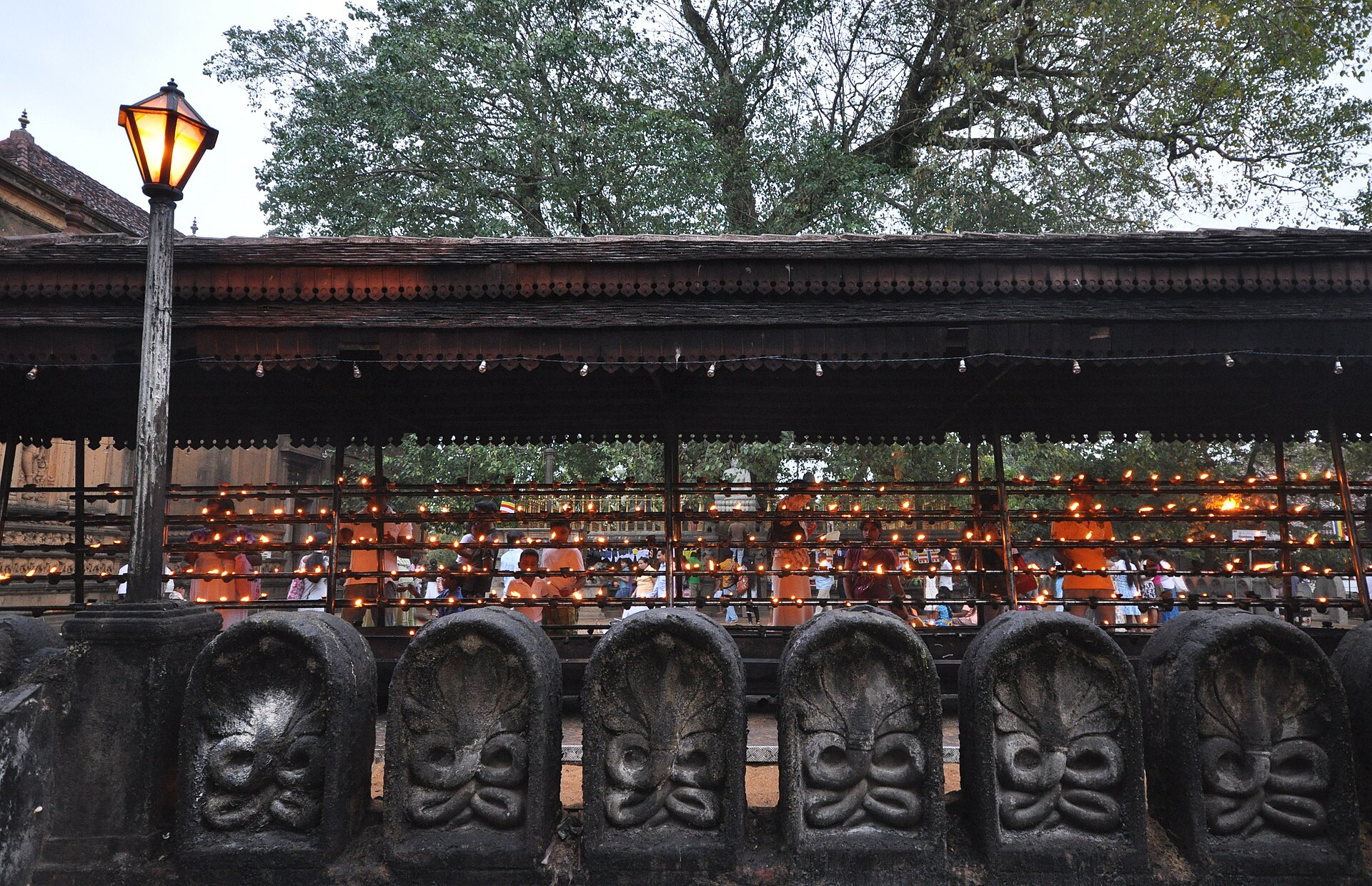
Kelaniya Raja Maha Vihara is one of those rare places in Colombo where time seems to move at its own pace, effortlessly weaving together history and everyday life. Perched on the banks of the Kelani River, it’s more than just a religious site—it’s a living piece of Sri Lanka’s cultural soul, drawing not only pilgrims but anyone curious about the island’s deeper identity. Legends say the temple was founded by the Buddha himself during his third visit to Sri Lanka, though the earliest written records date back to the 3rd century BCE. Over the centuries, it has been destroyed and rebuilt countless times, yet its significance for Buddhists has never wavered.
The architecture of Kelaniya Raja Maha Vihara tells a story of resilience and devotion, with every structure reflecting different eras of the island’s history. The main stupa, or dagoba, dominates the landscape, its gleaming white dome visible from afar. Reconstructed in the mid-20th century, it retains the traditional forms of Sinhalese Buddhist design, a quiet testament to continuity. Inside the temple, a vast hall houses a massive reclining Buddha statue, carved in the classic style that has defined Sri Lankan art for centuries. The walls are covered in vibrant murals depicting scenes from the Buddha’s life and pivotal moments in the island’s history, like the arrival of Prince Vijaya, the legendary founder of the Sinhalese people. The paintings are bold and almost childlike in their simplicity, yet that’s precisely what gives them their charm—they feel immediate, as if the stories they tell are still unfolding.
One of the temple’s most revered spots is the hall containing the sacred throne, said to have been used by the Buddha during his visit. The throne is intricately carved and adorned with inlays, surrounded by an air of quiet reverence. Nearby, a small museum holds ancient manuscripts, statues, and artifacts tied to the island’s Buddhist heritage. Visitors can see palm-leaf scrolls inscribed in Sinhala and Pali, bronze figurines, and fragments of ancient stupas unearthed during excavations. These objects aren’t just relics; they’re tangible connections to a past that still shapes the present.
Beyond its spiritual role, Kelaniya Raja Maha Vihara is a vibrant center of cultural life. Every year, it hosts one of Sri Lanka’s most important Buddhist festivals, Duruthu Perahera, commemorating the Buddha’s first visit to the island. For several days, the streets come alive with a grand procession of elephants, dancers, drummers, and monks. The elephants, draped in elaborate caparisons, carry sacred relics, while the air hums with music and celebration. Even for those who don’t share the faith, the festival offers a rare glimpse into the island’s collective spirit—something ancient and enduring.
The temple grounds are a sanctuary of greenery, with towering palms, flowering shrubs, and manicured lawns that invite quiet reflection. Along the riverbank, locals come not just to pray but to unwind, their presence adding to the temple’s lived-in warmth. Monks in bright orange robes often sit beneath the trees, engaged in gentle conversation with visitors. It’s common to see pilgrims offering flowers to statues or lighting small oil lamps, a ritual symbolizing enlightenment and remembrance. These small acts, repeated over generations, give the temple its rhythm.
What makes Kelaniya Raja Maha Vihara special is how seamlessly it bridges past and present. There’s no touristy hustle here, nor the sterile detachment of a museum. Instead, it feels like a living organism, evolving with the island while holding fast to its roots. For many Sri Lankans, the temple isn’t just a monument—it’s a personal landmark, a place they return to for solace or guidance from the monks who call it home.
If you visit Colombo, this temple deserves more than a quick stop for photos. The best time to come is early morning, when the air is still cool and the temple is wrapped in a soft mist. Sit by the river, listen to the birds and the occasional chime of bells drifting through the grounds. It’s in these quiet moments that you might catch a glimpse of the Sri Lanka that lingers in the memory long after you’ve left—the one that’s harder to describe than to feel.