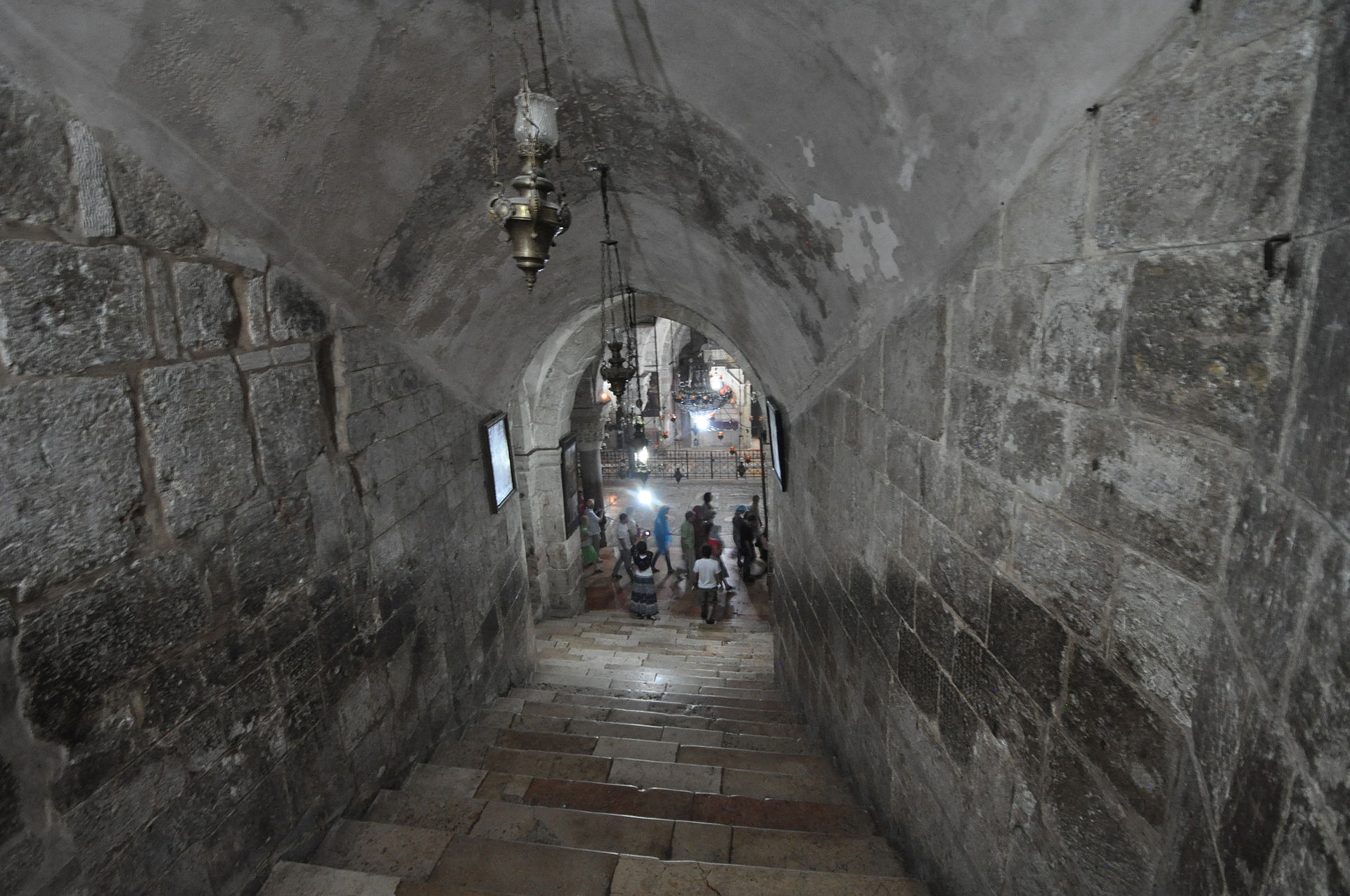
The Church of the Holy Sepulchre stands in the heart of the Old City of Jerusalem, a place where history, faith, and time itself seem to converge. For centuries, it has been one of the most sacred sites in Christianity, drawing pilgrims and visitors from across the world. The church is believed to encompass the locations of both the crucifixion and the resurrection of Jesus Christ, making it a focal point of Christian tradition. Yet its significance extends beyond religion—it is a monument to the layers of history that have shaped Jerusalem, a city where empires have risen and fallen, and where the stories of different peoples have intertwined.
The origins of the church trace back to the 4th century, when Emperor Constantine the Great ordered its construction after his mother, Helena, identified what were believed to be the true sites of Golgotha and the tomb of Christ. The original basilica was built to honor these discoveries, though much of it was destroyed over the centuries by invasions, earthquakes, and fires. What stands today is largely the result of Crusader-era reconstruction in the 12th century, though later additions and restorations have left their mark. The architecture reflects this complex history, blending Byzantine, Romanesque, and Gothic influences in a way that feels both grand and somewhat haphazard, as if each generation left its own imprint without fully erasing what came before.
Stepping inside, the first impression is one of dim, reverent stillness. The air is thick with the scent of incense and candle wax, and the soft murmur of prayers blends with the occasional echo of footsteps on stone. The church is not a single, unified space but a collection of chapels, altars, and shrines, each belonging to different Christian denominations. The Greek Orthodox, Roman Catholic, and Armenian Apostolic churches hold primary control, while smaller communities like the Coptic, Ethiopian, and Syriac Orthodox also maintain a presence. This shared custody has led to a delicate balance of power, where even the most mundane tasks—like the repair of a ladder or the opening of a door—can become matters of negotiation. The famous Immovable Ladder, a wooden structure resting on a ledge above the main entrance, has remained in place since at least the 18th century, a silent testament to the complexities of maintaining harmony among the church’s custodians.
At the heart of the church lies the Edicule, a small shrine built over what is traditionally believed to be the tomb of Jesus. The structure is modest in size but overwhelming in its symbolism. Pilgrims wait in line for hours, sometimes days, for the chance to enter the tiny chamber inside, where a marble slab marks the spot where Christ’s body is said to have been laid. The atmosphere here is one of quiet intensity, as visitors kneel, pray, or simply stand in awe. Nearby, the Stone of Anointing, where Jesus’ body is believed to have been prepared for burial, is another focal point. Pilgrims often kneel to kiss the stone or rub it with cloths, which they later take home as relics. The rituals surrounding these sites have been performed for centuries, and the sense of continuity is palpable.
Beyond the Edicule, the church’s interior is a maze of narrow passages, steep staircases, and hidden corners. One of the most striking features is the Chapel of Golgotha, located on an upper level. Here, a glass-encased rock marks the traditional site of the crucifixion. A small altar stands above it, and beneath the altar, a hole allows visitors to reach down and touch the rock itself. The chapel is divided between the Greek Orthodox and Catholic communities, each maintaining their own altars and decorations. The contrast between the two sides is subtle but telling—the Greek Orthodox side is adorned with rich icons and flickering oil lamps, while the Catholic side features a more restrained, almost austere design. This division is a microcosm of the broader dynamics within the church, where shared space does not always mean shared vision.
The church’s exterior is less immediately striking than its interior, but it holds its own quiet charm. The facade, with its Crusader-era arches and weathered stone, has a worn dignity, as if bearing the weight of centuries with quiet resilience. The courtyard outside is often crowded with pilgrims, vendors selling candles and religious souvenirs, and the occasional street musician playing hymns. The atmosphere here is more chaotic than inside, a mix of devotion and commerce that feels very much of the Old City. Nearby, the Via Dolorosa, the path Jesus is said to have walked on the way to his crucifixion, winds through the narrow streets, adding another layer of meaning to the church’s location.
For all its religious significance, the Church of the Holy Sepulchre is also a place of human stories. The monks and priests who live and work here come from different traditions, each with their own rituals and customs. The Ethiopian Orthodox community, for example, maintains a small monastery on the church’s roof, a quiet enclave of domed huts and prayer spaces. The Copts, meanwhile, have their own chapel tucked away in a corner, where ancient icons and flickering candles create an atmosphere of seclusion. These communities coexist, sometimes uneasily, but their presence is a reminder that the church is not just a monument to the past but a living, breathing place where faith is practiced daily.
Visiting the Church of the Holy Sepulchre is not like visiting a museum or a carefully preserved historical site. It is a place where the sacred and the mundane intersect, where the weight of history is felt in every stone and every whispered prayer. There is a sense of raw authenticity here, a feeling that the church has not been sanitized for tourists but remains a place of genuine devotion. That said, it can also be overwhelming—crowded, chaotic, and at times confusing. The sheer number of visitors, the competing claims of different denominations, and the physical wear of centuries can make it feel like a place struggling to contain its own significance.
Yet for all its complexities, the church endures. It has survived wars, earthquakes, and the passage of time, and it continues to draw those who seek meaning in its ancient stones. Whether one comes as a pilgrim, a historian, or simply a curious traveler, the Church of the Holy Sepulchre offers a glimpse into the layers of history and faith that have shaped Jerusalem. It is a place where the past is not just remembered but actively lived, where every corner holds a story, and where the line between the sacred and the ordinary blurs in the most human of ways.