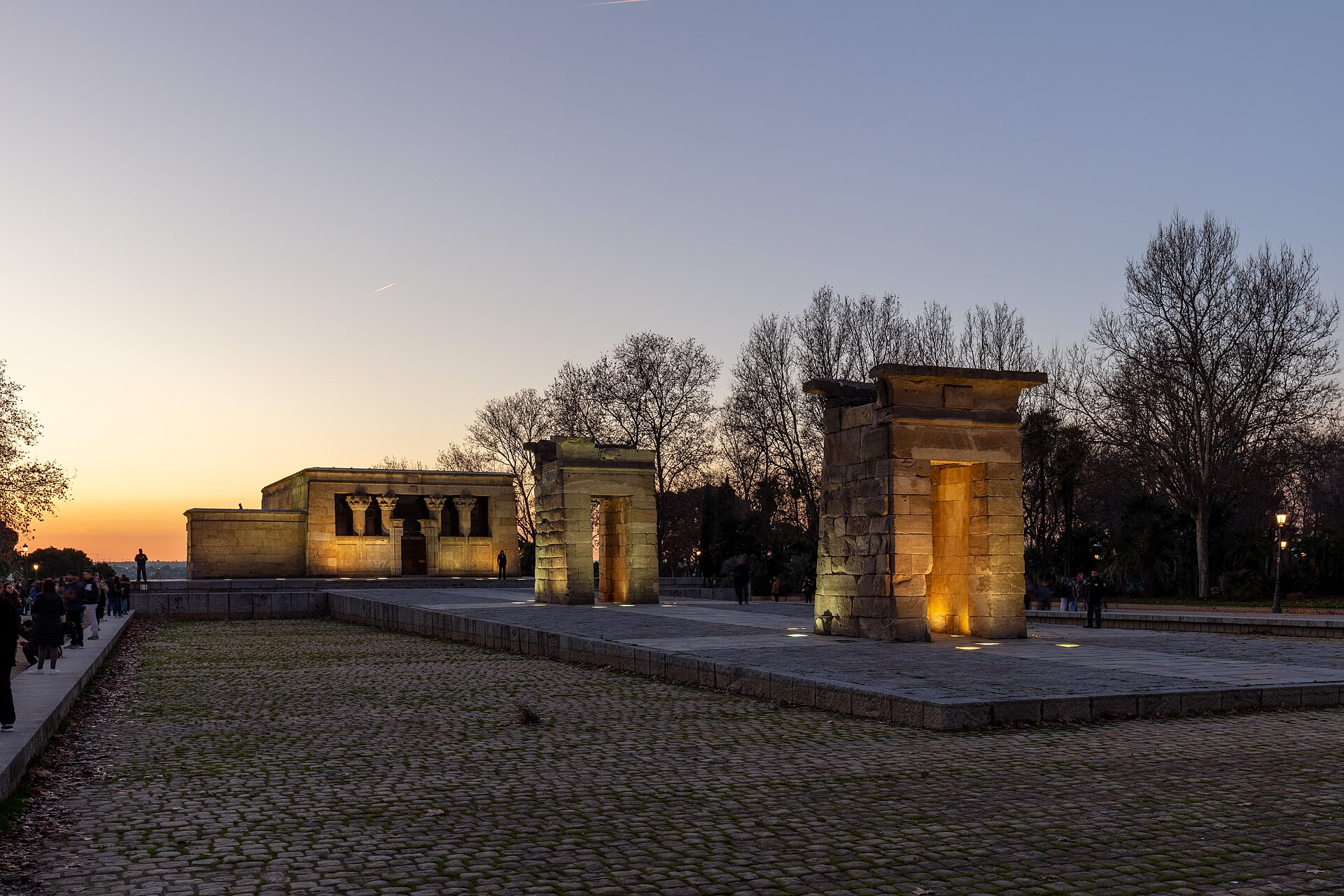
Temple of Debod is one of Madrid’s most surprising landmarks, a fragment of ancient Egypt transplanted into the heart of Spain. Built in the 2nd century BCE near Aswan, this small temple was originally dedicated to the gods Amun and Isis. Its walls still bear the carvings of pharaohs and deities, their outlines softened by time, while the story of how it came to stand in a Madrid park reads like something from an adventure novel.
The temple once overlooked a stretch of the Nile considered sacred by the ancient Egyptians, where the river seemed to merge with the sky at sunset. Constructed under Ptolemy IV, it was later expanded by Roman emperors Augustus and Tiberius, serving as a place of worship for centuries. By the mid-20th century, however, it faced destruction from the rising waters of the Aswan High Dam. In response, UNESCO launched an international campaign to save the monuments of Nubia, and Spain, having contributed to the effort, was gifted the temple in recognition of its help.
Today, the Temple of Debod sits atop a gentle rise in Parque del Oeste, its stone silhouette framed by the distant spires of the Royal Palace and Almudena Cathedral. The contrast with its original setting is striking—no desert sands or palm trees here, just manicured lawns, fountains, and the hum of the city. Yet stepping inside is like crossing into another world. The narrow passageways, dim light, and walls covered in hieroglyphs create an atmosphere of quiet reverence, momentarily erasing the modern world outside.
Entry is free, making it an accessible way to experience history without the usual tourist crowds. Inside, visitors can explore several chambers where original reliefs remain, along with displays explaining the temple’s journey from Egypt to Spain. The best time to visit is at dusk, when the setting sun bathes the stone in golden light, echoing the way it once illuminated the Nile’s banks thousands of years ago.
The temple’s architecture reflects the late Egyptian period, with its heavy stone blocks, lotus-topped columns, and tight corridors leading to the inner sanctum. The sense of enclosure is deliberate, designed to evoke the sacredness of the space. When the temple was dismantled in 1968, each piece was carefully numbered and later reassembled in Madrid, preserving the original layout. The precision of the reconstruction is remarkable, a testament to the effort to honor its past.
Beyond its historical significance, the Temple of Debod has become a cultural touchstone in Madrid. It stands as a symbol of how different eras and civilizations can converge in one place. The site often hosts guided tours, lectures, and even small classical music performances, all of which enhance its unique atmosphere. For many locals, it’s not just a tourist attraction but a familiar part of the cityscape, something they pass by on walks or pause to admire.
The surrounding park offers a quiet retreat from the bustle of Madrid. In summer, the shade of the trees provides relief from the heat, while in winter, the area takes on a peaceful, almost secluded feel. It’s common to see couples posing for wedding photos against the ancient walls or students sprawled on the grass with books. The temple and its surroundings seem to bridge generations and cultures, reminding visitors that history isn’t just something distant—it’s woven into the fabric of everyday life.
More than just an open-air museum, the Temple of Debod is a living monument that continues to inspire. Its presence in Madrid is a result of international cooperation, a reminder of the importance of preserving cultural heritage. In a city where history is layered into every street, this Egyptian temple holds a special place, linking Spain to a civilization that once thrived along the Nile. It’s a quiet corner of the past, standing resilient amid the modern world.