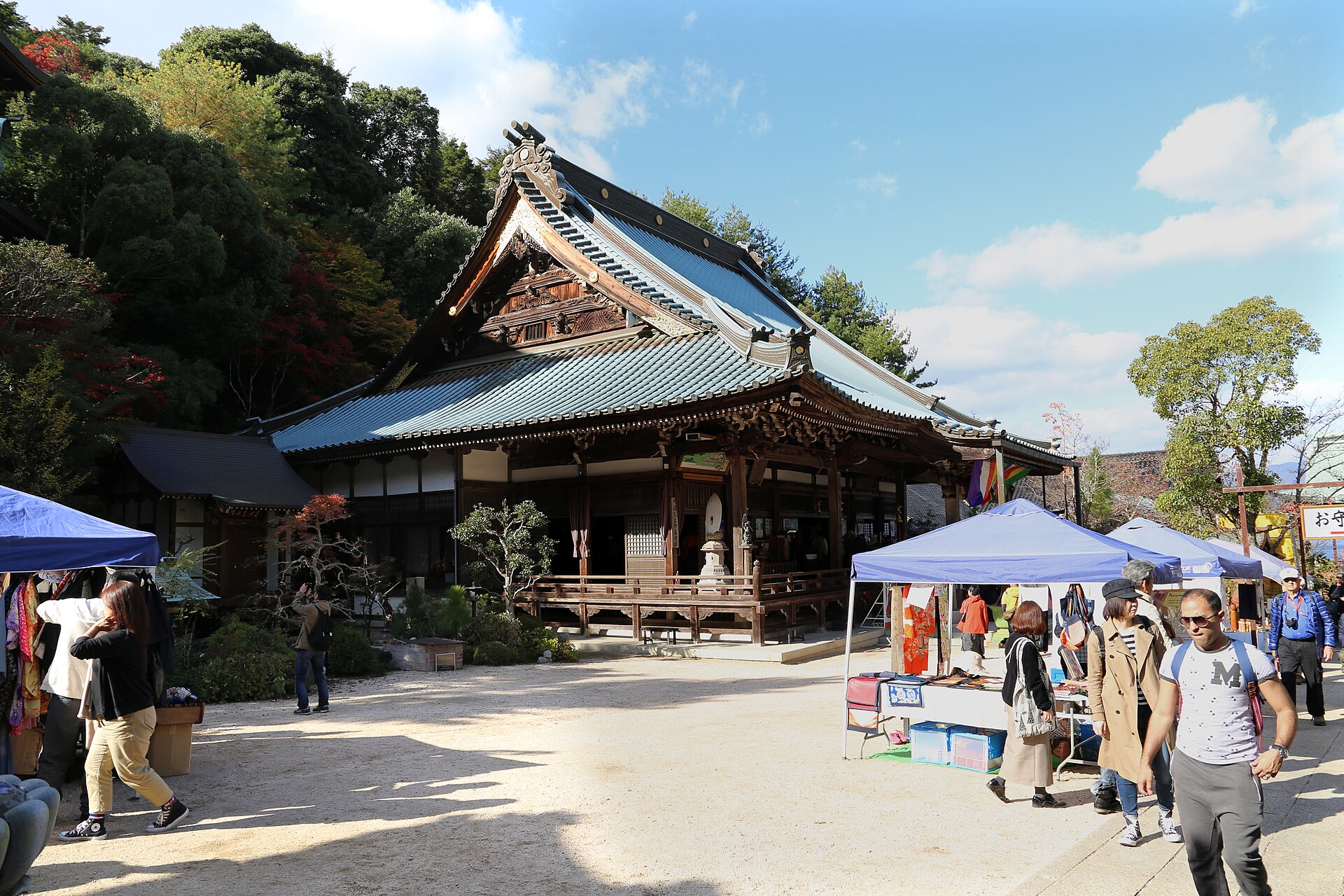
Perched on the gentle slope of Mount Misen, away from the bustling crowds that flock to Itsukushima Shrine, Daisho-in offers a quiet retreat into history and spirituality. Founded in the ninth century, when Buddhism was still taking root in Japan, the temple has long been a revered site of the Shingon school, a tradition that blends esoteric rituals with deep philosophical teachings. Unlike the vivid torii gates and tourist-packed pathways of the nearby shrine, Daisho-in feels like a world apart. The approach is a slow climb up stone steps, shaded by ancient trees whose leaves whisper in the wind. There are no souvenir stalls here, no lines for photographs—just the steady rhythm of footsteps on weathered stone.
The main hall, like many structures on the mountain, is built in the classic Japanese style, its curved roofs and dark wooden beams bearing the marks of centuries. Inside, the air is thick with the scent of incense and aged wood, the light dim and soft. The low ceilings create an intimate space, almost as if the building itself is bowing in reverence. The centerpiece is a hall filled with a thousand statues of bodhisattvas, each carved from wood or stone, their expressions and postures subtly different. Together, they don’t feel like a crowd but rather a silent congregation, watching over those who enter with quiet presence.
Daisho-in’s history is woven into the fabric of Miyajima. During the medieval period, it served as a spiritual hub for local rulers and pilgrims, a place where faith and power intersected. By the Edo era, it had become a stronghold of Shingon teachings, its influence spreading across the region. The temple has endured wars and fires, each time rebuilt with care to preserve its original essence. Remarkably, it survived the atomic bombing of Hiroshima in 1945, perhaps spared by its distance from the city center. Today, a small memorial plaque acknowledges those days, but the temple itself carries its memory without fanfare, as if the past is simply part of its quiet strength.
Beneath the main hall lies a network of small caves, their interiors dimly lit by the flicker of oil lamps. Statues of Buddhas and bodhisattvas line the walls, their forms emerging from the shadows. One chamber holds a revolving sutra library—a wooden drum filled with ancient scrolls. According to legend, turning the drum once is as meritorious as reading every text inside. Few know the exact contents of those scrolls, but the ritual itself feels like a bridge to something sacred, a moment of connection that transcends words.
The temple gardens shift with the seasons, each one offering a different kind of beauty. In spring, cherry blossoms drift like pink snow over the paths. Autumn turns the maples into a blaze of red and gold, while winter dusts the stone lanterns with a thin layer of frost. The garden is small but meticulously designed, with winding paths that lead past boulders and beneath wooden walkways where streams murmur below. At its heart lies a pond, its surface dotted with carp, their movements slow and deliberate. For centuries, monks have tended to this space, ensuring that its tranquility endures.
Daisho-in is not a place for grand spectacles or guided tours. There are no explanatory plaques, no crowds jostling for the best view. Instead, there is the sound of a bell ringing in the distance, the rustle of pages as someone turns a sutra, the occasional murmur of a prayer. Visitors are welcome to join in meditation, light incense at the altar, or simply sit on the veranda, gazing out at the mountains. The temple doesn’t demand attention; it invites reflection.
For the people of Miyajima, Daisho-in is more than a historic site—it’s a living part of their daily lives. Locals come here for festivals, young couples seek blessings for their marriages, and the elderly find a quiet corner to sit and rest. There’s no sense of division between visitors and residents; everyone is simply present, sharing in the stillness. The temple doesn’t belong to anyone in particular—it belongs to the island itself.
If you find yourself on Miyajima, the walk up to Daisho-in is worth the effort. The path from the ferry terminal takes time, winding past small shops selling mochi and tea, offering glimpses of the bay along the way. The temple is open from dawn until dusk, and on weekdays, the quiet is especially profound. There’s no need to rush; the journey is part of the experience.
Don’t come expecting fireworks or dramatic revelations. Daisho-in is a place where time slows down, where the weight of history feels tangible but not overwhelming. It’s a reminder of why this corner of Japan has endured—not for its grandeur, but for its ability to hold space for something deeper. Whether you spend an hour or a day here, the temple leaves its mark not through spectacle, but through the quiet persistence of its presence.