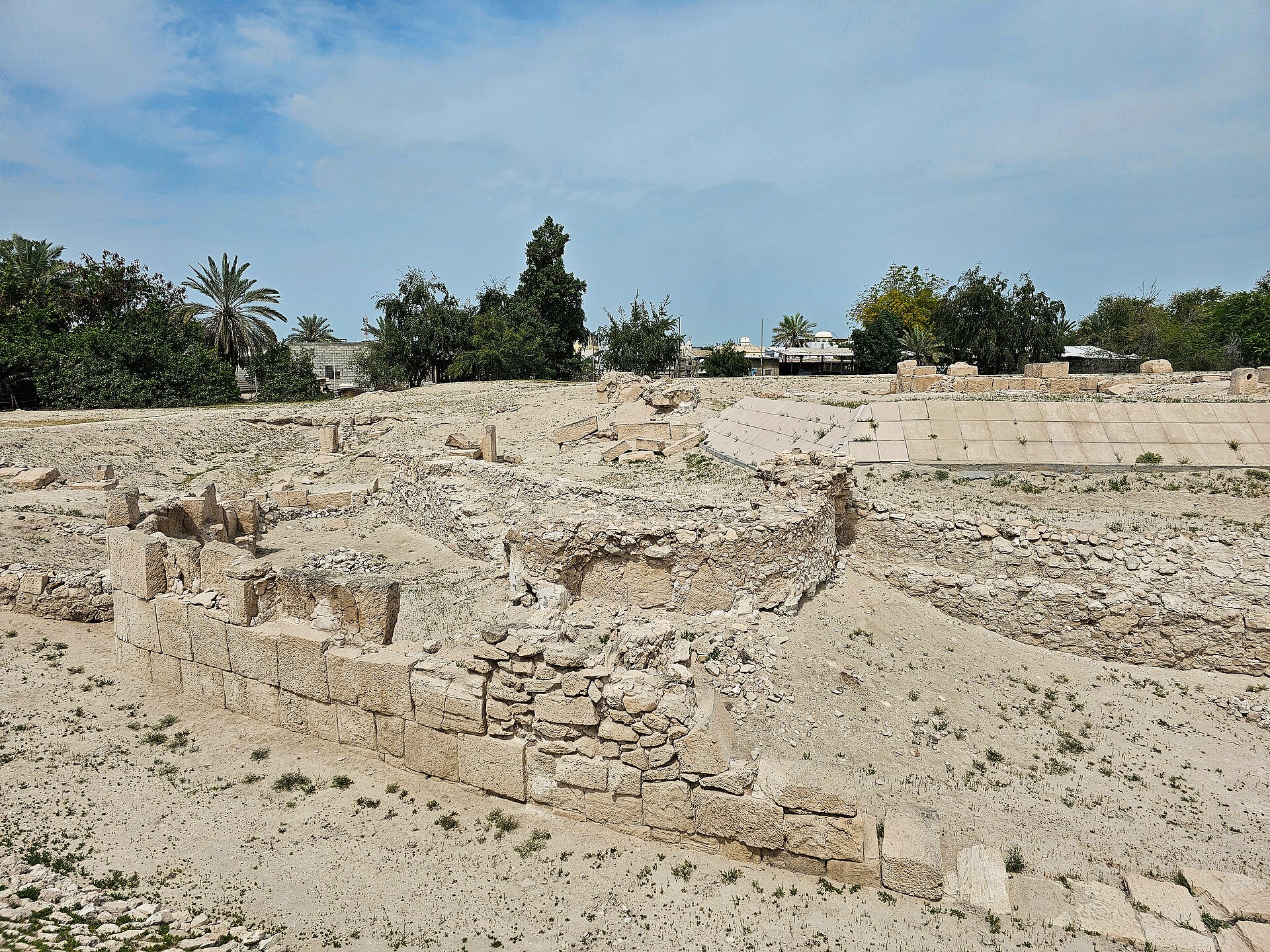
Photo: Prof, CC BY 2.0
Barbar Temple
out of 5 0 ratingsThe Barbar Temple stands quietly on the northern coast of Bahrain, a place where the past feels almost tangible. Built around 3000 BCE, it is one of the oldest known religious sites in the Gulf region, part of the Dilmun civilization that once thrived here. The temple was discovered in the 1950s, and since then, archaeologists have uncovered three distinct layers of construction, each built atop the other over centuries. The ruins you see today belong mostly to the middle phase, dating back to around 2000 BCE, though the earliest foundations go even deeper into history.
The layout of the temple is simple but deliberate. A central courtyard is surrounded by low stone walls, with small chambers and altars arranged around it. The most striking feature is the sacred well, still visible at the heart of the site. It was likely used for ritual purification, a practice common in many ancient cultures. The well’s presence suggests that water held spiritual significance here, perhaps tied to the Dilmun belief in a land of immortality, a theme that appears in later Mesopotamian texts. The temple’s design reflects a blend of practicality and reverence, built to serve both the gods and the community that gathered here.
What makes Barbar Temple particularly fascinating is its connection to Dilmun, a civilization that acted as a bridge between Mesopotamia and the Indus Valley. Dilmun was mentioned in Sumerian myths as a paradise, a place of abundance and eternal life. While the temple itself doesn’t reveal all the secrets of these beliefs, it offers a glimpse into the rituals and daily life of a people who played a crucial role in early trade networks. The artifacts found here—pottery, tools, and offerings—hint at a society that was both prosperous and deeply spiritual.
The temple’s location near the coast wasn’t accidental. Barbar sits close to the ancient harbor of Qal’at al-Bahrain, a UNESCO World Heritage Site, which was a major hub for trade in copper, pearls, and other goods. The temple likely served as a place of worship for merchants, sailors, and locals alike, a sanctuary where they could seek blessings before embarking on long journeys or give thanks upon their return. The sea breeze still carries a sense of that old rhythm, a reminder of how closely life here was tied to the waters of the Gulf.
Walking through the ruins, it’s easy to imagine the temple in its prime. The walls, though weathered, still stand firm, their rough stones bearing the marks of time. The site is small enough to explore in an hour or so, but it leaves a lasting impression. Unlike grander archaeological sites, Barbar feels intimate, almost personal. There are no towering columns or intricate carvings here—just the quiet dignity of a place that has witnessed thousands of years of human devotion.
The temple’s rediscovery in the 20th century was a turning point for Bahrain’s understanding of its own history. Before then, the Dilmun civilization was largely forgotten, its stories buried beneath layers of sand and time. The excavation of Barbar, along with other sites like the burial mounds of A’ali, helped piece together the narrative of a sophisticated society that flourished long before the rise of Islam or the arrival of modern nations. Today, the temple is a protected site, carefully preserved so that future generations can continue to learn from it.
Visiting Barbar is a quiet experience. There are no crowds, no guided tours shouting over each other—just the sound of the wind and the occasional call of a bird. The site is open to the public, and while there’s no museum on-site, the nearby Bahrain National Museum in Manama offers more context about Dilmun and the temple’s significance. If you’re interested in history, it’s worth pairing a visit to Barbar with a trip to Qal’at al-Bahrain or the ancient burial mounds scattered across the island.
What lingers after a visit to Barbar Temple isn’t just the weight of history, but the sense of continuity. The same sun that once warmed the stones here still shines today, and the same sea that brought traders to these shores still laps at the nearby coast. The temple may be a ruin, but it’s far from forgotten. It stands as a testament to the enduring human need to connect with something greater than ourselves, a need that has shaped civilizations for millennia. In a world that often feels disconnected from the past, places like Barbar remind us that some stories never really fade—they just wait to be rediscovered.
Day around this place
Where else to go on the same day
Building the day…
Where it is
26.22612, 50.48415