Holmsund’s lighthouse stands where the Ume River meets the Gulf of Bothnia, a quiet sentinel at the edge of Sweden’s northern coast. Built in 1896, it was one of the last major lighthouses constructed in the region before modern navigation reduced their necessity. The structure itself is modest—white-painted brick rising just over twenty meters, topped with a lantern room that once guided fishing boats and timber ships through the shifting shallows. Today, its light no longer shines for passing vessels, but the tower remains a landmark for those who live in Holmsund or pass through on their way to the archipelago.
The lighthouse was never meant to be grand. Its purpose was practical: to mark the entrance to the river and warn of the treacherous sandbanks that could ground a ship in low tide. The original lens, a third-order Fresnel, was powerful enough to cut through the coastal mists that roll in from the sea, especially in autumn and winter when the air turns damp and heavy. Over the decades, the light was automated, then eventually decommissioned as GPS and electronic charts made such beacons obsolete. Now, the tower is more of a historical curiosity than a working aid to navigation, though it still holds a place in local memory.
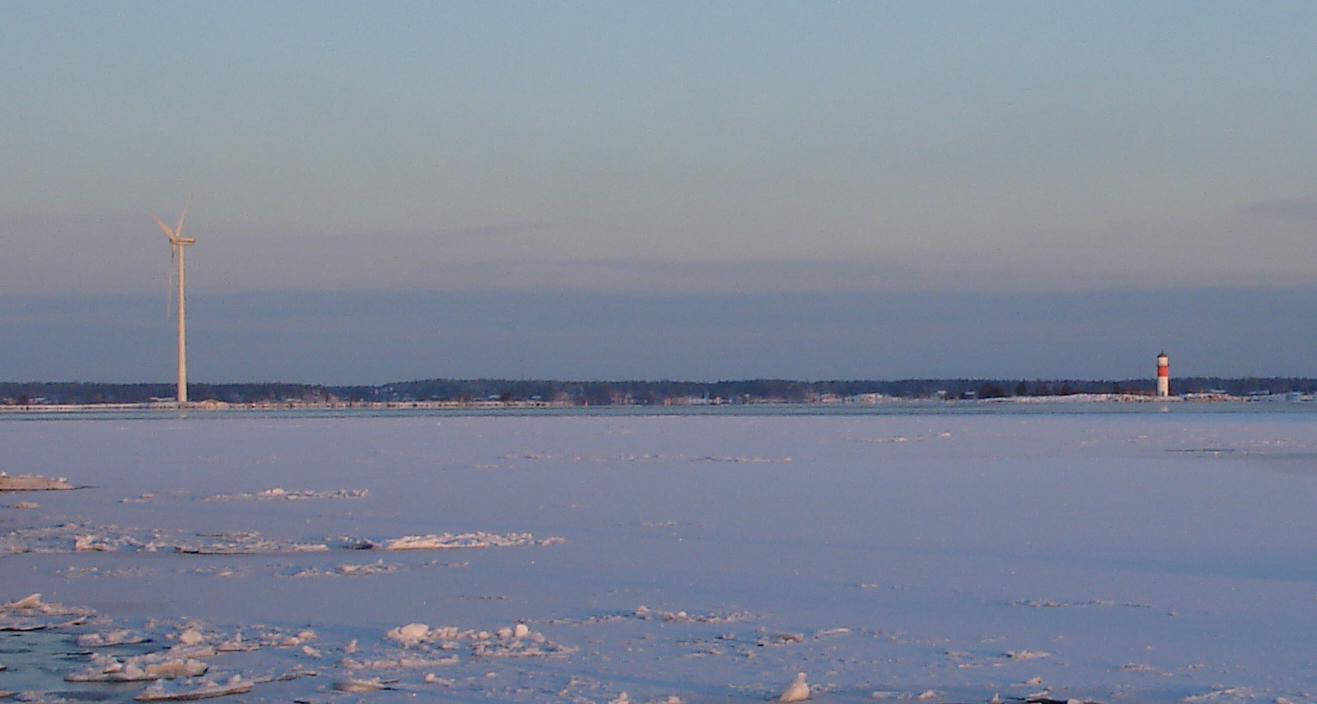
The area around the lighthouse is unassuming—flat, windswept land where the river widens into the gulf. In summer, the water is calm, reflecting the pale northern sky, while in winter, ice forms along the shore, and the wind carries a sharp, salty bite. The ground is rocky in places, covered with low grasses and wildflowers that bloom briefly before the cold returns. There’s no grand promenade or tourist infrastructure here; just a narrow road leading to the base of the tower, a few benches, and the occasional fisherman casting a line from the shore.
Holmsund itself is a small industrial town, known more for its sawmills and shipping history than for tourism. The lighthouse, though, offers a glimpse into a different era—one when the coast was a lifeline rather than just a backdrop. In the late 19th and early 20th centuries, this stretch of the Bothnian coast was busy with timber exports, and the river was a highway for logs floating downstream from the forests of Västerbotten. The lighthouse was part of that world, a small but essential piece of the infrastructure that kept trade moving.
The tower’s design is typical of Swedish lighthouses from the period—functional, with little ornamentation. The brickwork is solid, meant to withstand the harsh coastal climate, and the lantern room is enclosed in glass panels that once protected the light from the elements. Inside, the spiral staircase is narrow, winding up to the top where the lens once sat. There’s no museum or exhibition here, just the quiet sense of a place that has outlived its original purpose.
For those who visit, the appeal isn’t in grand views or dramatic scenery. The landscape is understated, almost austere, but there’s a quiet beauty in the way the light changes over the water. In the evening, the sun sets late in summer, casting long shadows across the river, while in winter, the days are short, and the lighthouse stands dark against the pale sky. It’s a place for slow walks along the shore, for watching the water and the occasional boat passing by.
The lighthouse is also a reminder of how quickly technology changes. What was once a vital tool for sailors is now a relic, preserved more out of sentiment than necessity. Yet there’s something enduring about it—the way it has weathered storms and seasons, standing firm while the world around it has shifted. It doesn’t demand attention, but for those who take the time to notice, it offers a connection to the past, to the people who once relied on its light, and to the quiet rhythms of life along this stretch of coast.
If you come here, it’s best to visit with no expectations. There are no guided tours, no gift shops, no crowds. Just the lighthouse, the river, and the open sky. It’s the kind of place that lingers in memory not for what it is, but for the way it makes you pause—even if just for a moment—to consider the passage of time.