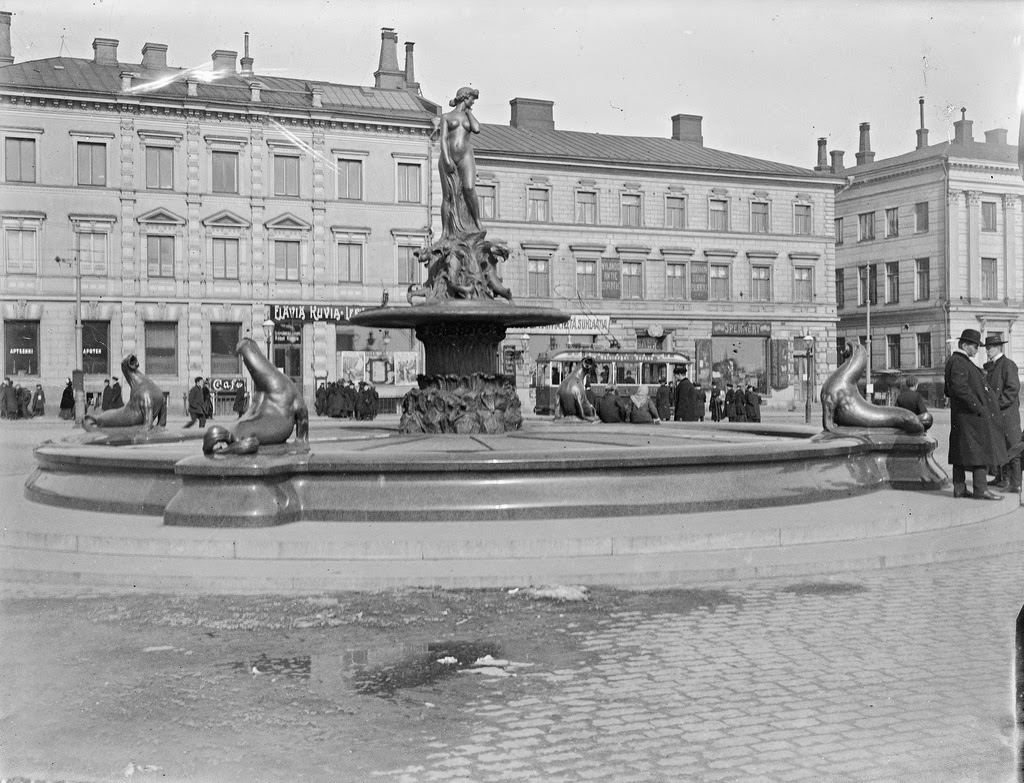
Havis Amanda is one of Helsinki’s most recognizable landmarks, standing at the edge of the harbor near Market Square. When it was unveiled in 1908, the sculpture sparked both fascination and controversy. Created by Finnish artist Ville Vallgren, the bronze figure of a young woman rising from the water was named after a character from one of his earlier works, but for locals, it quickly became something more—a symbol of the city, though not everyone embraced it at first.
The sculpture depicts a nude woman wringing water from her hair, surrounded by four fish at the base, representing the sea. Vallgren intended the figure to embody rebirth and purity, but at the time, the nudity was considered provocative. Some critics dismissed it as vulgar, while others defended it as a bold artistic statement. Today, those debates seem quaint, but they reflect the shifting attitudes of a society just beginning to accept modern art.
Over the years, Havis Amanda has become woven into the fabric of Helsinki’s daily life. Every Walpurgis Night, when the city celebrates the arrival of spring, students place a traditional white cap on the statue’s head—a ritual that began in the 1920s and remains a cherished tradition. For the rest of the year, the sculpture stands quietly, watched by passersby who often pause to take photos, even if they don’t know its story.
Market Square, where the statue is located, is one of the liveliest spots in central Helsinki. Year-round, vendors sell fresh fish, local delicacies, handmade crafts, and woolen goods. In summer, the square buzzes with colorful stalls, while in winter, it transforms into a festive Christmas market. Havis Amanda overlooks it all, motionless and serene, as if untouched by the constant movement around her.
The statue wasn’t always in its current location. Originally, it was meant to be placed elsewhere, but due to the controversy surrounding its design, it ended up at Market Square, where it would be seen by everyone. Over time, public opinion shifted, and what was once considered scandalous became one of Helsinki’s most beloved landmarks. Today, her image appears on postcards and souvenirs, though none capture the quiet presence of the original.
Like many famous statues, Havis Amanda has inspired its share of local legends. Some say touching the fish at her feet brings good luck, while others claim she turns her head toward those who fall in love with her. Of course, these are just stories, but they add a touch of mystery to the sculpture. In reality, she remains unchanged, a reminder of how art can challenge, endure, and eventually become part of a city’s identity.
For many Helsinkians, Havis Amanda is more than just a statue—she’s a symbol of the city’s history and evolution. She has witnessed Helsinki’s transformation from a quiet port town to a vibrant capital, surrounded by modern buildings yet standing as a quiet contrast to the bustle around her. There’s something timeless about her, as if she connects the past with the present, grounding the city in its own story.
Visiting Havis Amanda is about more than just taking a photo. The area is always alive with activity—people rushing to catch ferries, browsing market stalls, or simply sitting on the granite steps by the water. In the evening, when the streetlights glow, the bronze figure takes on a softer, almost ethereal quality. The light plays across her curves, making it easy to imagine her stepping into the harbor, dissolving into the twilight. It’s a moment that lingers, a quiet pause in the middle of the city’s constant motion.