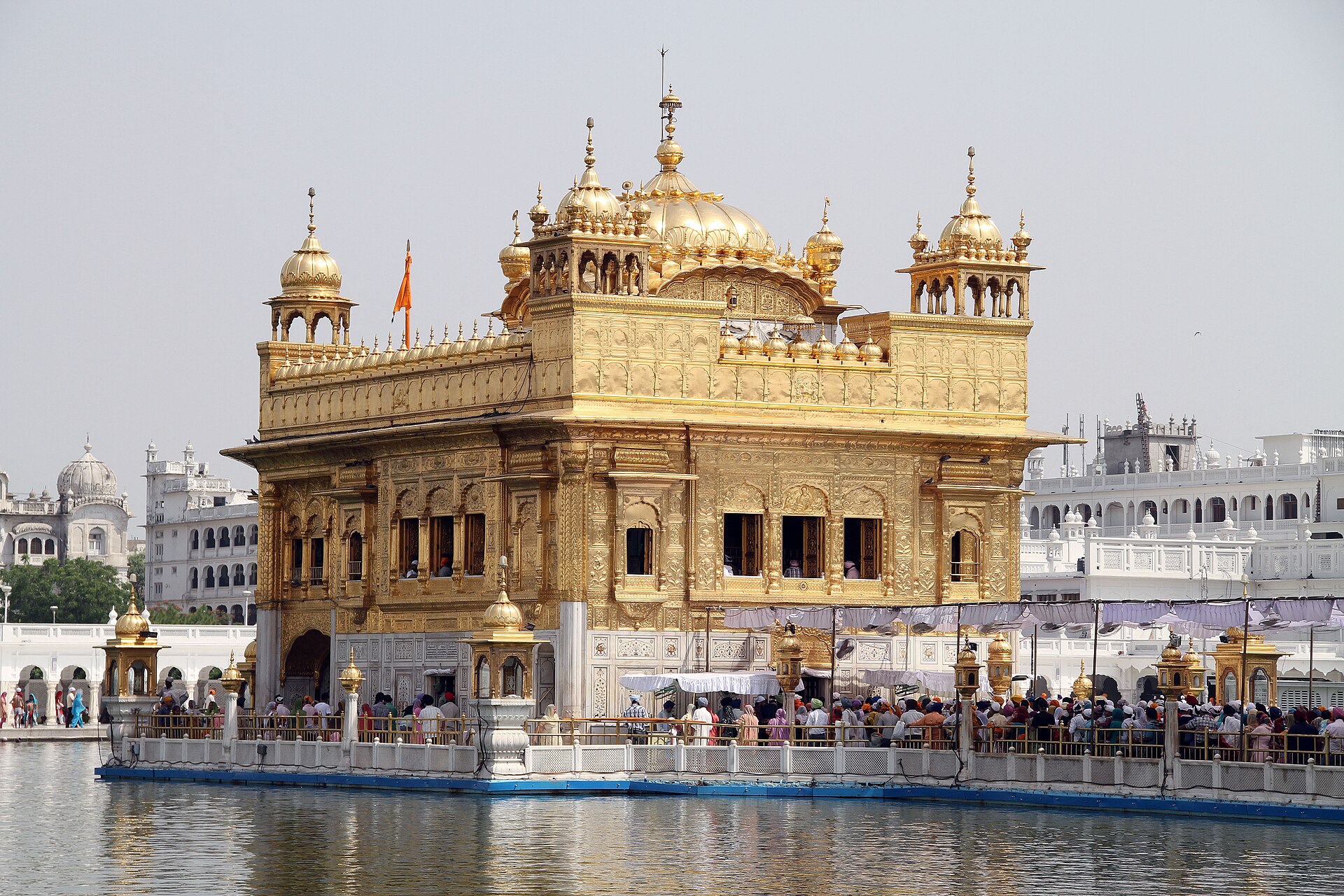
Amritsar’s Golden Temple isn’t just a place of worship—it’s where faith, history, and human connection flow together in a way that feels both ancient and alive. Set in the heart of Punjab, this gilded sanctuary draws people from all walks of life, dissolving differences in its quiet, golden light. Whether you arrive as a pilgrim, a traveler, or simply someone curious about the world, the temple welcomes you into its rhythm, where the sacred and the everyday merge seamlessly.
The story of the Golden Temple begins in the 16th century with Guru Nanak, the founder of Sikhism, who meditated by a tranquil pool surrounded by forest. Later, Guru Ram Das expanded the pool and laid the foundations for what would become the spiritual heart of the Sikh community. By 1604, Guru Arjan Dev completed the Harmandir Sahib, placing the first copy of the Guru Granth Sahib—the eternal scripture of Sikhism—inside its walls. Over the centuries, the temple has endured wars and destruction, only to rise again, each time more resilient.
The architecture is a study in symbolism. The temple sits at the center of the Amrit Sarovar, the "Pool of Nectar," its waters believed to hold healing properties. A marble causeway leads to the sanctum, representing the soul’s journey toward the divine. Four entrances, one on each side, embody Sikhism’s openness to all, regardless of background. Inside, the continuous recitation of the Guru Granth Sahib fills the air, a reminder that the scripture itself is considered the eternal guru.
The pool is more than just a backdrop—it’s central to the temple’s rituals. Pilgrims bathe in its waters before entering, a tradition that dates back centuries. Around the perimeter, marble walkways offer space to sit, reflect, or simply watch the ebb and flow of visitors. The atmosphere is one of quiet industry: some pray, others rest, and many lend a hand in the langar, the free community kitchen that serves meals to thousands daily. The langar is one of Sikhism’s most powerful traditions, a place where caste, class, and creed vanish in the act of sharing a meal.
The temple changes with the light. At dawn, the golden dome glows softly against the pale sky, the air still and reverent. By midday, the complex hums with activity—pilgrims circling the pool, tourists snapping photos, volunteers preparing food. As evening falls, the temple’s lights come on, turning it into a beacon that can be seen from across the city. During festivals like Vaisakhi, which marks the Sikh New Year and the founding of the Khalsa, the temple becomes a sea of color and song, drawing crowds from around the world.
The Golden Temple has also borne witness to darker chapters. In 1984, it was the site of a violent military operation aimed at flushing out Sikh militants, an event that left deep scars on the community. The damage was later repaired, and today the temple stands as a testament to resilience, its doors open to anyone willing to step inside.
Visiting the temple is simple, but there are customs to observe. Shoes must be removed, heads covered, and feet washed before entering. Inside, the marble floors are cool underfoot, and the air is thick with the scent of incense and the sound of hymns. Some visitors stay for a few minutes, others for hours, sitting cross-legged on the floor, listening to the scriptures, or watching the priests tend to the Guru Granth Sahib. There’s no pressure to participate—just an invitation to be present.
Beyond the temple’s walls, Amritsar pulses with life. The narrow streets around the complex are lined with shops selling spices, sweets, and handcrafted goods. Cafés serve steaming cups of chai and plates of butter chicken, while rickshaws weave through the crowds. Yet even amid the city’s chaos, the temple remains a place of stillness, its golden dome a constant presence on the skyline.
What makes the Golden Temple special isn’t just its beauty or its history—it’s the way it makes you feel. There’s no expectation to believe, no demand to conform. Instead, it offers something quieter: a sense of belonging, a reminder that in this corner of the world, at least, the things that divide us matter less than the things that connect us. Maybe that’s why people keep coming back—not for answers, but for the feeling of being part of something larger than themselves.