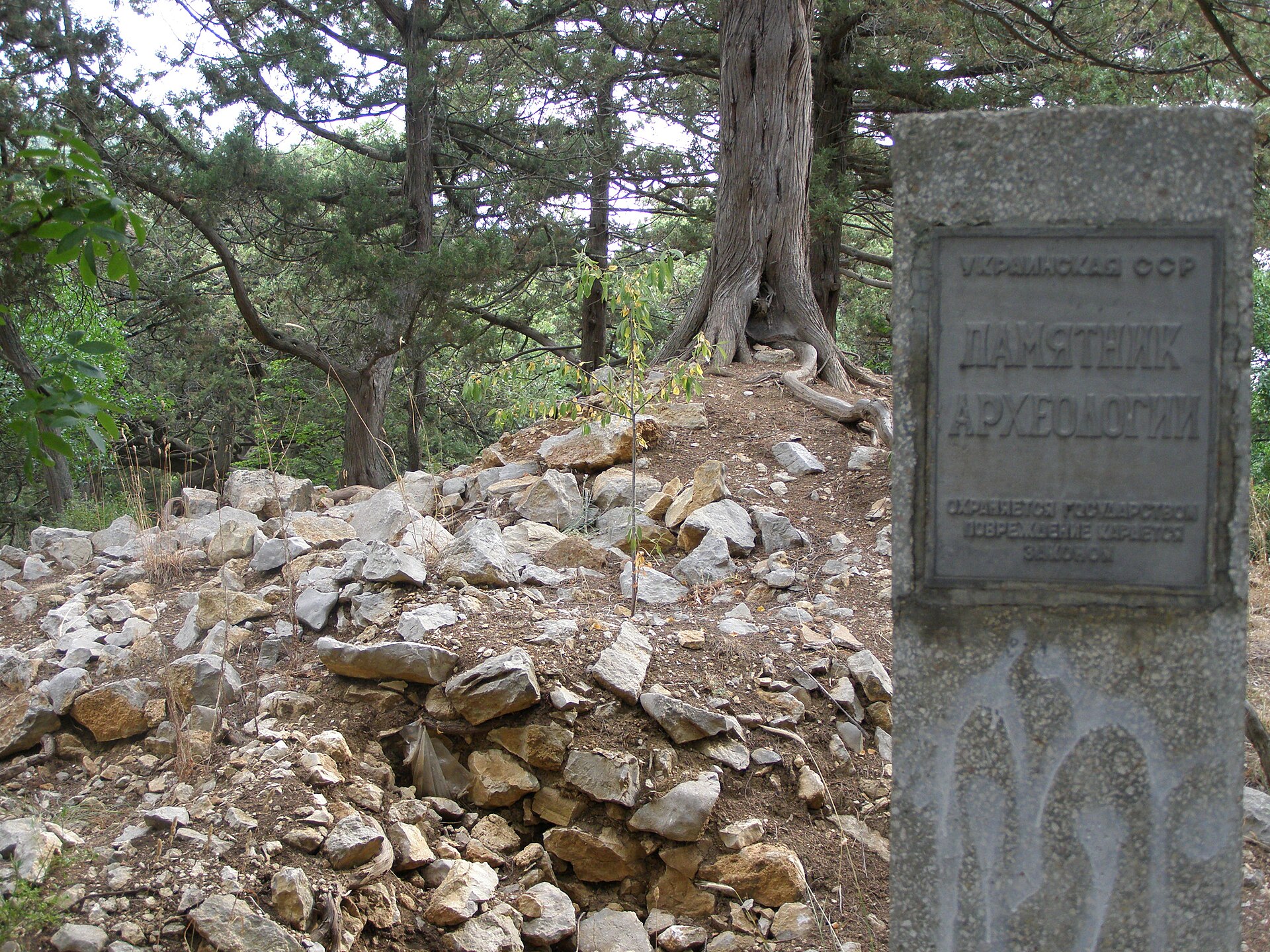
Charax is one of those rare places where history feels alive not because of grand restorations or polished exhibits, but because it has been left almost untouched. Perched on the Ai-Todor cape near Gaspra, this ancient Roman military camp blends into the landscape as if it has always been part of it. There are no crowds here, no souvenir stalls, no guided tours—just the remains of stone walls, scattered fragments of buildings, and centuries-old pines swaying in the sea breeze. It’s easy to imagine Roman legionaries patrolling these paths two thousand years ago, their footsteps long erased by time.
The settlement dates back to the first century AD, when Crimea was a distant outpost of the Roman Empire. Though far from Rome, the peninsula’s strategic location made it a crucial stronghold. Charax was one of several fortifications built to protect trade routes and monitor the Black Sea coast. The Romans constructed a fortress, barracks, baths, and even a small temple here. Over time, as the empire weakened, the camp fell into disrepair, its stones gradually reclaimed by nature. What remains today are mostly fragments—foundations, wells, and the occasional mosaic floor, half-buried under pine needles.
The best-preserved part of Charax is its defensive walls, built from large limestone blocks. They stretch along the edge of the cape, a silent reminder of the empire’s reach. Inside the perimeter, you can still make out the outlines of buildings, though little else remains. Archaeologists continue to work here, occasionally unearthing coins, pottery, or everyday objects that hint at the lives once lived within these walls. The site is far from a meticulously reconstructed ruin; it’s more like an open-air puzzle, where visitors can piece together the past from what’s left behind.
What makes Charax special is how seamlessly it merges with its surroundings. The Ai-Todor cape is a rugged promontory, with the sea crashing against its cliffs on three sides. From here, the view stretches across the Yalta Bay, with mountains rising in the distance and the lights of coastal villages flickering at dusk. On clear days, the horizon seems endless, and the air carries the scent of salt and pine resin. It’s a place where time slows down, especially in the early morning or late afternoon, when the sunlight turns the stones golden.
Nearby stands another Crimean landmark, the Swallow’s Nest castle, a fairy-tale structure perched on a cliff. But unlike its famous neighbor, Charax has never become a tourist hotspot. There are no guides, no gift shops, no marked paths—just the freedom to wander, sit on the rocks, and listen to the waves. Occasionally, school groups or history enthusiasts visit, but even they quickly fade into the quiet, leaving the place to those who seek solitude.
Charax isn’t just a relic of antiquity; it’s also a chapter in Crimea’s more recent history. In the 19th century, when the peninsula became a fashionable retreat for Russian aristocracy, Grand Duke George Mikhailovich built a neoclassical estate here. He restored parts of the ancient ruins, laid out gardens, and even conducted his own excavations. Today, only fragments of his palace remain, but they’ve become part of the landscape, adding another layer to the site’s story.
Visiting Charax isn’t about ticking off a tourist attraction—it’s about experiencing a place where the past and present coexist. There are no clear boundaries here; ancient stones lie next to wild shrubs, and the sea looks the same as it did when Roman soldiers stood guard. You can spend hours exploring, sketching the ruins, or simply sitting on a rock with a thermos of tea, watching the horizon. The site has become part of a national park in recent years, which means access is limited but also ensures that its quiet charm remains intact.
Getting here requires some effort. There’s no public transport to the Ai-Todor cape, so most visitors arrive by car or taxi. Entry is free, but it’s worth remembering that Charax isn’t a museum—it’s a protected area where the rule is to leave everything as you found it. The site won’t dazzle you with grandeur or elaborate reconstructions. There are no towering columns, no golden artifacts, no dramatic legends. Instead, its appeal lies in its understated authenticity. History isn’t on display here; it’s woven into the rocks, the grass, and the wind off the sea. And if you’re lucky, you might leave with the feeling that you’ve touched something real—something that hasn’t been packaged for tourists, but has simply endured.