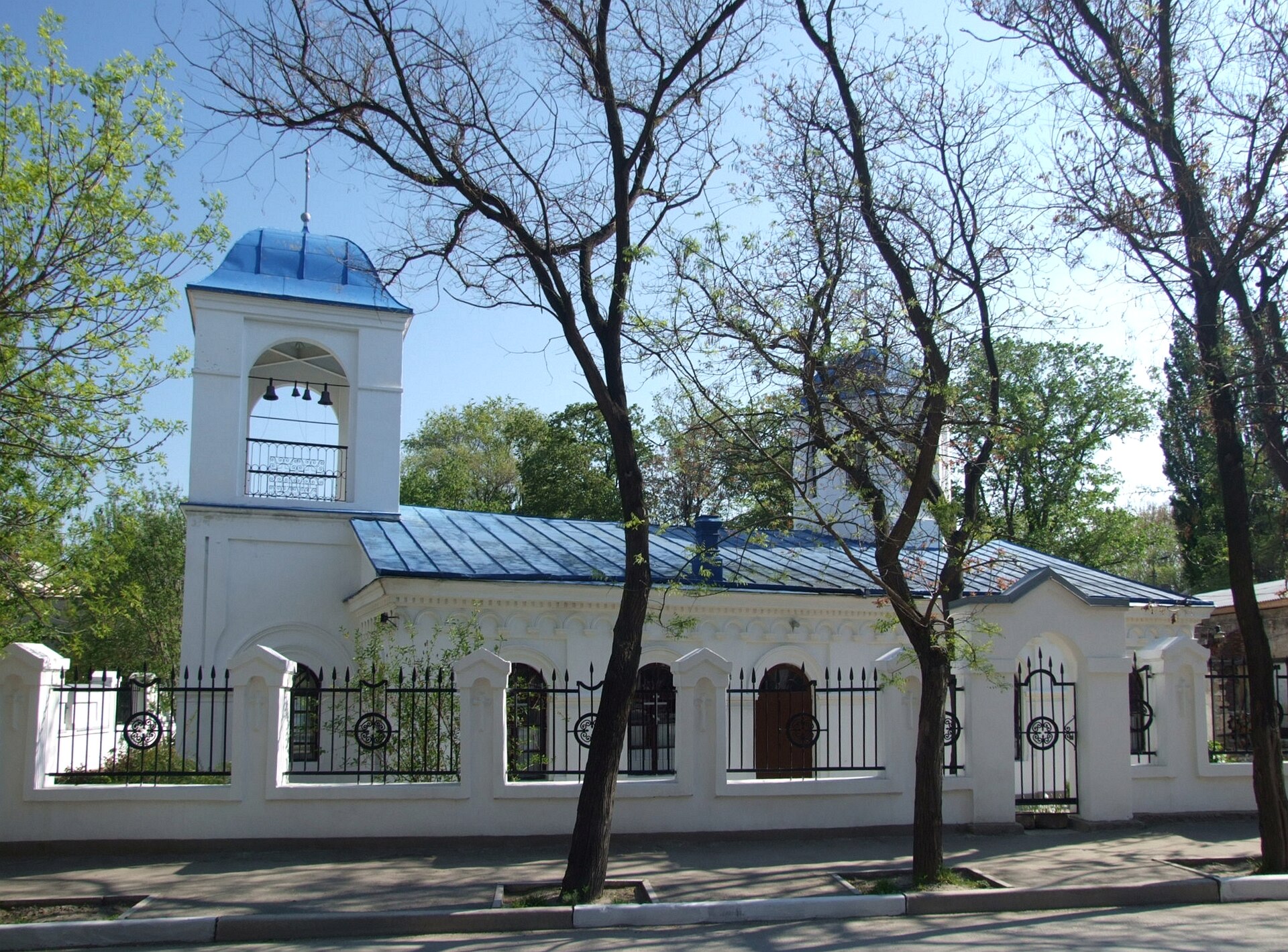
The Church of the Presentation of the Virgin, known locally as Vvedenskaya, sits quietly on a low hill in the old part of Feodosia. Built in the early 1700s, it’s one of those places where the weight of history feels tangible, not through grand gestures, but in the way the light falls on its whitewashed walls or how the sound of footsteps echoes under its modest dome. The church isn’t large—its silhouette, with a squat bell tower and a single cupola, blends into the surrounding streets of low-roofed houses and narrow lanes. Yet there’s something about it that draws the eye, especially in the late afternoon when the sun softens the stone and the shadows stretch long across the courtyard.
Feodosia itself has always been a city of layers. Founded by the Greeks, shaped by Genoese traders, ruled by the Ottomans, and later absorbed into the Russian Empire, it carries traces of each era in its streets and buildings. The Church of the Presentation was one of the first Orthodox churches built here after Crimea became part of Russia, erected on the site of an older medieval church whose origins are now half-legend. In the 18th century, Feodosia was a small but busy port, and this church served as both a spiritual anchor and a gathering place for merchants, sailors, and townspeople. Its walls have heard countless conversations in different languages, prayers whispered in haste, and the slow, deliberate chants of liturgy.
The architecture is unassuming, almost austere—a reflection of the practical needs of its time. Built from local stone, the church’s exterior is simple: plastered walls, a red-tiled roof, and small windows that let in just enough light to illuminate the interior. Inside, there’s no gilded opulence, just a wooden iconostasis, a handful of old icons, and rows of plain benches. What stands out is the acoustics. Even a murmur carries clearly under the vaulted ceiling, as if the space itself is holding its breath, preserving the voices of those who have stood here over the centuries. The bell tower, though short, has a deep, resonant chime that drifts over the rooftops, particularly on still days when the sound travels unimpeded.
Like much of Feodosia, the church has seen its share of upheaval. During the Crimean War in the 1850s, the city found itself on the front lines, and the church suffered damage along with many other buildings. Later restorations patched the cracks, but time has left its mark—the darkened plaster, the faint scent of damp stone, the icons that have been touched up more than once. In the Soviet era, the church was closed, its doors locked, its purpose forgotten as it was repurposed into a warehouse. It wasn’t until the late 20th century that it was returned to the faithful, carefully restored, and reopened as a place of worship.
Today, the Church of the Presentation remains an active parish, though it doesn’t attract the crowds of more famous cathedrals. That’s part of its charm. Visitors who wander in find a quiet, unhurried space where the air is cool in summer and warmed by candlelight in winter. The priest, a soft-spoken man with a patient manner, is happy to share stories of the church’s past with those who ask, but he doesn’t press. Outside, the courtyard is peaceful, with a few benches where one can sit and listen to the bells or watch the light change on the walls.
The area around the church still feels like old Feodosia. The streets are narrow and uneven, paved with cobblestones worn smooth by time. The houses nearby are low and unpretentious, with wooden shutters and small gardens where fig trees and roses grow. A short walk away, the morning market bustles with vendors selling fresh fish, local cheeses, and ripe fruit. From the hill near the church, there’s a view of the harbor—less dramatic than the panoramas from Mount Mithridat, but more authentic. Fishing boats bob in the water, and in the distance, the crumbling towers of Genoese fortresses stand as silent reminders of the city’s medieval past.
This isn’t a place for those seeking grand monuments or Instagram-worthy backdrops. The Church of the Presentation is for those who appreciate the quiet persistence of history, the way a building can hold the memories of generations without fanfare. It’s the kind of place where you might linger on a bench in the courtyard, listening to the bells, or wander the nearby streets, imagining the lives of the people who walked here centuries ago. Feodosia has its share of tourist attractions, but it’s these unassuming corners—the ones that haven’t been polished for visitors—that give the city its character. Here, the past isn’t staged; it’s simply present, waiting to be noticed.