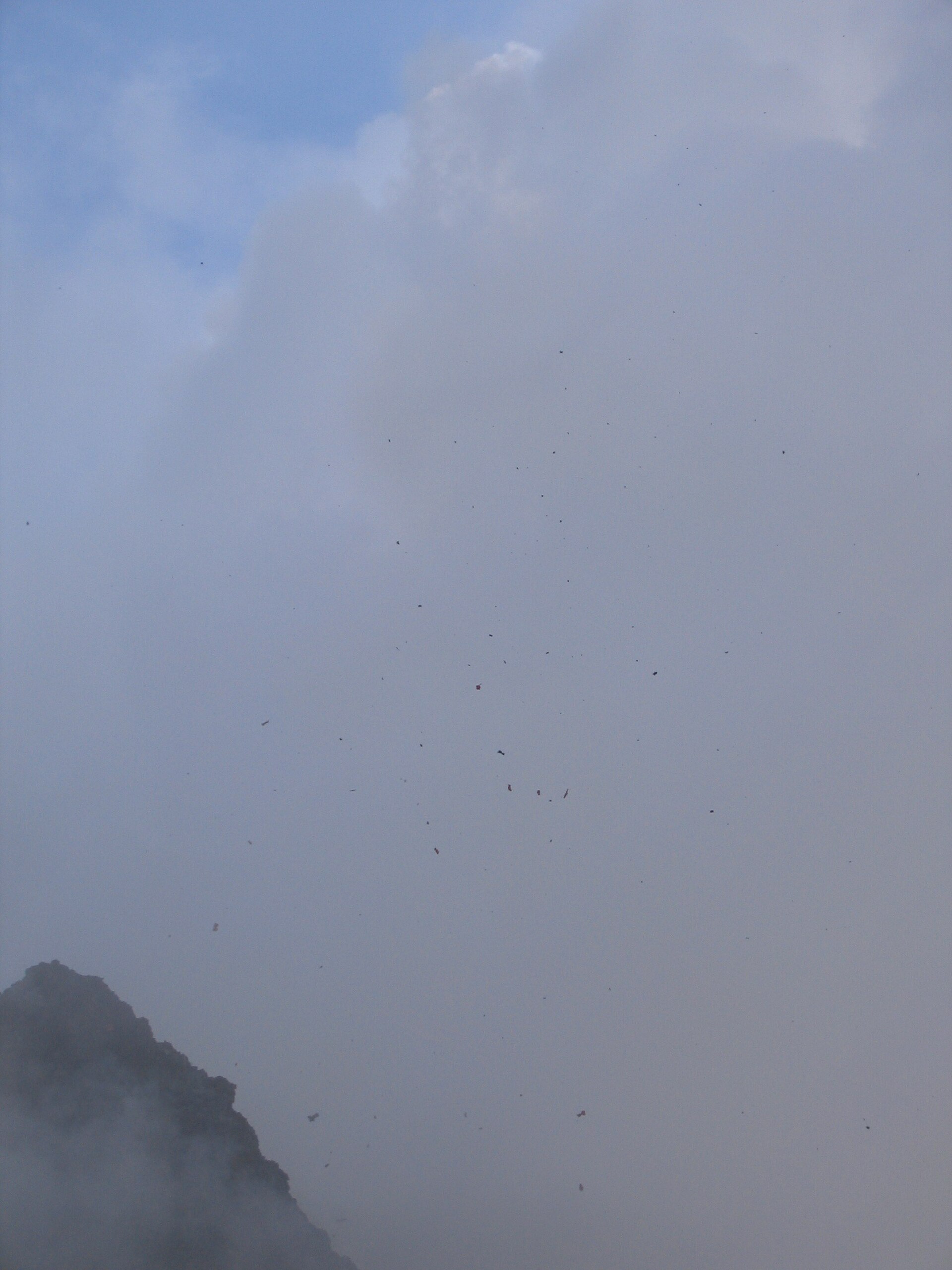
Pacaya is one of Guatemala’s most active volcanoes. It rises south of Guatemala City, its presence shaping both the skyline and the lives of those nearby. Unlike Volcán de Fuego or Acatenango, Pacaya is lower but far less predictable. Its eruptions—gentle, violent, or anything in between—draw those who want to see the earth’s raw power up close.
The volcano sits within Pacaya Volcano National Park, where lava flows have carved paths through forests and fields. The terrain shifts from barren, moon-like expanses to pockets of green where life persists. Hiking here isn’t just about the summit. It’s about walking through layers of history, each step on ash and stone telling a story.
For locals, Pacaya is part of daily life. Farmers watch its moods, knowing when ash might cover their crops or when the ground’s rumble means preparation is needed. Some earn a living from guided hikes, leading visitors to witness eruptions firsthand. Living beside such a force is a balance struck over generations.
The 2021 eruption sent ash miles into the sky, disrupting flights and dusting nearby towns. Yet even in its fury, the volcano holds a strange beauty. At night, lava glows red, creating a spectacle that feels almost alien. For those who reach the summit, the reward is often a front-row view of molten rock spilling across the land.
Most hikes start in San Vicente Pacaya, where guides lead groups up the mountain. The trail is moderate but demanding—loose volcanic rock shifts underfoot, and sulfur fills the air. Along the way, old lava fields stretch out, their surfaces still warm in places. Higher up, the landscape opens, revealing valleys and distant peaks like Agua and Fuego.
The summit’s crater is often too active to approach closely. But the steam rising from the earth is enough. On quieter days, you can walk along old lava flows, where the ground stays hot enough to roast marshmallows—a tradition among hikers. It’s a reminder of how small we are against nature’s forces.
Pacaya has been active for at least 23,000 years. Records of eruptions date back to the Spanish colonial period. In 2010, lava flowed toward villages, forcing evacuations and reshaping the land overnight. Yet destruction brings renewal. The ash enriches the soil, making the surrounding land some of Guatemala’s most fertile.
Visiting Pacaya isn’t just a hike. It’s hearing the rumble, smelling sulfur, watching lava creep. The experience lingers. It’s not for those who want comfort. But if you’re drawn to nature’s untamed side, Pacaya delivers.
The dry season, November to April, is the best time to visit. Trails are less slippery, skies clearer. Still, conditions change fast—go with a guide who knows the mountain. Whether you’re there for an eruption or to stand at the edge of something ancient, Pacaya leaves its mark. The earth here doesn’t sit still. It breathes, shifts, and reminds you the world is still being made.