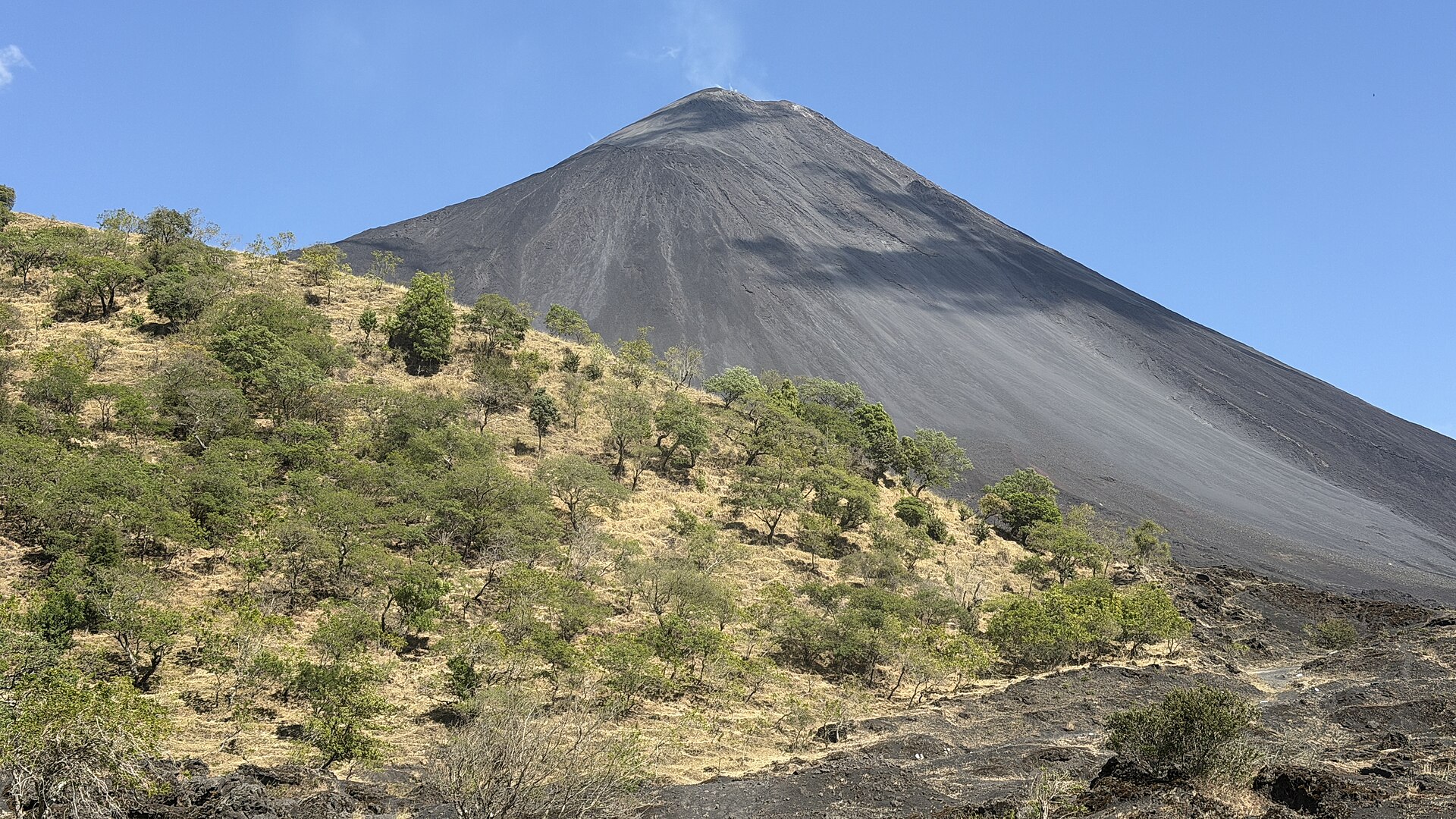
Pacaya is one of Guatemala’s most active volcanoes, a place where the earth’s raw power feels almost tangible. Rising just south of Guatemala City, it’s part of the Central American Volcanic Arc, a chain of fire that stretches from Mexico to Panama. Unlike some of its more remote counterparts, Pacaya is easily accessible, making it a popular destination for those who want to witness an eruption up close without venturing too far into the wilderness. The volcano has been in near-constant activity since the 1960s, with lava flows, ash plumes, and occasional explosions shaping its reputation as a living, breathing force of nature.
The journey to Pacaya usually begins in the town of San Vicente Pacaya, where the trailhead marks the start of a steady climb. The hike itself is moderate, taking about two hours to reach the summit, depending on the route and conditions. Along the way, the landscape shifts dramatically—from lush coffee plantations and pine forests to stark, moon-like expanses of volcanic rock. The higher you go, the more the vegetation thins, giving way to a world of blackened lava fields and steaming vents. The air grows warmer, carrying the faint scent of sulfur, a reminder that this is still very much an active volcano.
At the summit, the view is both awe-inspiring and humbling. On clear days, the panorama stretches across the Guatemalan highlands, with the distant peaks of Agua, Fuego, and Acatenango visible in the distance. But the real draw is the crater itself. Depending on the volcano’s mood, you might see rivers of molten lava snaking down the slopes, or hear the deep, rumbling growl of an impending eruption. Even when Pacaya is relatively quiet, the ground beneath your feet feels alive, with wisps of steam rising from cracks in the rock. It’s a place where time seems to slow, and the usual rules of the world don’t quite apply.
Pacaya’s activity has shaped not just the landscape but also the lives of those who live nearby. The volcano has erupted dozens of times in recorded history, with some events leaving lasting marks on the region. In 2010, a particularly violent eruption sent ash plumes thousands of feet into the air, disrupting flights and blanketing nearby towns in a fine, gray dust. Yet, despite the risks, the land around Pacaya remains fertile, thanks to the mineral-rich volcanic soil. Farmers in the area grow coffee, corn, and beans, their fields a patchwork of green against the dark slopes of the volcano. For them, Pacaya is both a threat and a provider, a force to be respected rather than feared.
The volcano has also become a symbol of Guatemala’s natural beauty and unpredictability. Unlike the more famous Acatenango, which offers a multi-day trek with overnight camping, Pacaya is often visited as a day trip, making it accessible to a wider range of travelers. The experience is less about endurance and more about immediacy—the chance to stand on the edge of an active crater and feel the heat of the earth beneath you. Guides are available in San Vicente Pacaya, and while the hike can be done independently, having someone who knows the terrain and the volcano’s behavior can make the experience safer and more informative.
One of the most striking things about Pacaya is how it changes from visit to visit. The lava flows shift, new vents open, and the shape of the crater evolves with each eruption. In some years, the volcano is relatively calm, with only minor steam emissions. In others, it puts on a spectacular show, with lava fountains lighting up the night sky. This unpredictability is part of what makes Pacaya so compelling. You never quite know what you’ll find when you reach the top, and that sense of uncertainty adds to the thrill of the hike.
For those who make the climb, the descent often feels like returning to another world. The lower slopes are cooler, the air fresher, and the sounds of birds and rustling leaves replace the deep, ominous rumble of the volcano. Back in San Vicente Pacaya, small comedores serve hot meals and cold drinks, a welcome reward after the effort of the hike. The town itself is quiet, with a few basic lodgings for those who want to linger, but most visitors head back to Guatemala City or Antigua, carrying with them the memory of a landscape that feels both ancient and ever-changing.
Pacaya is more than just a tourist attraction; it’s a reminder of the forces that have shaped Guatemala over millennia. The volcano’s eruptions have influenced everything from the country’s geography to its agriculture, and its presence looms large in the collective imagination. For locals, it’s a part of daily life, a neighbor that demands respect. For travelers, it’s a chance to step outside the ordinary and witness something primal. Whether you come for the lava, the views, or the sheer thrill of standing on an active volcano, Pacaya leaves an impression that lingers long after the hike is over.