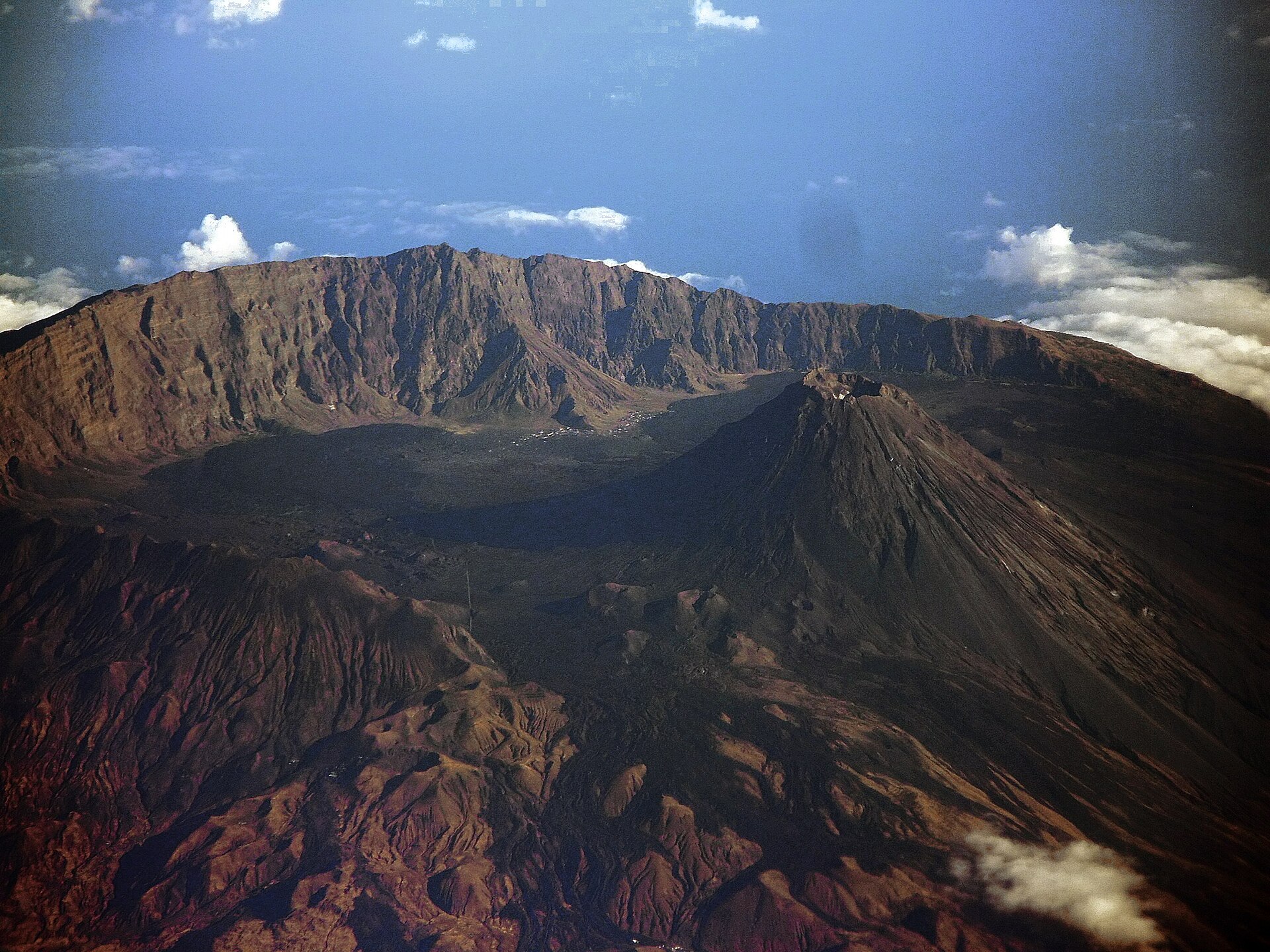
Fogo Volcano rises from the heart of its namesake island, the tallest and most dramatic in Cape Verde’s archipelago. Its steep, dark slopes dominate the landscape, a silent but unmistakable presence that shapes everything around it. From the sea, the volcano’s cone appears to split the sky, a jagged silhouette against the horizon. It’s an active force, last erupting in 2014, and its influence extends far beyond the geological—it defines the rhythm of life here, the way people farm, build, and even think about their place in the world.
The history of Fogo is inseparable from the island’s own. Settlers arrived in the 15th century, drawn by the fertile volcanic soil, and since then, the mountain has been both provider and destroyer. Eruptions have reshaped the land every few decades, forcing those who live here to adapt. Over time, the people of Fogo learned to coexist with the volcano, cultivating coffee, grapes, and tropical fruit in the rich earth. The island’s name—Fogo, meaning fire—is no accident. For Cape Verdeans, the volcano is more than a natural wonder; it’s a symbol of resilience, a reminder that life here is a balance between creation and upheaval.
Climbing Fogo is not a casual hike. The journey begins in the village of Chã das Caldeiras, nestled inside a vast caldera formed when an ancient volcano collapsed. The crater’s walls stretch nine kilometers across, enclosing a stark, almost lunar landscape of black lava fields and scattered settlements. The path to the summit winds upward over rough, uneven terrain, where the air grows thinner with each step. About halfway up, the ruins of an old observatory stand abandoned, a relic of past efforts to monitor the volcano’s activity. The crumbling structure adds a quiet sense of history to the climb, a reminder of how long people have tried to understand this place.
The summit isn’t a sharp peak but a broad plateau, with a crater nearly five hundred meters wide and a hundred and fifty deep at its center. Even years after the last eruption, the signs of activity remain—cracks in the ground, wisps of steam rising from fissures, and rivers of solidified lava that stretch like frozen waves. On clear days, the view from the top is breathtaking, a sweeping panorama of the island and the endless Atlantic beyond. More often, though, the peak is shrouded in clouds, creating the strange sensation of standing at the edge of another world, suspended between earth and sky. The silence up here is profound, broken only by the wind, and time seems to slow down.
Life in Chã das Caldeiras moves at its own unhurried pace. The village feels untouched by the outside world, its houses built from dark volcanic stone, its streets paved with the same black rock that covers the land. The people here are farmers, growing some of Cape Verde’s finest coffee and tending small vineyards where they produce a local wine with a faint, smoky edge. Despite the harsh conditions, the villagers are warm and welcoming, their lives shaped by the volcano’s presence. They speak of it not with fear, but with a quiet familiarity, as if it were an old neighbor—one you respect, even if you can never fully predict its moods.
Fogo is more than just a destination; it’s a place that demands something from those who visit. There are no crowds, no souvenir stands, no neatly marked trails. Those who make the climb do so for reasons beyond a photograph at the crater’s edge. It’s a chance to see the world stripped of pretense, where nature sets the rules and humans learn to live within them. The volcano is a reminder that the earth is alive, its power both destructive and life-giving. The same forces that once buried villages in ash also created the fertile soil that sustains them today.
To understand Cape Verde, you have to understand Fogo. The island is unlike the rest of the archipelago, where palm-fringed beaches and turquoise waters define the landscape. Here, everything is shaped by the volcano—the soil, the climate, even the culture. Local festivals, music, and food all carry traces of this unique environment. Meals are often cooked over open flames, and the wine made from the island’s grapes has a subtle smokiness, as if infused with the essence of the mountain itself. Even the language reflects this connection; proverbs and songs speak of the volcano’s moods, of patience and perseverance.
The best time to climb Fogo is in the early morning, before the heat sets in and the clouds roll in. The ascent takes several hours, and it’s not an easy one—sturdy shoes and plenty of water are essential. Local guides offer their services, and while it’s possible to go alone, their knowledge can make the journey safer and more meaningful. They’ll point out rare plants that have adapted to the lava fields, explain the volcano’s geology, and share stories of past eruptions. Their presence turns the climb into something more than just a physical challenge; it becomes a conversation with the land itself.
Fogo leaves no one indifferent. It forces you to think about time, about the raw power of nature, about the quiet strength of the people who call this place home. There’s no room for distraction here, only the vastness of the earth and the sky above. When you descend back into the village, the volcano doesn’t feel like just a mountain anymore. It’s a living thing, still shaping the island and the lives of those who depend on it. And if it erupts again, the people of Fogo will meet it as they always have—with respect, with caution, and with the understanding that life here is a cycle of destruction and renewal.