Anapa’s Breakwater: The Pier That Holds the City’s Stories
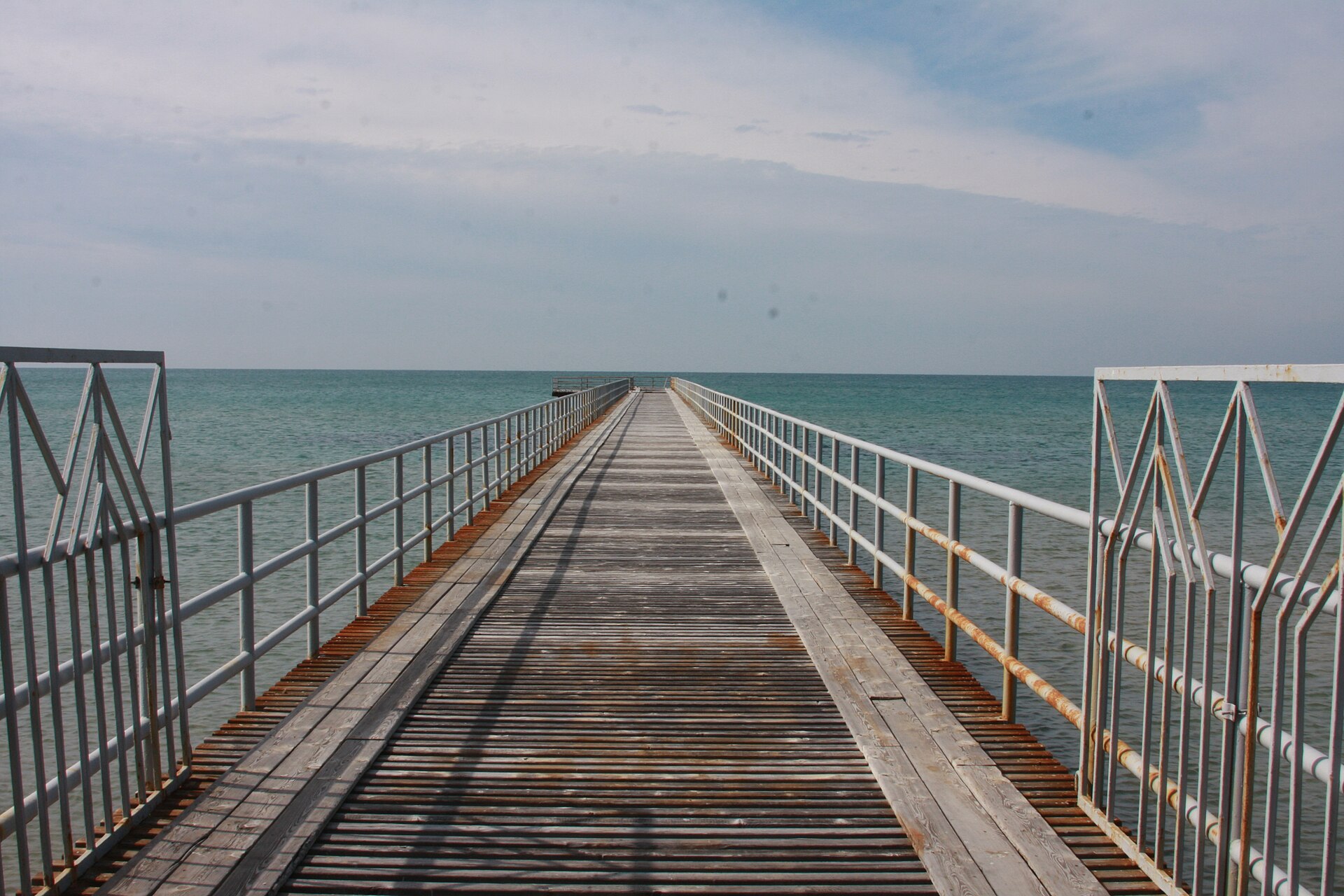
Anapa’s breakwater, often called the pier, isn’t grand or imposing. It stretches into the sea, connecting the shore to a small artificial island where a fortress once stood. The fortress is gone, but the pier remains, shaped by the people who walk it daily. Some come for photographs, others to watch the sunrise or sunset. In winter, storms turn the waves into crashing walls against the concrete, the sound rolling over the water like thunder.
The pier’s history starts in the late 19th century. Anapa was shifting from a fortified settlement to a resort town, and the breakwater was built to protect the harbor from waves and sediment. A lighthouse was added nearby to guide ships. Over time, its original purpose faded. It became a place for meetings, quiet conversations, and slow walks. During the Soviet era, it even served as a film set, standing in for stories of love and adventure.
Architecturally, the breakwater is simple—a long concrete embankment lined with stone blocks that sink into the water. At the far end, only the foundation of a small tower remains. A flagpole with the Russian flag stands there now, surrounded by benches. On clear days, the view stretches far: ships on the horizon, beaches near the shore, and the changing skyline of Anapa. The pier offers a quiet place to watch the city grow.
Summer brings families feeding seagulls, couples walking arm in arm, and fishermen casting lines. Evenings fill with laughter and guitars, the sea reflecting the promenade’s lights. In autumn and spring, the crowds thin. Solitary figures appear with books or cameras, and the sea turns restless. Winter draws those who come for storms—waves roaring against the stones, a raw, primal spectacle.
For locals, the pier is part of daily life. People walk their dogs here, jog in the mornings, or sit alone, staring at the horizon. Children know every crack in the concrete. Older residents remember their youth. The city has added benches, lampposts, and a small parking lot, but the pier keeps its weathered charm. That’s what draws those who want more than postcard views.
Despite its simplicity, the breakwater is one of Anapa’s symbols. It appears in guidebooks and postcards, often framed by a sunset. But the real experience isn’t in the photograph. Walk its length. Notice how the wind changes as you move farther from shore. Listen to the seagulls and the waves. There’s nothing grandiose about it—just the quiet pull of a place that feels like it’s always been here.
The pier isn’t just a structure. It’s a bridge between past and present—fortresses and lighthouses on one side, a modern resort town on the other. Stand here, and you can almost hear the voices of sailors from a century ago, the commands of ships, the greetings of locals welcoming vessels. Those moments are gone, but the place carries their echoes.
If you visit Anapa for more than beaches, walk the breakwater. The best times are early morning, when the city is still asleep, or late evening, when only the stars remain. Don’t rush. Stand at the edge, feel the wind, breathe the salt air. It’s in these quiet moments that Anapa’s pull makes sense—not for luxury, but for the beauty beneath the surface.