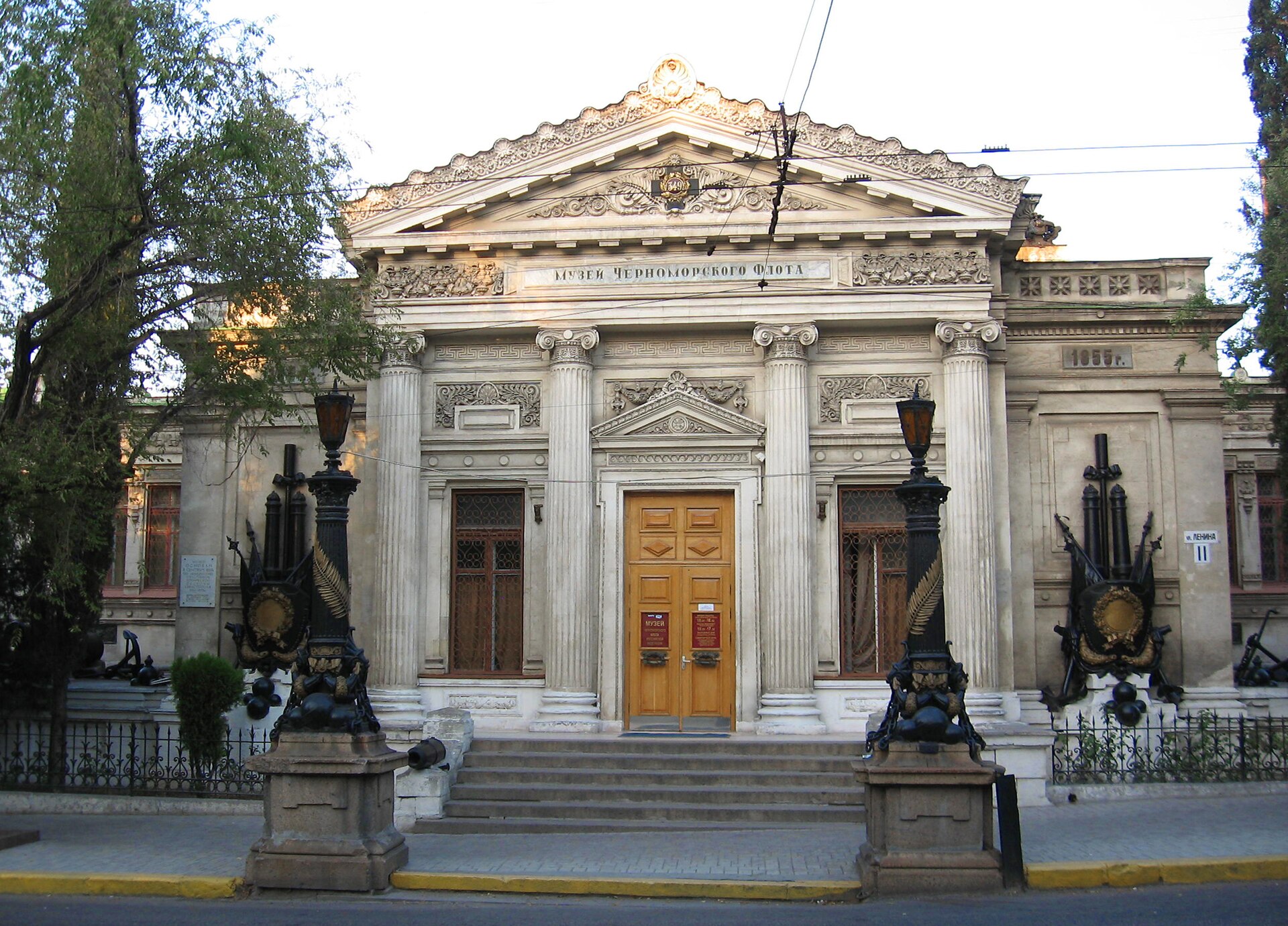
The Naval History Museum of the Russian Black Sea Fleet sits in the heart of Sevastopol, a city where the past isn’t just remembered—it lingers in the air like salt from the sea. Housed in a grand 19th-century building that once served as the Naval Assembly, a gathering place for fleet officers, the museum itself is a piece of history. Its high ceilings, intricate moldings, and large windows reflect the elegance of an era when Sevastopol was more than just a port city; it was a symbol of imperial ambition on the Black Sea. The building’s architecture alone tells a story of a time when the fleet was the lifeblood of the city, and every stone seems to echo with the footsteps of the sailors who once walked its halls.
The museum’s origins trace back to 1869, but its collection began taking shape much earlier, during the Crimean War. That conflict made it clear that the Black Sea Fleet’s history deserved a place of its own, and so the first artifacts—weapons, documents, personal belongings of those who defended Sevastopol—were gathered under fire, often in the midst of battle. Today, the museum holds over three hundred thousand items, each one a fragment of a larger narrative. From the earliest days of the fleet to the present, the exhibits weave together the threads of war, innovation, and daily life that have defined Sevastopol for centuries.
The museum’s displays cover a vast span of time, beginning with the founding of Sevastopol in 1783 and stretching into the modern era. Visitors can see ship models that range from wooden frigates to submarines, personal effects of admirals and sailors, medals, battle maps, and even fragments of uniforms from different periods. Some of the most striking exhibits are tied to the city’s two most devastating sieges: the Crimean War of 1854–1855 and the 250-day defense during World War II. Here, you’ll find cannons dredged from the harbor, shell fragments, photographs, and letters written by soldiers on the front lines. These objects don’t just document history—they bring it to life in a way that textbooks never could.
One of the most moving sections of the museum is dedicated to the Black Sea Fleet’s role in World War II. The exhibits here tell the story of Sevastopol’s heroic but doomed resistance against Nazi forces, a battle that lasted nearly a year and left the city in ruins. Personal belongings of the defenders—letters, diaries, even a child’s drawing found in the rubble—paint a vivid picture of life under siege. There’s a display devoted to the legendary cruiser *Krasny Kavkaz*, which became a symbol of the fleet’s resilience during the war. The ship’s story is one of defiance, a testament to the sailors who refused to surrender even as the odds stacked against them.
But the museum isn’t just about war. It also offers a glimpse into the everyday life of the fleet, with exhibits on navigation, shipbuilding, and the evolution of maritime technology. There are sextants, compasses, and other tools that sailors once relied on, as well as models of early steamships that revolutionized travel on the Black Sea. One particularly fascinating display shows the blueprints of ships built in Sevastopol’s shipyards, revealing the ingenuity and craftsmanship that went into constructing vessels that would shape the region’s history. These artifacts remind visitors that the fleet wasn’t just a military force—it was a community, a way of life.
The building itself is part of the experience. The interiors have been preserved to reflect their original grandeur, with marble staircases, oak paneling, and stained-glass windows depicting maritime scenes. In one of the halls, an old piano still stands, a silent witness to the evenings when officers gathered to play music and unwind. The former banquet hall, where formal receptions were once held, now houses portraits of admirals and models of ships that fought in famous battles. Walking through these rooms, it’s easy to imagine the conversations, the laughter, and the sense of camaraderie that once filled the space.
What makes this museum different from others is its unflinching honesty. There’s no glorification of war here, no attempt to soften the harsh realities of conflict. Instead, the exhibits present history as it was—messy, complicated, and deeply human. A sailor’s last letter, scribbled on a scrap of paper before a battle, or a photograph of a family huddled in a bomb shelter, serve as reminders that behind every strategic decision and every battle plan were real people with lives, dreams, and fears. The museum doesn’t just preserve artifacts; it preserves stories, and that’s what makes it so compelling.
For those who aren’t particularly interested in military history, the museum still has something to offer. It’s a place where you can spend hours poring over details, reading letters, and trying to piece together what it must have been like to live in a city that has always been on the front lines of history. Sevastopol’s identity is inseparable from its fleet, and the museum captures that connection in a way that feels intimate and personal. Whether it’s the model of a ship that once patrolled the Black Sea or a sailor’s diary entry, each exhibit adds another layer to the city’s story.
Ultimately, the Naval History Museum of the Black Sea Fleet is more than just a collection of artifacts. It’s a tribute to the people who built, defended, and rebuilt Sevastopol over the centuries. It’s a reminder that history isn’t just about dates and battles—it’s about the lives that were lived, the choices that were made, and the resilience that carried a city through its darkest moments. And perhaps that’s why the museum remains so relevant. In a world where the past is often reduced to headlines and soundbites, it offers something rare: a chance to slow down, to reflect, and to remember that history is, above all, human.