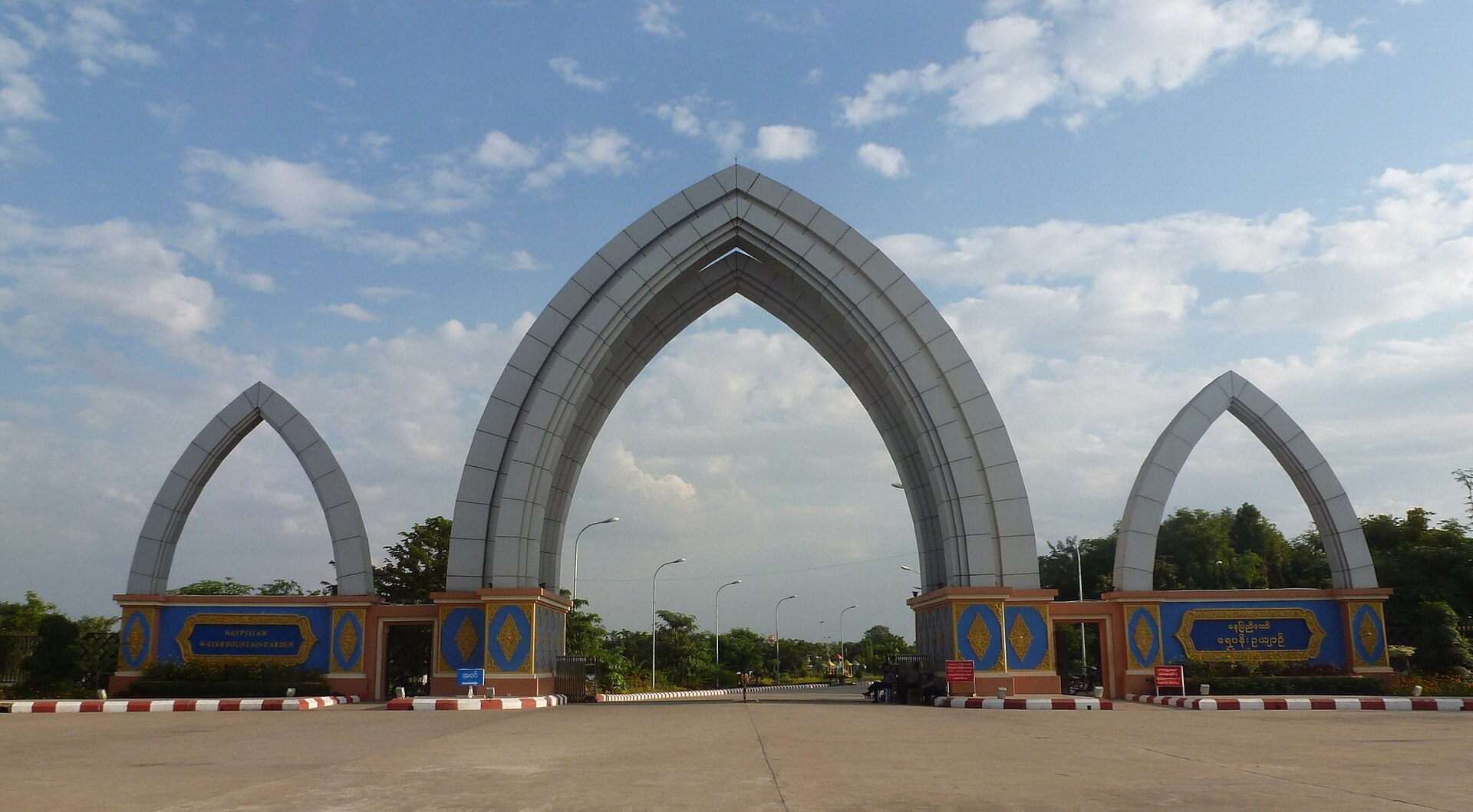
Naypyidaw’s Water Garden is one of those places built not for tourists, but for the people who call the city home. Sprawling across dozens of hectares, it was created in the mid-2000s when Myanmar’s capital moved inland from Yangon. Naypyidaw was envisioned as a city of the future, and the Water Garden became its green core—a place where grand architectural ambitions meet quiet nature. There are no crowded attractions or tourist traps here, just wide pathways, artificial lakes, and a stillness broken only by the rustle of palm leaves and the gentle lap of water.
The park is divided into distinct areas, each with its own mood. The central section features a large expanse of water with fountains that come to life in the evenings when the heat subsides. Paths lined with flowers and shrubs wind around the lake, and shaded benches offer a place to rest. Locals often visit with their families for picnics or to escape the city’s hustle. On weekends, the park fills with life—children fly kites while elders play chess under pavilions, their games unfolding in the dappled light.
Bridges play a special role in the park’s design, connecting the shores of its lakes. The most striking is a pedestrian bridge with delicate metal arches, reminiscent of European landscape architecture. It’s both functional and decorative, especially at night when lights illuminate its structure, casting shimmering reflections on the water. Another bridge, curved and wooden, leads to a small island dotted with traditional Burmese pavilions and gazebos. This is a popular spot for wedding photos, and if you’re lucky, you might see a bride in a vibrant *longyi* posing against a backdrop of blooming bushes.
The Water Garden is deeply tied to Naypyidaw’s history. When the capital relocated in 2005, the city was built from scratch, and every public space was meant to symbolize a new chapter for Myanmar. The park was originally intended as a retreat for officials and diplomats, but over time, it opened to everyone. Its design reflects a mix of influences—wide colonial-era promenades and meticulously arranged flowerbeds sit alongside Burmese touches like miniature pagodas, stone lions at the entrances, and intricately carved wooden panels depicting scenes from the *Jataka* tales.
One of the park’s most intriguing sections is its botanical area, home to plants from across Myanmar. Rare orchids bloom in greenhouses, while trees from different regions—mangroves from the Irrawaddy Delta, pines from the Shan State highlands—stand side by side. Signs along the paths label the plants in Burmese and English, turning the garden into a living classroom. In summer, the air is thick with the scent of hibiscus, jasmine, and plumeria, their fragrances mingling as the sun climbs higher.
Despite its well-kept appearance, the park has a subtle air of neglect that gives it charm. Paint peels from benches in places, grass creeps over pathways, and fountains don’t always work. It’s not a museum piece but a living space, evolving at its own pace. Locals treat it with affection, as if it were a vast backyard. There are no rigid rules here—you can sit on the grass, feed the ducks, or lie under a tree with a book, undisturbed.
The Water Garden also offers a glimpse into the rhythm of life in Naypyidaw. The city, with its planned boulevards and empty plazas, can feel artificial at times. But here, among the greenery and water, it takes on a human scale. Mornings bring yoga sessions, afternoons see school groups on field trips, and evenings fill with young people gathering in small clusters. During festivals like Thingyan or Diwali, the park comes alive with concerts, fairs, and the scent of roasted nuts drifting through the air.
For visitors, the Water Garden isn’t so much a must-see attraction as it is a chance to observe everyday life in Naypyidaw. There are no tour guides waving flags, no loudspeakers, no souvenir stalls—just quiet pathways to wander. You can spend hours watching children play, listening to birdsong, or sitting by the water, tracing the clouds’ reflections. In the heat of the day, the park is a refuge, its shade and cool breezes offering relief. And if you’re lucky, you might catch a sunset, when the sky over Naypyidaw turns shades of pink and orange, and the city’s lights begin to flicker on.