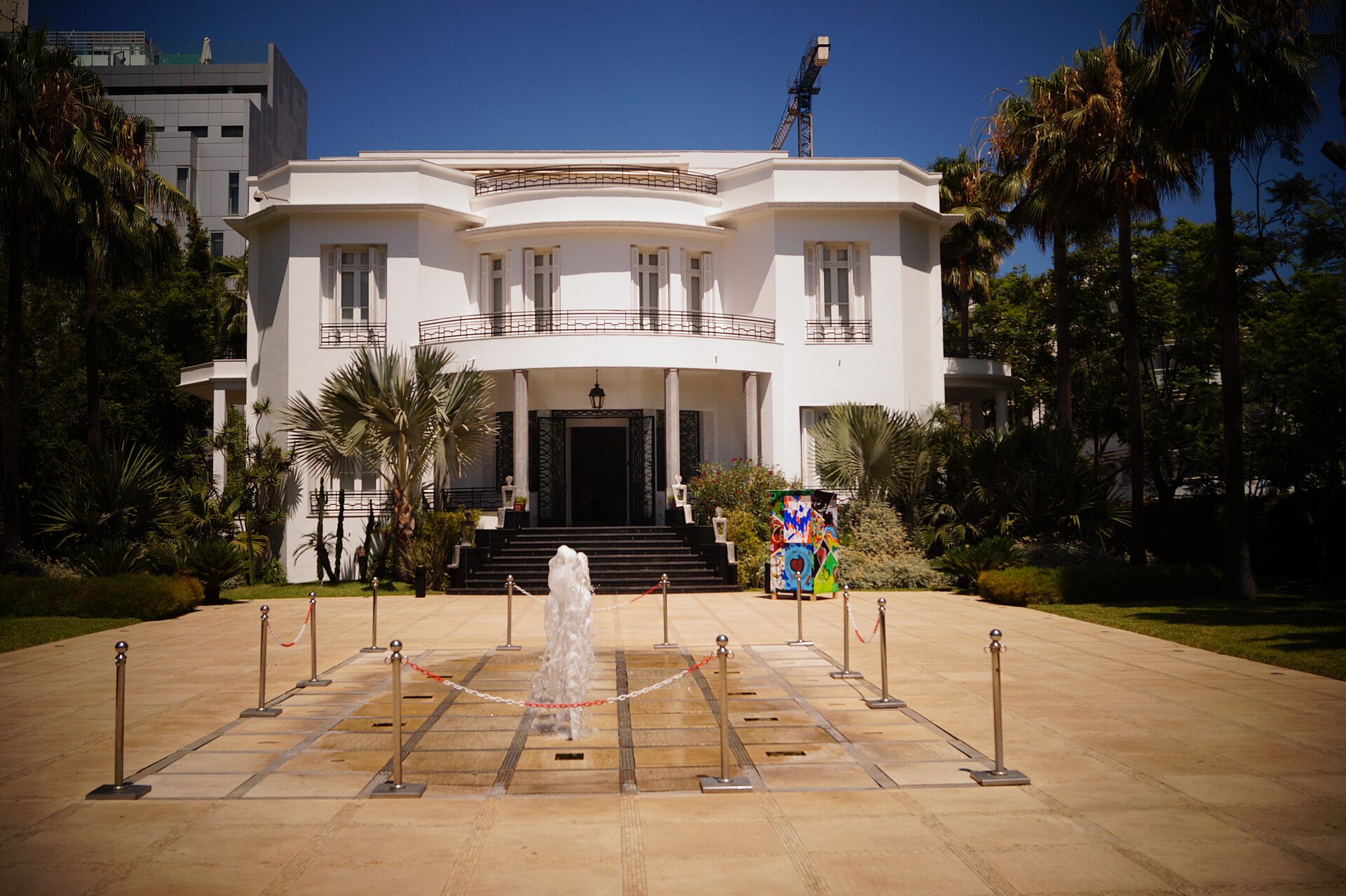
Casablanca’s Villa des Arts is one of those places where the city’s layered identity comes into focus. Tucked away in the heart of the metropolis, it occupies a building that has witnessed nearly a century of change. Originally constructed in the early 1900s as a private residence, the villa later fell into disuse before being repurposed as a cultural space. Today, it serves as a platform for contemporary Moroccan art, hosting exhibitions, workshops, and discussions that bridge local and international perspectives. The architecture itself tells a story—high ceilings, intricate mosaic floors, and carved wooden panels preserve the elegance of a bygone era, while modern lighting and installations create a dialogue between past and present.
The villa reflects Casablanca’s essence: a city where tradition and modernity coexist, often uneasily. Inside, you’ll find works that draw from Berber heritage, urban landscapes, and everything in between. Many exhibitions tackle social and political themes, turning the space into more than just a gallery—it’s a place for conversation. Beyond static displays, the villa buzzes with activity: performances, film screenings, and artist talks keep the atmosphere dynamic. There’s no rigid separation between art and audience here; visitors might stumble upon an impromptu discussion or a live painting session.
The building’s design is a study in contrasts. Its colonial-era façade, adorned with lacy ironwork and balconies, blends seamlessly with Moroccan architectural elements. The inner courtyards, with their quiet patios, evoke the intimacy of traditional homes. When the villa was restored, great care was taken to preserve these details, yet the addition of contemporary art installations ensures the space feels alive, not frozen in time. The result is a setting where history and creativity coexist without tension.
What makes the Villa des Arts special is its accessibility. Unlike some cultural institutions, it doesn’t feel exclusive or intimidating. Entry is free, and you’ll often see locals and tourists alike wandering in just to escape the city’s hustle. Some come to linger in the galleries, while others retreat to the café or one of the shaded courtyards. There’s no pressure to engage—just an invitation to observe, reflect, or simply enjoy the quiet.
Casablanca isn’t the first place that comes to mind when people think of Morocco’s cultural scene. That honor usually goes to Fez or Marrakech, with their ancient medinas and vibrant arts scenes. But in this fast-paced, commercial city, the Villa des Arts carves out a space for creativity amid the everyday. It acts as a bridge between eras and cultures, showcasing everything from experimental works by young artists to pieces that honor long-standing traditions. The villa doesn’t just display art; it nurtures it, offering a platform for voices that might otherwise go unheard.
For the local artistic community, the villa is invaluable. It provides a venue for exhibitions that commercial galleries might overlook—projects that push boundaries, explore marginalized themes, or highlight lesser-known artists. This makes it a vital hub in Casablanca’s cultural life, one that fosters dialogue and innovation. The programming is diverse, often surprising, and always rooted in a sense of place.
Visitors who come to Casablanca for its iconic landmarks—the Hassan II Mosque, the bustling markets, or the Corniche—might not expect to find a place like this. Yet the Villa des Arts offers something different: a glimpse into the city’s creative soul. There’s no touristy veneer here, no curated experience designed to impress. Instead, you’ll find art that speaks for itself, whether it’s a photography series documenting the lives of Moroccan women or abstract canvases inspired by the desert. If you’re lucky, you might catch an exhibition that lingers in your mind long after you’ve left.
What sets the villa apart is its lack of pretension. It’s not a grand museum with rigid rules, nor is it a chaotic market stall. It’s simply a quiet space where history and modernity coexist without fanfare. Here, you can see how Casablanca isn’t just Morocco’s economic powerhouse—it’s also a city with a rich, evolving cultural life. If you find yourself in the area during an exhibition or event, it’s worth stepping inside. You might just discover a side of Morocco you didn’t expect.