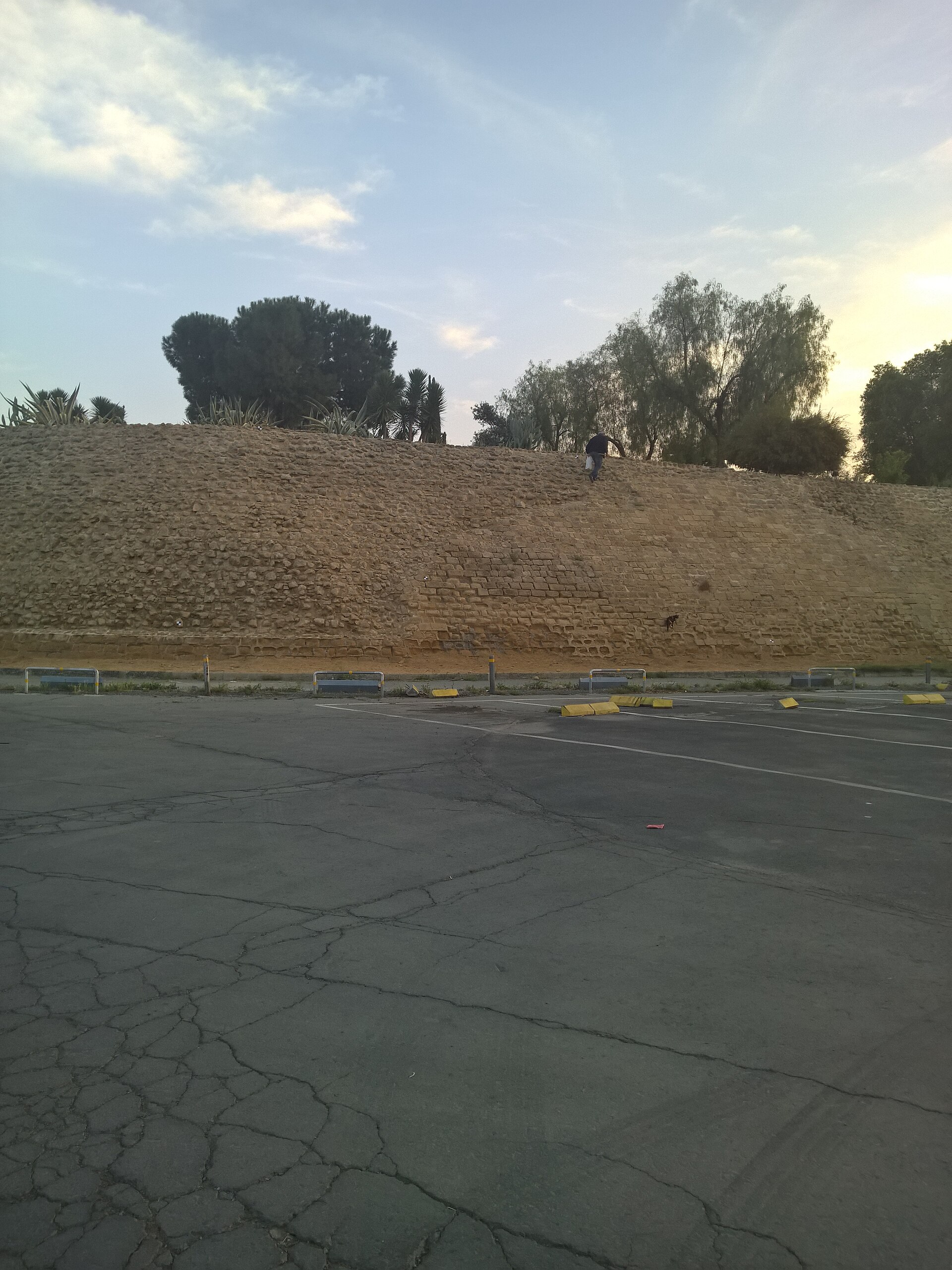
The fortifications in Nicosia are among the few surviving examples of Renaissance military design in the eastern Mediterranean. Built in the 16th century under Venetian rule, they were meant to shield the island’s capital from Ottoman attack. The walls form a near-perfect circle around the old city, their star-shaped bastions jutting outward. Walk along the weathered stone paths, and you’ll notice how every angle and curve was planned for defense.
Earlier medieval defenses had failed. When the Venetians arrived, the city was already valuable. The new walls took nearly three years to build, with thousands of laborers hauling limestone from nearby quarries. At their peak, they stood twelve meters high and were surrounded by a deep moat. The moat is gone, but the walls remain, their scale still evident despite centuries of wear.
These walls have survived empires and modern conflicts. After the Ottomans took Cyprus in 1570, they added minarets to some bastions and converted others into mosques. Under British rule, parts were modified or removed for roads and urban expansion. Yet the core structure endured, a rare constant in a city marked by upheaval.
The old city within the walls is still Nicosia’s center. Narrow streets wind past Ottoman houses, Byzantine churches, and Venetian palazzos. Some bastions now hold cafes, small museums, or cultural centers. Others stay quiet, their grassy slopes offering a place to sit. The Podocataro Bastion, named after a Venetian noble family, is a favorite spot for locals and visitors.
The walls also frame Nicosia’s division. The city remains split by a UN-patrolled buffer zone, with the walls marking the boundary between the Greek Cypriot south and the Turkish Cypriot north. In some places, you can stand on the ramparts and see both sides—barbed wire and abandoned buildings on one, streets and cafes on the other. The contrast is stark.
The stone, worn smooth by time, glows in the late afternoon light. The bastions cast long shadows. There’s a sense of permanence here, as if the walls have always been part of the city. Even modern buildings pressing against them seem to acknowledge their presence, their facades reflecting the old stone.
Explore the walls on foot. Start anywhere—perhaps near the Famagusta Gate, the best-preserved of the original three, where a small museum explains the city’s history. From there, the path leads along the top, offering views of rooftops, church domes, and distant mountains. The walk isn’t long, but it invites pauses—to read a plaque or take in the view.
This isn’t a polished tourist site. There are no guided tours or gift shops. The walls feel like a shared secret, preserved without fanfare. That makes them compelling. They don’t demand attention; they simply stand, as they have for centuries.
In a way, the Venetian Walls reflect Nicosia itself—resilient, unassuming. They’ve seen empires rise and fall, yet they remain. For those who look closely, they reveal how history shapes the places we live.