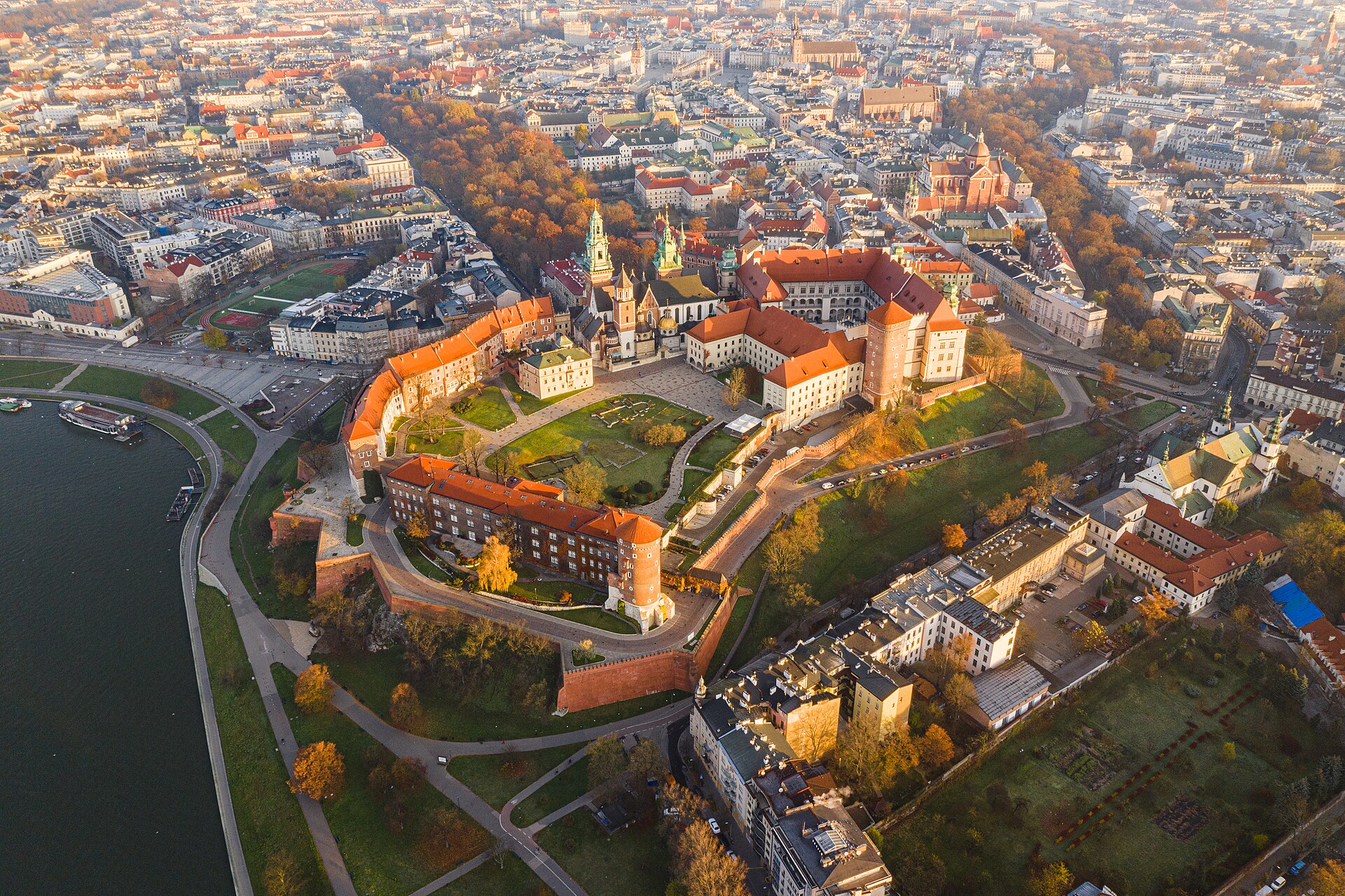
Wawel is more than just a hill rising above the Vistula River—it’s the living heart of Kraków, where history, myth, and everyday life intertwine. For centuries, this elevated ground, once an island, served as the seat of Polish kings and a symbol of the nation’s identity. Today, the Wawel complex is a layered tapestry of cathedrals, palaces, and courtyards, each stone whispering stories of a time when Kraków was the capital of Poland. Walking through its grounds, you can almost hear the echoes of coronations, the murmur of royal councils, and the footsteps of those who shaped the country’s fate. The rustling leaves in the old park, the worn cobblestones underfoot, and the grand facades that have witnessed wars and celebrations all make the past feel tangible.
The architecture of Wawel is a chronicle of changing styles and eras, each building reflecting the ambitions of its time. The oldest structure here is the Romanesque rotunda of the Virgin Mary, built in the 10th century when Poland was still taking shape as a nation. Later, during the Renaissance, the royal castle emerged as a masterpiece of Central European design, its arcaded courtyards and intricate frescoes bearing the influence of Italian craftsmen. The Cathedral of Saints Stanislaus and Wenceslaus, where Polish monarchs were crowned, is a fusion of Gothic, Baroque, and Neoclassical elements, mirroring the evolving tastes of the rulers who expanded and embellished it. Every corner of Wawel tells a story of power, faith, and artistic ambition.
Legends cling to Wawel like ivy to its ancient walls. The most famous is that of the Wawel Dragon, a beast said to have terrorized the city until a clever shoemaker tricked it into devouring a sheep stuffed with sulfur. The dragon, overcome by thirst, drank from the Vistula and burst, leaving behind a cave at the foot of the hill. A statue of the creature now stands near the riverbank, a playful nod to the tale that has been passed down through generations. Another legend speaks of King Sigismund the Old, who commissioned a chapel in honor of his beloved wife, creating one of the finest examples of Renaissance architecture in Poland. These stories, whether true or not, are woven into the fabric of the place, giving it a sense of magic that lingers in the air.
For Poles, Wawel is far more than a tourist attraction—it’s a national shrine. The cathedral and its crypts hold the remains of kings, poets, and heroes, from Bolesław the Brave to Tadeusz Kościuszko. The tombs of monarchs line the walls, their names etched into the country’s history, while the sarcophagi of saints draw pilgrims seeking solace. One of the most visited is the grave of Józef Piłsudski, the founder of modern Poland, whose legacy is honored with a permanent flame. For many Poles, a visit to Wawel is a pilgrimage of sorts, a way to connect with the past and pay respects to those who shaped the nation.
Yet Wawel is not a relic frozen in time. It remains a vibrant part of Kraków’s cultural life, hosting museums, exhibitions, and performances. In summer, the courtyards come alive with medieval music festivals and knightly tournaments, while winter transforms the hill into a quiet, snow-dusted wonderland. Locals often stroll through the grounds, sitting on benches by the river or admiring the city’s skyline from the hilltop. The place feels lived-in, not just preserved, with children playing on the lawns and artists sketching the ancient facades.
What makes Wawel special is how seamlessly the past blends with the present. You can spend hours wandering through the royal chambers, studying the faded portraits of kings and the intricate tapestries that once adorned their walls. Or you might descend into the underground vaults, where the echoes of history feel almost audible. But sometimes, the simplest moments leave the deepest impression—sitting on the cathedral steps, watching the sunlight glint off the Vistula, or listening to the laughter of visitors posing with the dragon statue. In these quiet instances, it becomes clear that Wawel isn’t just a monument to Poland’s history. It’s a place where that history is still being written, one day at a time.