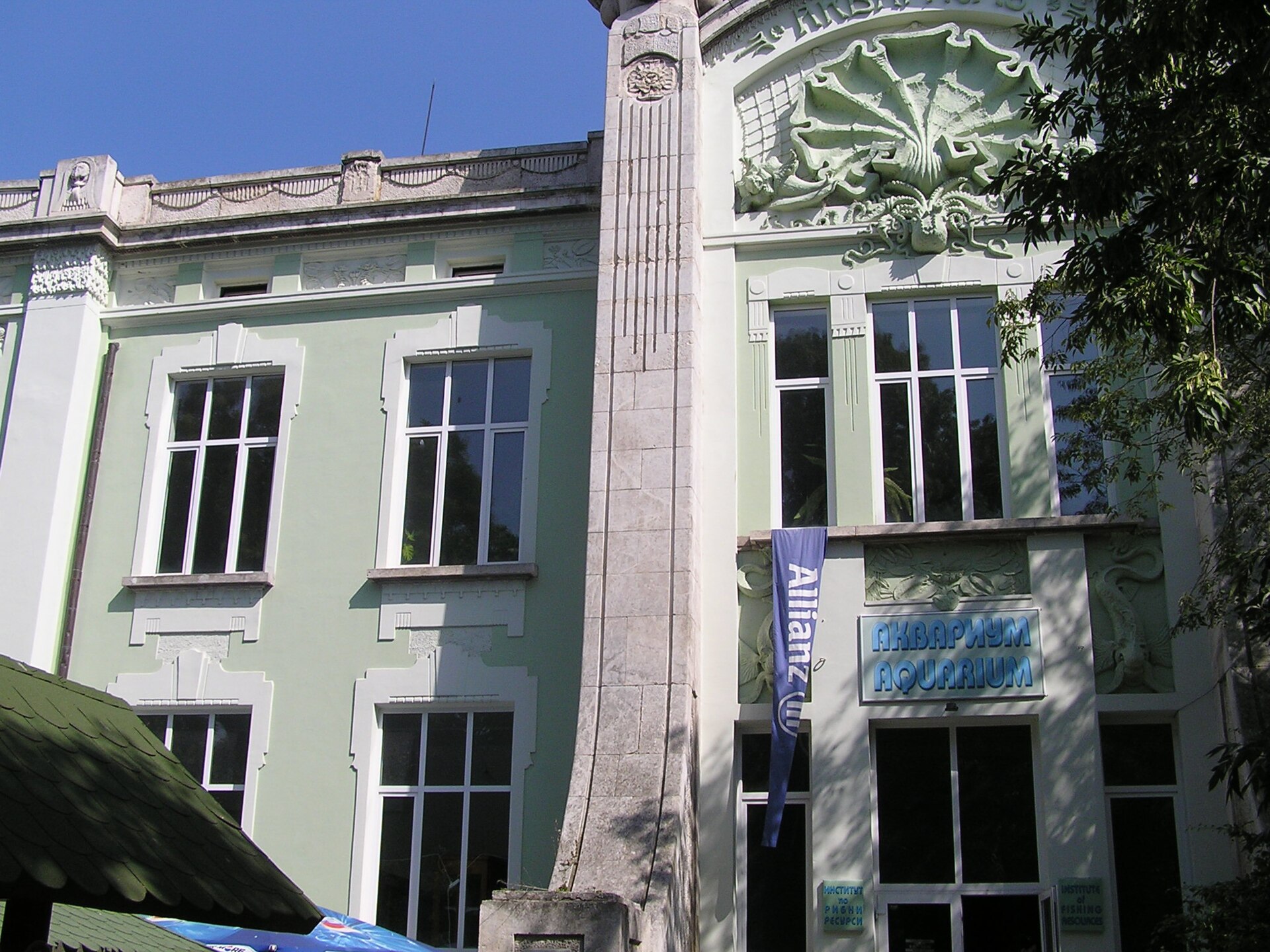
Varna’s Aquarium is one of those quiet places that doesn’t announce itself with flashy signs or crowds, yet it has been part of the city’s fabric for nearly a century. Opened in 1932, it was the first of its kind in Bulgaria, a modest but ambitious project that grew out of the country’s early scientific curiosity about the Black Sea. The building itself is unassuming—a low, whitewashed structure near the sea garden, its architecture blending into the coastal landscape rather than standing out. Inside, the air carries the faint saltiness of the sea, mingling with the cool humidity of tanks that have housed marine life for generations.
The aquarium’s origins are tied to the vision of a few Bulgarian scientists who wanted to study and showcase the Black Sea’s biodiversity. At the time, the idea was novel; most people in the region knew the sea as a place for fishing or swimming, not as an ecosystem worth examining up close. The early exhibits were simple, focusing on local species like turbot, mullet, and the occasional seahorse. Over the decades, the collection expanded, though it never grew into the kind of sprawling, high-tech attraction found in larger cities. Instead, it retained a certain intimacy, a place where visitors could observe fish in dimly lit tanks without the distraction of interactive screens or loud announcements.
What makes the Varna Aquarium distinct is its focus on the Black Sea. Unlike aquariums that import exotic species from distant oceans, this one has always prioritized the waters just beyond its walls. The tanks hold creatures that locals might recognize from fishing trips or summer swims—sturgeon, jellyfish, and the small, darting fish that flicker near the shore. There’s a practicality to it, almost like a living field guide to the sea that borders the city. For many Bulgarians, especially those who grew up near the coast, the aquarium serves as a reminder of the marine life that exists just beneath the surface, often overlooked in favor of the sea’s more obvious pleasures.
The building’s design reflects its age. The entrance leads into a narrow hallway lined with old photographs and faded informational panels, some of them still in Bulgarian and Russian, a nod to the decades when Varna was a favored destination for Soviet tourists. The tanks themselves are arranged in a way that feels more functional than theatrical, with labels that are straightforward rather than dramatic. There’s no grand narrative here, no attempt to turn the visit into a spectacle. Instead, the experience is understated, almost meditative—watching a school of fish drift lazily in the current or a crab scuttle along the bottom of a tank can feel like a small, private moment.
Over the years, the aquarium has weathered its share of challenges. Funding has always been tight, and there have been periods when the exhibits looked a little worn, the paint on the tanks slightly chipped. Yet it has endured, partly because of the dedication of the staff and partly because it fills a niche that no other institution in Varna does. It’s not a place for thrill-seekers or those looking for Instagram-worthy backdrops, but for anyone curious about the sea that shapes the city’s identity, it offers something rare: a chance to see the Black Sea’s inhabitants up close, without the noise of a crowded beach or the distraction of a bustling promenade.
The aquarium’s location in the Sea Garden adds to its charm. After a visit, it’s easy to step outside and walk along the paths that wind through the park, where the scent of pine mixes with the salt air. The sea is always visible from here, its surface shimmering under the sun or gray and restless on windy days. The contrast between the controlled environment of the tanks and the vast, unpredictable expanse of the Black Sea just beyond the trees is striking. It’s a reminder that the aquarium, for all its quiet presence, is just a small window into a much larger world.
For visitors from outside Bulgaria, the aquarium might not be the main reason to come to Varna, but it’s one of those places that lingers in the memory. There’s a sense of authenticity to it, a lack of pretense that’s increasingly rare in tourist attractions. It doesn’t try to be anything other than what it is—a modest, enduring institution that has quietly documented the life of the Black Sea for nearly a hundred years. In a city that has seen waves of development and change, the aquarium remains a steady, unassuming presence, a place where the sea’s mysteries are preserved, one tank at a time.