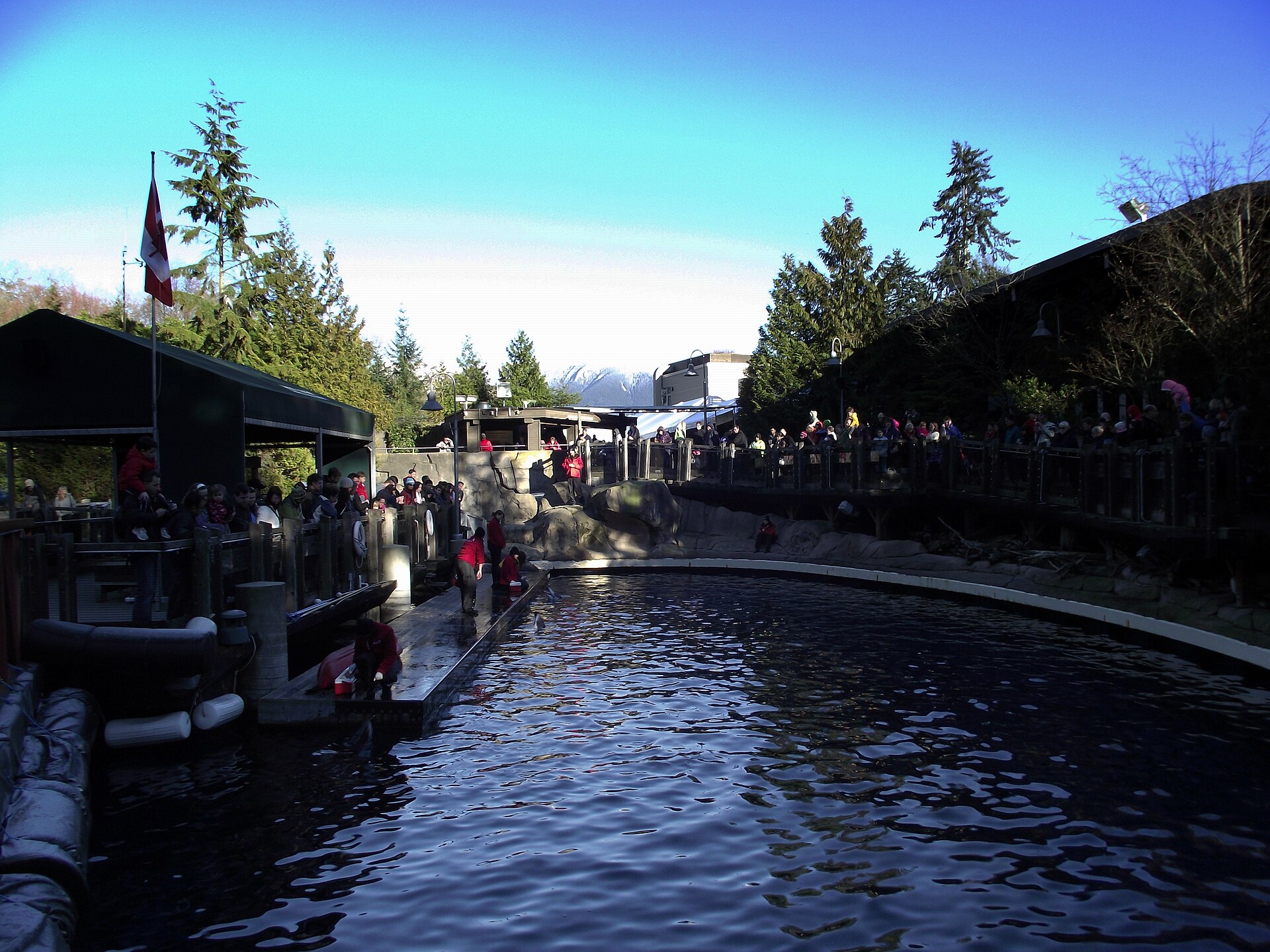
Vancouver Aquarium sits where the city and the ocean meet—not just at the edge of a shoreline, but where the mysteries beneath the waves become visible. Tucked into the heart of Stanley Park, it feels less like a building and more like a natural extension of the landscape, a place where the boundaries between land and sea blur. Since opening in 1956, it has grown from a local attraction into something far more meaningful: a hub for marine research, conservation, and education. Here, the ocean isn’t just observed—it’s studied, protected, and shared with those who might otherwise never see its depths.
The architecture doesn’t demand attention. Instead, it quietly settles into the park, with low wooden structures and glass walls that let the surrounding trees and light filter through. Inside, the spaces flow like water, guiding visitors from one ecosystem to the next. You might start in the cool, dimly lit halls of the Arctic, where seals glide through icy-blue pools, then move to the vibrant chaos of a tropical reef, where clownfish dart between coral branches. Each exhibit tells a different story, but together they weave a larger narrative about how deeply human life is tied to the ocean—and how fragile that connection really is.
The aquarium has long been a place to encounter the marine life of the Pacific Northwest, a region where cold waters teem with unexpected color and diversity. Sea lions bask on rocky platforms, salmon navigate currents that mimic their natural migration routes, and anemones cling to submerged logs. For many visitors, these are the first glimpses of the creatures that inhabit the waters just beyond Vancouver’s shores. The experience can be surprising—who expects to find such richness in what seems, from the surface, like a dark and inhospitable world? Even the temporary residents, like rescued orcas or injured sea turtles, serve as reminders of how human activity shapes these ecosystems, for better or worse.
The tropical galleries offer a stark contrast to the local exhibits. Here, warmth and light fill the air as fish in electric blues and yellows weave through coral formations. The beauty is undeniable, but so is the fragility. Corals grow at a glacial pace, yet they can be destroyed in moments by rising temperatures or pollution. The aquarium doesn’t just showcase these environments; it explains why they matter, how they’re threatened, and what can be done to protect them. Staff members often linger near the tanks, answering questions or demonstrating how they care for the animals, turning a casual visit into something more thoughtful.
One of the aquarium’s most compelling roles is its work in rescue and rehabilitation. It’s one of the few places in the world where injured or stranded marine animals—seals, sea turtles, even dolphins—are nursed back to health with the goal of returning them to the wild. Visitors might witness the slow process of recovery, from initial treatment to the moment an animal is released. These stories stay with people long after they leave, not just because they’re moving, but because they show how science and compassion can make a tangible difference.
For children, the aquarium is a place of wonder. Touch pools let them handle starfish and crabs, while interactive displays break down complex ideas into simple, engaging lessons. But the experience isn’t just for kids. Even seasoned aquarium-goers find something new here, whether it’s the mesmerizing drift of jellyfish in a darkened gallery or the eerie glow of deep-sea creatures that seem plucked from another planet. The exhibits don’t just entertain—they invite curiosity, asking visitors to look closer, to question, and to care.
Beyond the tanks and displays, the aquarium serves as a space for broader conversations about the ocean’s future. Lectures, temporary exhibits, and public programs tackle issues like plastic pollution, climate change, and overfishing. The staff aren’t just caretakers; they’re researchers and advocates, working on projects that extend far beyond Vancouver. A visit here can be the first step toward understanding how everyday choices—what we buy, how we travel, what we throw away—ripple outward, affecting ecosystems thousands of miles away.
Stanley Park itself is worth lingering in long after the aquarium visit ends. The trails wind through towering cedars, the ocean crashes against the shore, and the air carries the scent of salt and pine. The aquarium feels like a natural part of this landscape, a place where the city’s pulse slows to match the rhythm of the tides. It’s not just about seeing animals in tanks; it’s about recognizing the ocean’s presence in our lives, even when we’re far from its shores. That connection, once noticed, is hard to ignore.