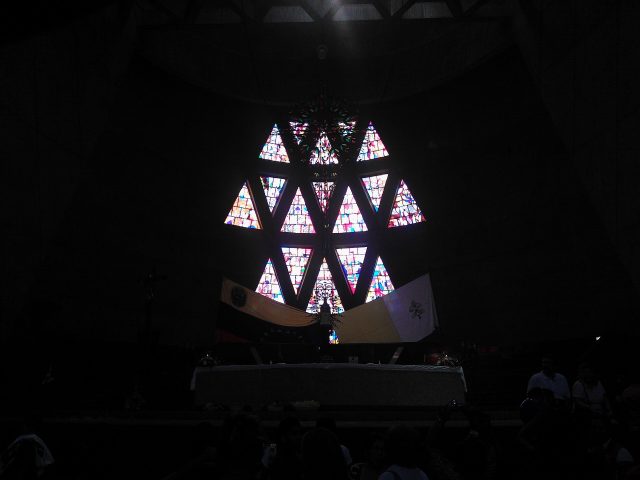
Guanare is a quiet city in the Venezuelan llanos, best known as the spiritual heart of the country. It’s where the Basilica of Our Lady of Coromoto stands, drawing pilgrims from across Venezuela who come to pay their respects to the nation’s patron saint. But beyond its religious significance, Guanare plays another important role—as an educational hub for the region. At its center is the Universidad Ezequiel Zamora, one of the oldest and most respected universities in western Venezuela.
The university is named after Ezequiel Zamora, a 19th-century military and political leader whose legacy still shapes the country’s identity. Zamora fought for the rights of peasants and was a key figure in the Federal War, a conflict that redefined Venezuela’s future. His name isn’t just a tribute here; it represents the university’s commitment to social justice and regional progress. Founded in the mid-20th century, the institution was designed to train professionals who could drive agricultural and economic development in the llanos, the vast plains that have long been the backbone of Venezuela’s economy.
The university’s campus reflects both its practical purpose and its symbolic mission. The buildings are low and sprawling, with large windows and open courtyards—a style typical of mid-century educational architecture, where the focus was on creating spaces that encouraged learning and interaction. The grounds are lush with greenery: palm trees, flowering shrubs, and well-kept lawns soften the harsh llanos climate, making the campus a pleasant place to walk even in the heat of the day. The most striking structure is the central administrative building, with its neoclassical colonnade, housing the library and offices. It’s dignified without being grandiose, a fitting reflection of the university’s values.
Today, the Universidad Ezequiel Zamora is more than just a place of learning; it’s a research center with deep ties to the region. The university focuses on agriculture, veterinary science, ecology, and social studies—fields that directly impact the llanos, where cattle ranching and farming remain vital to the local economy. Researchers collaborate with farmers, agribusinesses, and government agencies to introduce new technologies and address pressing challenges. For example, they develop sustainable grazing methods to combat overuse and drought, or study ways to prevent livestock diseases common in the tropical climate.
Student life in Guanare is far removed from the hustle of Caracas or Maracaibo. There are no subways, skyscrapers, or 24-hour cafes, but the city has its own unhurried rhythm, shaped by the llanos. Mornings start early, the afternoons slow under the relentless sun, and evenings come alive in plazas and parks. Students often gather in the university’s shaded courtyards to study or chat, while weekends might bring trips to nearby ranches or the Portuguesa River. Some venture further, exploring national parks like Aguaro-Guariquito, where wildlife roams freely in its natural habitat.
Though Guanare is small, the university plays a significant role in its cultural life. The campus hosts conferences, exhibitions, and concerts that attract not just students but also locals. Events celebrating the history and traditions of the llanos are especially popular—folk music festivals, poetry readings in the local dialect, and craft fairs. The university also maintains connections with Indigenous communities, such as the Yaruro people, studying their language, customs, and traditional knowledge. This isn’t just academic work; many students come from rural backgrounds themselves, bringing firsthand experience of the region’s challenges and strengths.
For travelers visiting Guanare, the university offers a glimpse into the real Venezuela beyond the tourist trail. There are no flashy attractions here, just the quiet pulse of provincial life. Visitors can wander the campus, browse the library’s collection of rare books on llanos history, or simply sit on a bench under a tree, watching students hurry to class. The university occasionally offers guided tours for guests, and if you’re lucky, you might join one.
Guanare and its university embody the idea that education should serve the needs of the community. Here, students don’t just gain abstract knowledge; they learn skills they can put to use in the llanos. Many graduates stay in the region, becoming teachers, agronomists, veterinarians, or officials who understand the area’s problems firsthand. In that sense, the Universidad Ezequiel Zamora carries forward the mission of its namesake—not just advancing science, but serving the people who call this land home.