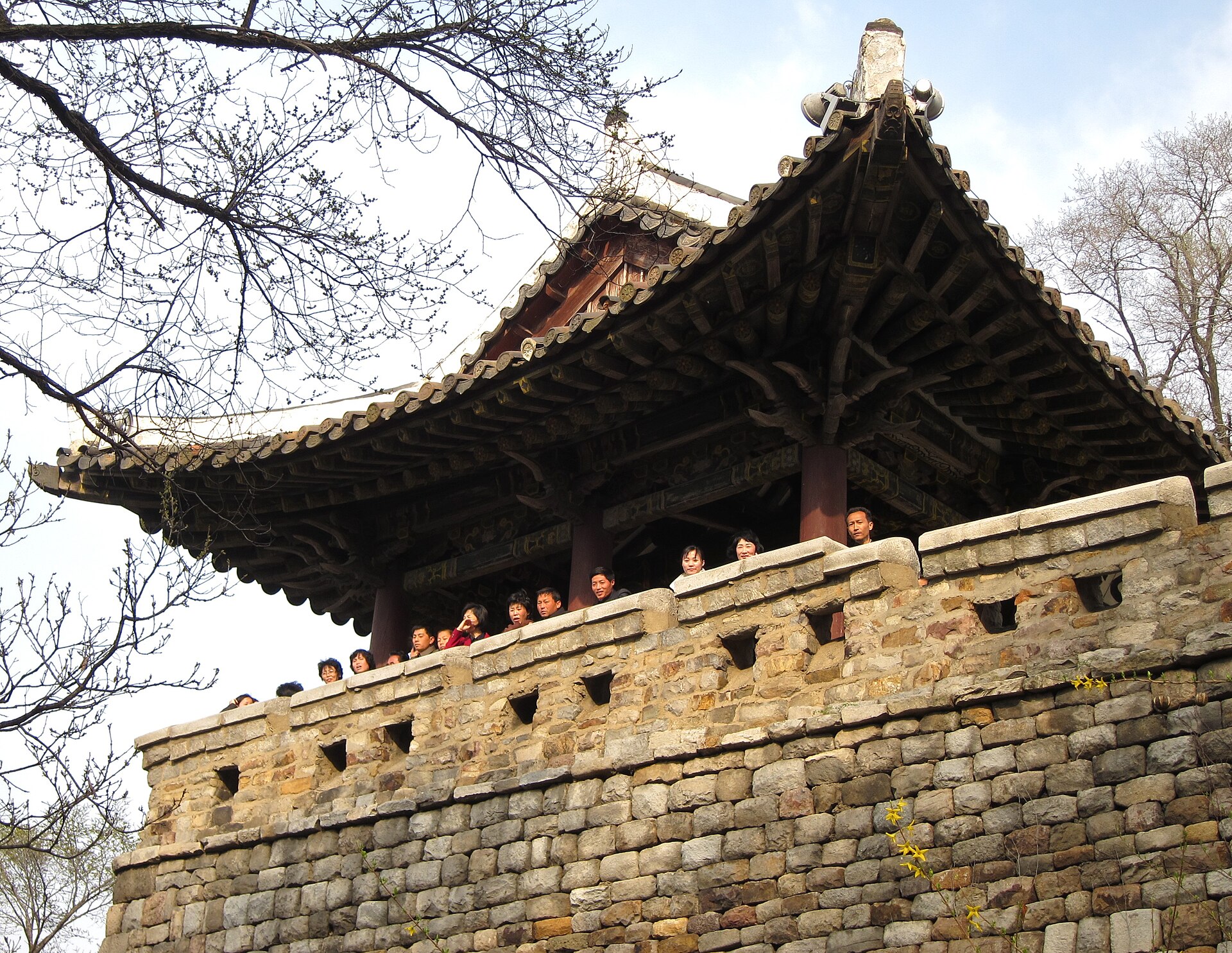
Perched on a gentle rise in the heart of Pyongyang, Ulmil Pavilion is one of those rare places where the weight of history lingers in the air. From its wooden terrace, the city unfolds in layers—wide boulevards stretching toward the horizon, the slow curve of the Taedong River, and the towering monuments that define the skyline. Unlike the more famous landmarks that draw crowds, Ulmil feels like a quiet witness to centuries of change, a spot where the past isn’t just remembered but still breathes.
Built in the mid-16th century, the pavilion was originally a military lookout, its name translating roughly to the "Pavilion of Victory Song." During the Japanese invasions, commanders stood here to track enemy movements, and later, celebrations of hard-won battles echoed within its walls. The structure itself is a classic example of traditional Korean architecture: a two-tiered wooden frame with a gracefully upturned roof, its eaves adorned with carvings of dragons and phoenixes—symbols of power and renewal. The dark, weathered pillars still hold firm, their stone bases as solid as the day they were laid, a testament to the craftsmanship of another era.
Inside, little remains of the original furnishings, but the space invites imagination. The walls bear inscriptions in hanja, the classical Chinese script once used across Korea, some commemorating military triumphs, others reflecting on the nature of war and peace. One plaque honors Admiral Yi Sun-sin, the revered naval commander whose victories are celebrated nationwide, though he never set foot in Pyongyang. His legacy, like the pavilion itself, transcends geography, tying the city to a broader national story.
Over time, Ulmil’s role shifted from military outpost to cultural gathering place. During the Joseon Dynasty, scholars and poets met here to debate literature and statecraft, while official ceremonies marked royal birthdays and the completion of city fortifications. Today, it stands more as an architectural monument than an active venue, though its cultural significance endures. On national holidays, small events are held here, and locals often visit to sit on the benches, gazing out at the city below.
The pavilion is surrounded by a park where paths wind beneath shady trees and a small pond reflects the sky. Scattered among the greenery are stone steles, their surfaces etched with poems and historical accounts. One tells of a 17th-century fire that destroyed the pavilion, only for it to be rebuilt by royal decree. Another recounts how, during the Japanese occupation in the early 20th century, the site became a quiet act of resistance—a place where Korean traditions were preserved despite colonial restrictions. These stones are more than markers; they’re fragments of a larger narrative, stitching together the story of Pyongyang itself.
Ulmil’s location makes it a natural starting point for exploring the city’s layered history. Just a short walk away stands Pyongyang Fortress, one of Korea’s oldest, while the towering Arch of Triumph looms in the distance, a 20th-century monument to resistance. The pavilion, modest in scale, bridges these eras, offering a glimpse of how Pyongyang has been shaped by conflict, reconstruction, and memory.
Visiting Ulmil is a low-key affair. There’s no admission fee, no grand entrance—just the quiet hum of the city fading into the background. Mornings and late afternoons are the best times to come, when the light is soft and the shadows deepen the contours of the woodwork. On some days, school groups file through, their voices rising in recitation, while elderly locals gather nearby, playing janggi, the Korean chess game, under the trees. In these moments, the pavilion feels less like a relic and more like a living part of the city, where the past isn’t just preserved but still in conversation with the present.
From the upper terrace, the view extends beyond Pyongyang’s boundaries on clear days—rolling hills, distant fields, and the faint outline of mountains. It’s a reminder that the city is more than its political identity; it’s a place with roots stretching back centuries, where every corner holds a story. Ulmil Pavilion, with its weathered wood and silent stones, is one of those stories—a quiet anchor in a city that has seen so much change.