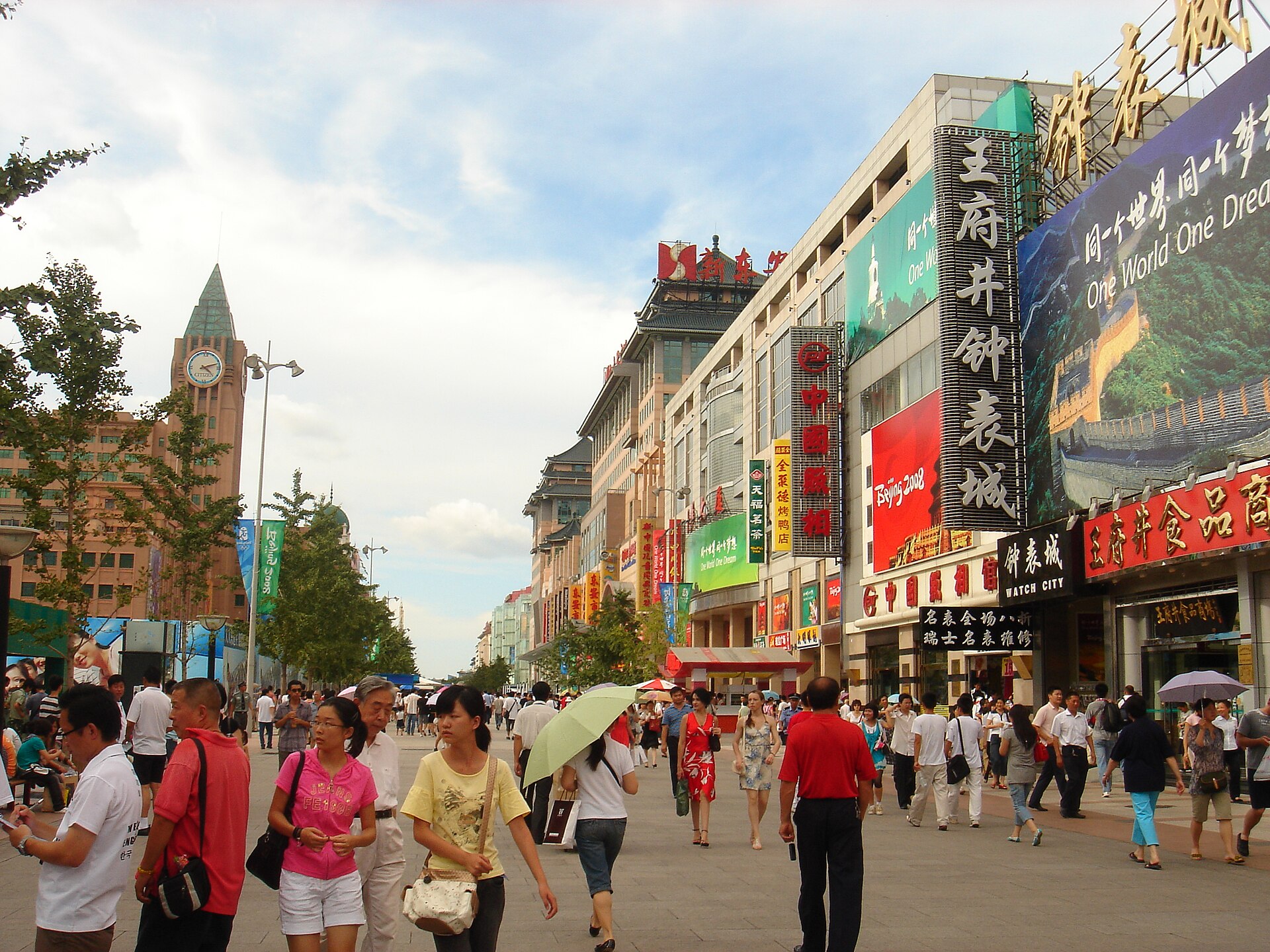
Wangfujing Street is one of those rare places in Beijing where the past and present don’t just coexist—they intertwine so seamlessly that time itself seems to bend. Stretching north to south through the heart of the city, this pedestrian thoroughfare is more than a shopping destination; it’s a living record of Beijing’s transformations. Here, the grandeur of imperial China brushes shoulders with the energy of a modern metropolis, where neon signs flicker above century-old eaves and the scent of street food mingles with the hum of a global city. Wangfujing isn’t a museum frozen in time. It’s a place where history isn’t just preserved—it’s still being written, one step at a time.
The street’s origins trace back to the Ming Dynasty, when artisans and merchants settled here to serve the imperial court. Beginning near the Dong’anmen Gate, which led to the Forbidden City, Wangfujing—then called Wangfudajie, or "Street of Ten Thousand Fortunes"—slowly filled with workshops and stalls. By the late Qing Dynasty, it had earned a reputation as the place to find everything from silk and porcelain to rare medicines and delicacies. Foreign traders soon arrived, bringing goods from Europe and America, and for many Beijingers, Wangfujing became a window to the outside world. The street’s name reflected the hopes of its visitors: a wish for prosperity, luck, and the kind of abundance that only a bustling marketplace could offer.
The early 20th century brought Wangfujing its golden age. After the fall of the Qing Dynasty and the establishment of the Republic of China, the street became a symbol of Beijing’s modernization. Department stores, cinemas, and cafés sprang up, while paved sidewalks replaced dirt paths. By the 1920s, Wangfujing had transformed into a gathering place for intellectuals and young people, where newspapers were read over coffee and new ideas were debated in the open air. Some of the city’s most famous restaurants opened during this time, serving dishes once reserved for emperors—many of which are still on the menu today. The street wasn’t just a commercial hub; it was a cultural crossroads, shaping the identity of a changing capital.
When the People’s Republic of China was founded in 1949, Wangfujing entered a new phase. Private shops gave way to state-run department stores and cooperative markets, and during the Cultural Revolution, the street, like the rest of Beijing, was swept up in ideological campaigns. Yet even then, it remained a destination for locals, a place where the pulse of the city could still be felt. The 1980s brought economic reforms, and with them, a revival. Joint ventures and international brands appeared, and in 1999, Wangfujing became a fully pedestrian zone, cementing its status as one of Beijing’s most visited landmarks.
Today, Wangfujing offers a snapshot of China’s contradictions and continuities. Luxury boutiques stand alongside stalls selling traditional candied hawthorn, while a gleaming shopping mall’s glass façade overlooks a temple with walls darkened by centuries of smoke. The street comes alive at night, when neon lights cast a warm glow over the crowds, and the air is thick with the smells of sizzling skewers, spices, and freshly baked bread. Tourists snap photos of the vibrant scene, families stroll with children in tow, and street musicians play melodies that have echoed here for generations.
One of Wangfujing’s most famous attractions is its night market, a chaotic but captivating stretch of food stalls in the northern part of the street. Here, adventurous eaters can sample delicacies that might raise eyebrows elsewhere: fried scorpions, seahorses, silkworm larvae, or cicadas, all skewered and crisped to order. For locals, these snacks are nothing out of the ordinary—just another part of Beijing’s culinary landscape. Nearby, vendors hawk souvenirs, from miniature Buddha statues to hand-painted fans and silk scarves. Herbal remedies and teas are sold with persuasive enthusiasm, and it’s easy to get drawn into a conversation about their supposed benefits.
Despite the encroachment of modern retail, Wangfujing still holds pockets of its layered history. The Cathedral of St. Joseph, built in 1655 by Italian missionaries, is one of Beijing’s oldest churches. Its white walls and towering spires stand in stark contrast to the surrounding skyscrapers, a reminder that this area was once the city’s outskirts. Not far away, an old bookstore still stocks rare editions in Chinese and foreign languages, while a short walk leads to a quiet hutong courtyard, where life moves at the same unhurried pace it has for a hundred years. These remnants of the past aren’t relics—they’re living parts of the street’s story.
Wangfujing is more than a place to shop or sample unusual foods. It’s a street that tells Beijing’s story through its architecture, its aromas, and the rhythm of its crowds. Here, you can sense the city’s evolution—the shifting tastes of its people, the way traditions adapt to modernity, and how even in an era of globalization, China holds onto its roots. Walking down Wangfujing is like flipping through the pages of a history book, where each chapter blends into the next: from the narrow alleys of old Beijing to the wide boulevards of today’s metropolis. Yet for all its fame, the street hasn’t become a sterile tourist attraction. It’s still a place where life happens, where every day brings something new, and where the past isn’t just remembered—it’s lived.