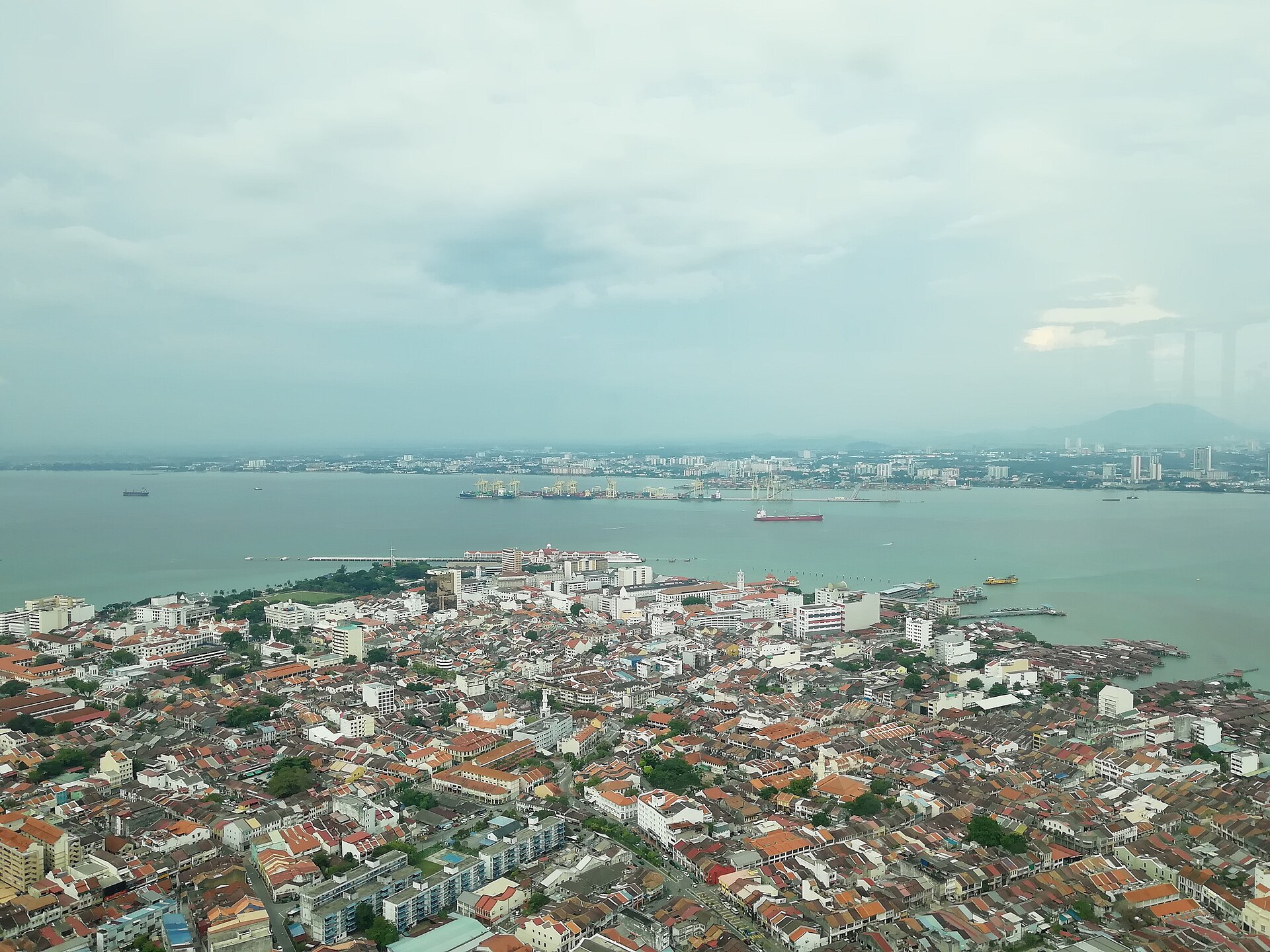
Komtar Road in George Town isn’t just a street—it’s a living thread woven through the city’s past and present. Walking here feels like stepping into a different era, where the narrow lanes and low-slung shophouses with their wooden shutters still carry the echoes of 19th-century Penang. The road stretches from the waterfront to the hills, linking the bustling port districts with the quieter neighborhoods where merchants, artisans, and sailors once settled. Today, it remains one of the most authentic corners of George Town, where tourists and locals cross paths, and history lingers in the details of everyday life.
The architecture along Komtar Road tells a story of cultural layers. The two- and three-story shophouses, with their narrow facades painted in soft pastels, blend colonial influences with Chinese and Malay traditions. Many still feature intricate wooden balconies and wrought-iron grilles, remnants of a time when George Town was a vital trading hub under British rule. These buildings, known as shophouses, were designed with shops on the ground floor and living spaces above—a layout that persists today. Some now house small cafes, workshops, or family-run stores, preserving the street’s practical, lived-in character.
The history of Komtar Road is tied to Penang’s rise as a trading port. In the early 1800s, Chinese immigrants arrived here seeking opportunity, setting up shops, workshops, and small factories. Over time, the street became a center of the city’s Chinese community, and that legacy is still palpable. Old temples dedicated to deities of commerce stand alongside traditional Chinese pharmacies, where remedies are still prepared using century-old recipes. The street’s atmosphere is one of quiet resilience, a place where the past isn’t just remembered but actively shapes the present.
Nearby, the Kek Lok Si Temple looms over the area, its influence extending even to Komtar Road. Though the temple itself sits on a hillside just beyond the street, pilgrims and visitors often pass through here on their way to its grand halls. Built in the late 19th century, Kek Lok Si blends Chinese, Thai, and Malay architectural styles, making it one of Malaysia’s most significant Buddhist sites. Its towering pagodas and statues are visible from afar, a reminder of the spiritual traditions that have long been part of George Town’s identity.
A stroll down Komtar Road is also a chance to experience the rhythm of local life. Mornings bring the scent of fresh fruit and spices from open-air stalls, while street vendors appear by midday, serving up steaming bowls of noodles or fried rice. As evening falls, the street transforms again—lanterns glow softly, music drifts from cafes, and neighbors gather for tea or a game of mahjong. There’s no rush here, just the easy flow of daily routines, where tourists are welcome to linger and soak in the unhurried pace.
Unlike some parts of George Town that have been polished for tourism, Komtar Road retains its unvarnished charm. There are no luxury hotels or flashy bars, just the quiet hum of a neighborhood that has stayed true to itself. It’s a place where history isn’t confined to plaques or museums but lives in the way people go about their day. That authenticity is why George Town earned its UNESCO World Heritage status—not just for its architecture, but for the way its past and present coexist.
For those who want to dig deeper, the street offers small museums and galleries tucked into old shophouses. Some focus on Penang’s history, others on traditional crafts or contemporary art. Many are free or ask for a small donation, and the owners often share stories about the city with genuine enthusiasm. It’s this personal touch that makes Komtar Road more than just a pretty street—it’s a place where curiosity is rewarded with real connections.
Evenings bring a different kind of magic to Komtar Road. After a rain, the wet pavement reflects the warm glow of streetlights, and the shadows of old trees dance on the walls of the shophouses. The air is cooler, the crowds thinner, and the street takes on a peaceful, almost dreamlike quality. It’s the perfect time to wander without purpose, peeking into open doorways or watching locals unwind after the day’s work. There’s no touristy hustle here, just the quiet satisfaction of being in a place that feels timeless.
Komtar Road isn’t a relic—it’s a living part of George Town, where the past and present move in step. It’s a reminder that the city’s appeal lies not just in its landmarks but in its ability to evolve while staying true to its roots. Walking here, you sense the layers of history, the blend of cultures, and the resilience of a place that has weathered centuries without losing its soul. That’s why Komtar Road lingers in the memory long after you’ve left—it’s not just a street, but a piece of the city’s beating heart.