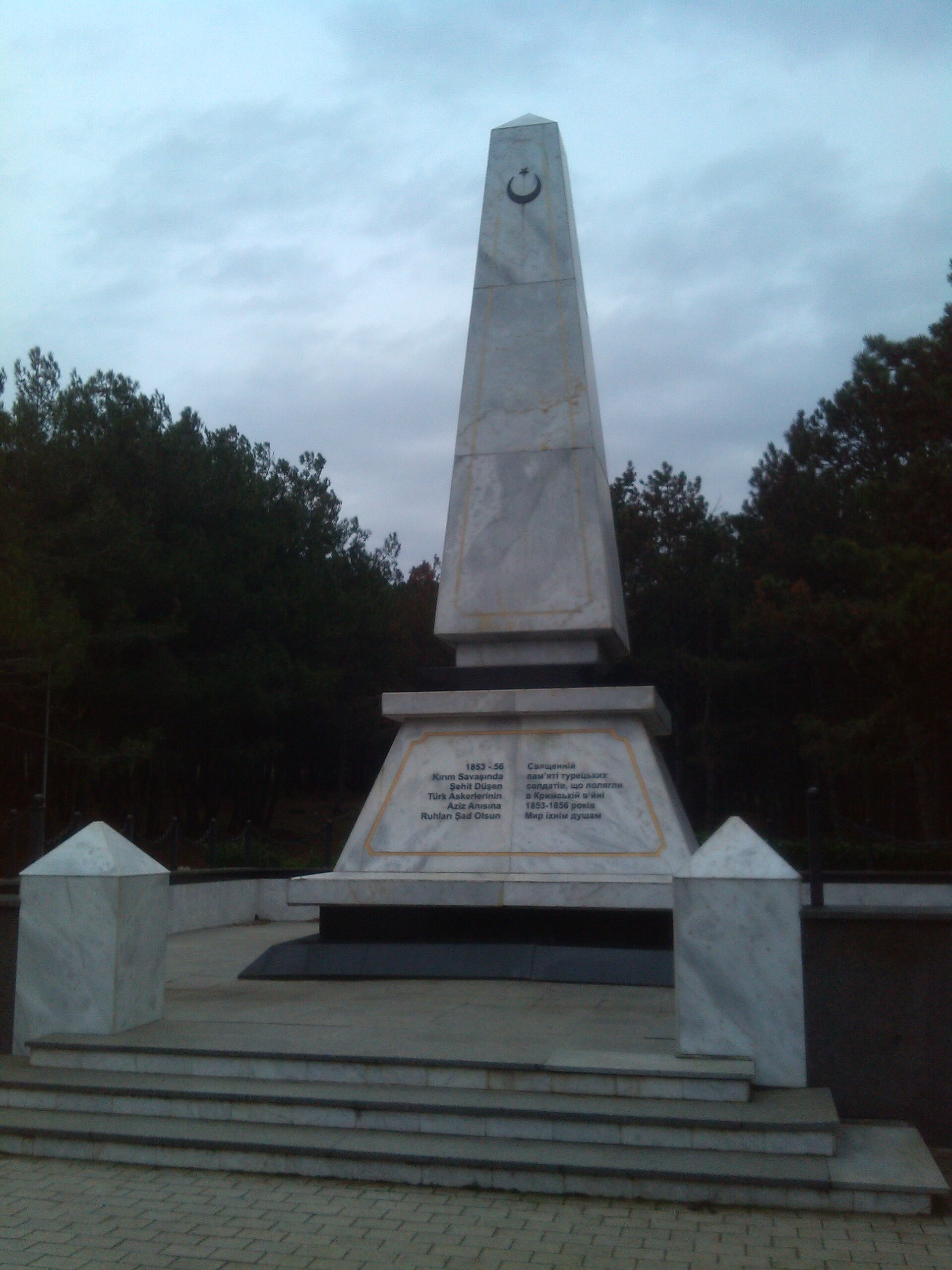
Perched on a quiet hillside in Sevastopol, the Turkish Military Cemetery is one of those places that history almost forgot. Tucked away in the Ushakova Balka district, just a short walk from the city center, it remains overlooked by most visitors rushing toward the more famous landmarks. Yet this small, unassuming burial ground holds a quiet significance—a reminder of the tangled and often brutal history of Crimea, where empires clashed and left behind traces that still linger today.
The cemetery is the final resting place of Ottoman soldiers who died during the Crimean War in the mid-19th century. Sevastopol, then the Russian Empire’s key fortress on the Black Sea, became the stage for one of the war’s bloodiest sieges. The Ottoman forces, allied with the British, French, and Sardinians, fought to break Russian control over the city. Many of them never left, and this cemetery stands as a testament to the shared fate of those who perished, regardless of which side they fought for.
The graves themselves are modest, marked by low stone steles inscribed with Arabic script—a traditional Ottoman style that has weathered the passage of time. Some of the inscriptions have faded beyond recognition, but even the legible ones offer little more than names, long detached from the lives they once represented. There are no grand monuments here, no elaborate memorials, just the quiet weight of history carried by simple stone markers. The only sounds are the rustling of leaves and the occasional footsteps of visitors, making it a place where reflection comes naturally.
What makes this cemetery unusual is its official recognition in a city where much of the past has been erased or rewritten. Sevastopol has seen countless conflicts since the Crimean War, each leaving its own scars. Yet this small plot of land has endured, preserved not as a tourist attraction but as a rare acknowledgment of the Ottoman presence in a region where their role is often overshadowed by later events. It’s a reminder that history is rarely one-sided, and even former enemies eventually become part of the same story.
Today, the cemetery is well-maintained, though it sees few visitors. Those who do come are often historians, descendants of veterans, or simply curious travelers seeking a different perspective on the city. For them, this isn’t just a collection of graves—it’s a tangible connection to a past that most guidebooks overlook. The absence of crowds only adds to the sense of stepping into a forgotten corner of history, where the weight of what happened here feels more immediate.
Sevastopol has other military cemeteries from the Crimean War, including British and French burial sites, but the Turkish cemetery stands apart in its understated dignity. There’s no pomp or ceremony here, just a quiet respect for those who fought and died on this land. That lack of spectacle might be why it resonates with those who prefer history in its raw, unvarnished form—less about grand narratives and more about the individuals who lived and died in the midst of them.
Finding the cemetery is easy enough. It’s located in a residential area, a short walk or bus ride from the city center, with no tourist signs or souvenir stalls to mark its presence. The surrounding streets are ordinary, lined with apartment buildings and small parks, which only reinforces the sense of stumbling upon something real. There’s no attempt to package the past for visitors; it simply exists, as it has for over a century and a half.
For anyone interested in military history or looking to see Sevastopol beyond its well-trodden sights, the Turkish Military Cemetery offers a different kind of experience. It’s not a place that demands attention, but one that rewards those who take the time to notice it. Here, the past isn’t reduced to dates and battles—it’s preserved in the quiet dignity of those who once called this city, however briefly, their final resting place. And in that quiet, there’s something deeply human.