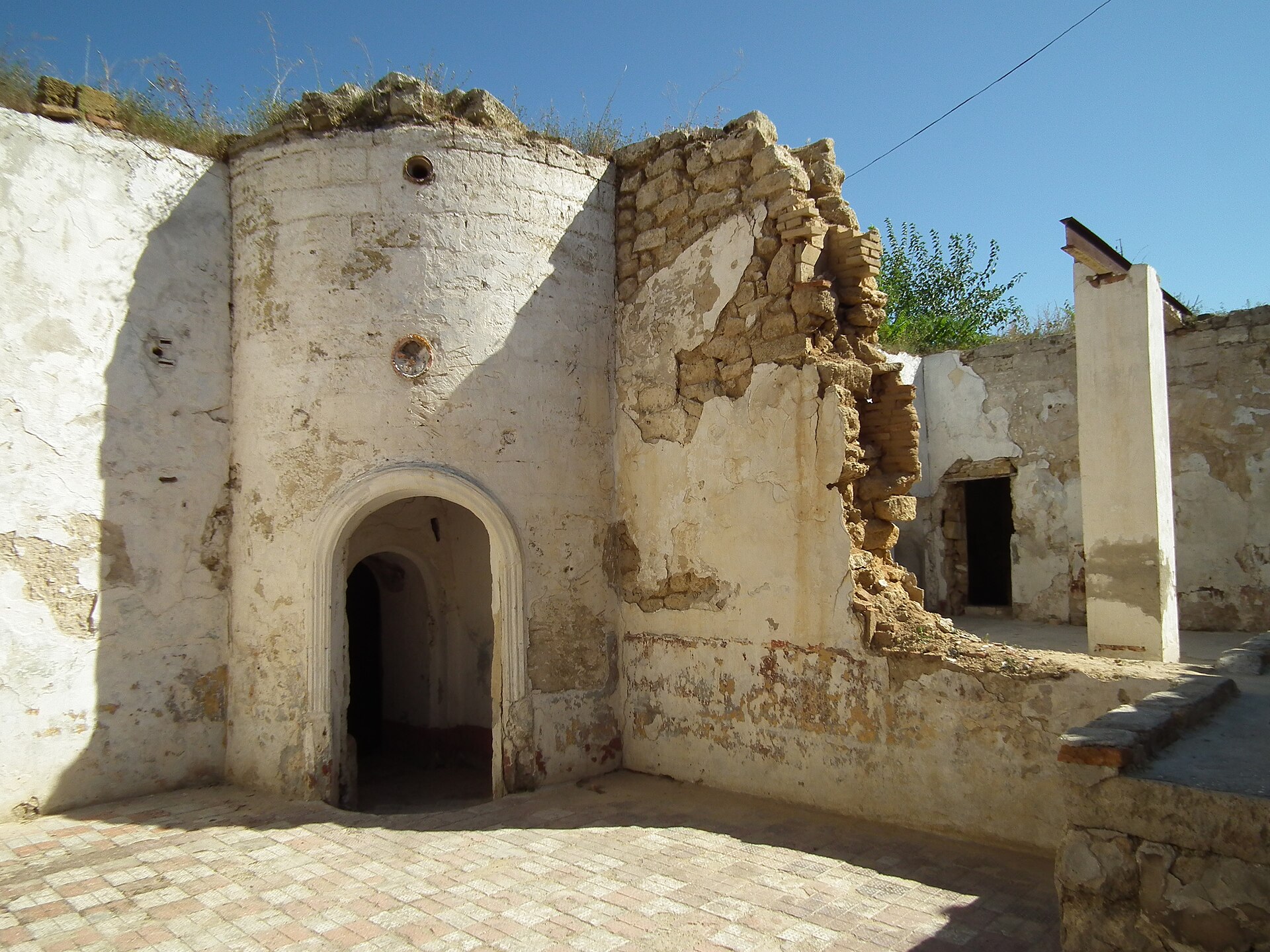
Yevpatoria is a city where layers of history settle like dust on old stone, each era leaving its mark. Among the most vivid traces of its past is the Turkish bathhouse on Krasnoarmeyskaya Street, a rare surviving example of Ottoman civic architecture from the 16th century. Built when the city was known as Gözleve and served as a bustling Black Sea port under Ottoman rule, the bathhouse has endured through centuries with its original character largely intact.
The building’s design follows the classic Ottoman style, its thick walls of local limestone supporting domes punctured by small skylights that cast soft, diffused light onto the vaulted ceilings. Inside, the space unfolds in a series of chambers, each serving a distinct purpose. The central hall, with its marble pool at the heart, was once the social core of the bathhouse—where merchants haggled over deals, neighbors exchanged gossip, and weary travelers washed away the grime of the road. Smaller rooms branch off from this main area, offering private spaces for individual rituals or quiet rest, while the furnace rooms below kept the water hot and the steam rising.
Though Yevpatoria changed hands when Crimea became part of the Russian Empire, the bathhouse remained in use. In the 19th century, it underwent renovations, but its Ottoman essence was preserved, earning it the enduring nickname of the "Turkish bath." Even during the Soviet era, it continued to function, though adapted to the times. Today, it stands as one of the few places where the past isn’t just remembered but actively lived.
Stepping inside feels like crossing into another era. The creak of the wooden door, the echo of footsteps under the domes, the cool touch of stone beneath bare feet—these are the same sensations visitors would have experienced centuries ago. There are no neon lights or sleek modern finishes here, just the raw elements of water, heat, and time-worn surfaces. Even if you don’t plan to bathe, the experience offers a glimpse into the daily rhythms of a city that was once a crossroads of empires.
The surrounding neighborhood is just as steeped in history. Krasnoarmeyskaya Street is one of Yevpatoria’s oldest, lined with 19th-century houses whose carved shutters and hidden courtyards hint at the lives once lived within. Nearby, the Karaite kenesa stands as a testament to the city’s religious diversity, its architecture blending influences from different cultures. A walk through this area reveals how Yevpatoria grew at the intersection of Greek, Turkish, Tatar, and Russian traditions, each leaving its imprint on the streets and buildings.
Beyond its historical significance, the bathhouse has become a cultural hub. Guided tours explore the city’s Ottoman past and the traditions of the hammam, while occasional evenings feature live music and tea ceremonies that evoke the ambiance of a bygone era. For those seeking a deeper immersion, the bathhouse offers private sessions with age-old rituals: a vigorous scrub with a kese mitt, a soothing soap massage, or the fragrant steam of aromatherapy.
What makes this place remarkable is its ability to adapt without losing its soul. Recent restorations have peeled back layers of later modifications, revealing the original Ottoman design beneath. Yet the bathhouse isn’t a museum piece—it remains a living space where people gather, unwind, and connect, just as they have for hundreds of years. In a world where so much is disposable, it’s a quiet reminder that some traditions endure not because they’re preserved in amber, but because they still have meaning.