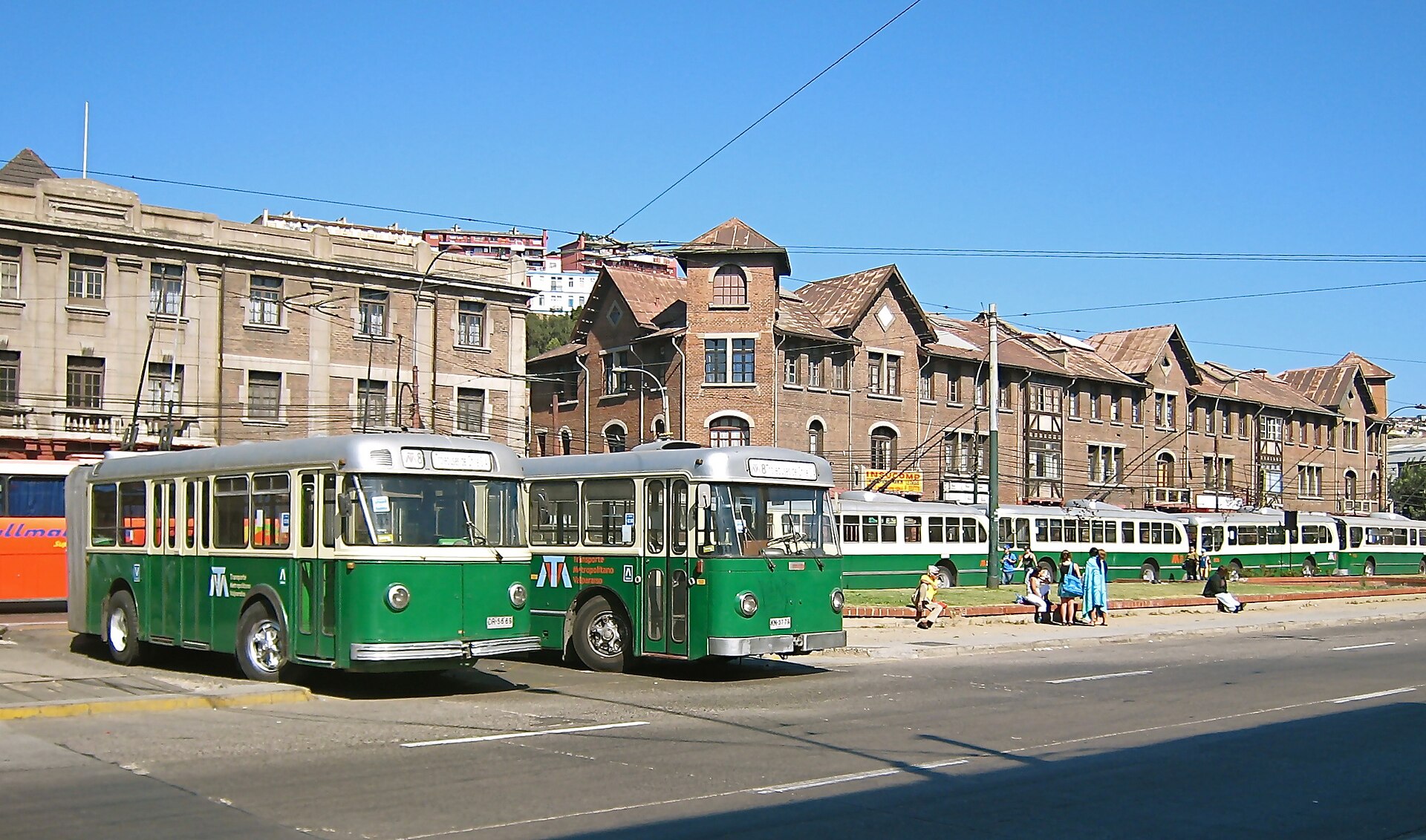
Valparaíso moves to its own rhythm. The past lingers in the steep streets, and the salt air carries stories from another era. Among its layers of history, the city’s trolleybuses stand out—not just as transport, but as a living piece of its identity. They connect the present to a time when electric transit was new, and Valparaíso’s hills demanded something sturdy that could climb without choking the air.
The trolleybus system began in the mid-20th century, when cities worldwide adopted electric public transport. For Valparaíso, with its narrow, winding roads and sharp inclines, trolleybuses worked well. They handled the terrain without diesel fumes, and their quiet hum suited the city’s pace. The first vehicles arrived from the United States, and over the decades, they became part of the streetscape, like the colorful houses clinging to the hillsides.
Today, Valparaíso’s trolleybus line is the last in Chile. It runs a single route linking the city center to Barrio Puerto. Many buses still in service date back to the 1940s and 50s, their rounded bodies and large windows a throwback to an earlier age. Inside, worn leather and metal linger. Outside, the city unfolds—graffiti-covered walls, crumbling staircases, sudden glimpses of the Pacific.
The design of these trolleybuses is part of their appeal. They’re solid, unpretentious, with wooden seats. Riding one isn’t about efficiency. There’s no strict schedule, no rush. The bus moves at its own pace, stopping when it needs to, letting passengers take in the views—the way light hits the hills, the way the ocean breeze cuts through the streets. Getting somewhere isn’t always the point.
The route starts downtown, where grand plazas and colonial-era buildings hint at the city’s past as a major port. As the trolleybus climbs, the streets narrow, the houses grow more colorful. By the time it reaches Barrio Puerto, the air is thick with salt and old wood. It passes warehouses that once stored goods from around the world, their facades faded but still imposing.
For locals, the trolleybuses are part of childhood, a familiar presence on daily commutes. For visitors, they’re a curiosity, a chance to see the city as it once was. There have been attempts to modernize the fleet, but people don’t want new buses. They want these—flawed, slow, but undeniably real. The trolleybuses carry memories, stories, and a sense of continuity in a city that’s always changing.
The buses break down occasionally. In the evenings, they can get crowded. That’s part of the charm. There’s no pretense of perfection. The trolleybuses move when they move, and if you’re in a hurry, you might as well walk. But if you’re willing to slow down, they offer something rare: a way to see Valparaíso as it is, without filters.
Over the years, the trolleybuses have become more than transport. They’re a symbol of the city’s resilience, a nod to its past. Artists paint them, photographers frame them, and travelers seek them out, not just for the ride, but for the feeling they evoke—a sense of stepping into a living postcard. In a world that moves too fast, Valparaíso’s trolleybuses remind us that some things are worth preserving, exactly as they are.