Photo: Wikimedia Commons, Public domain
Torcello
out of 5 0 ratingsTorcello is one of those rare places that feels suspended in time, a quiet island in the northern reaches of the Venetian Lagoon where the past lingers in the air like salt from the sea. Unlike Venice itself, with its crowded alleys and relentless hum of tourism, Torcello offers something far more elusive: stillness. There are no souvenir stalls here, no gondoliers calling out for passengers, no sense of being hurried along by the expectations of a guidebook. Instead, the island unfolds slowly, revealing itself in fragments—a crumbling wall, a vine-covered arch, the distant chime of a church bell. It’s small, barely more than a speck in the lagoon, yet its role in Venice’s history is impossible to overstate.
Long before Venice became the glittering maritime republic of legend, Torcello was the heart of the lagoon. In the fifth and sixth centuries, as barbarian invasions swept across mainland Italy, refugees fled to the safety of its marshy islands. Torcello became one of the first true settlements, a place where life took root in the most unlikely of environments. By the tenth century, it was thriving. Workshops hummed with activity, merchants traded goods from across the Mediterranean, and churches rose from the mudflats. At its peak, the island was home to twenty thousand people—a staggering number for such a tiny place. But over time, the fortunes of Torcello waned. The lagoon’s shifting currents silted up its canals, making trade difficult. Disease swept through the population, and Venice, with its deeper harbors and more strategic position, gradually drew people away. By the time the last families left, Torcello had become little more than a ghost of its former self. Today, only a handful of residents remain, and the island exists as a kind of open-air museum, a place where history is written into the very landscape.
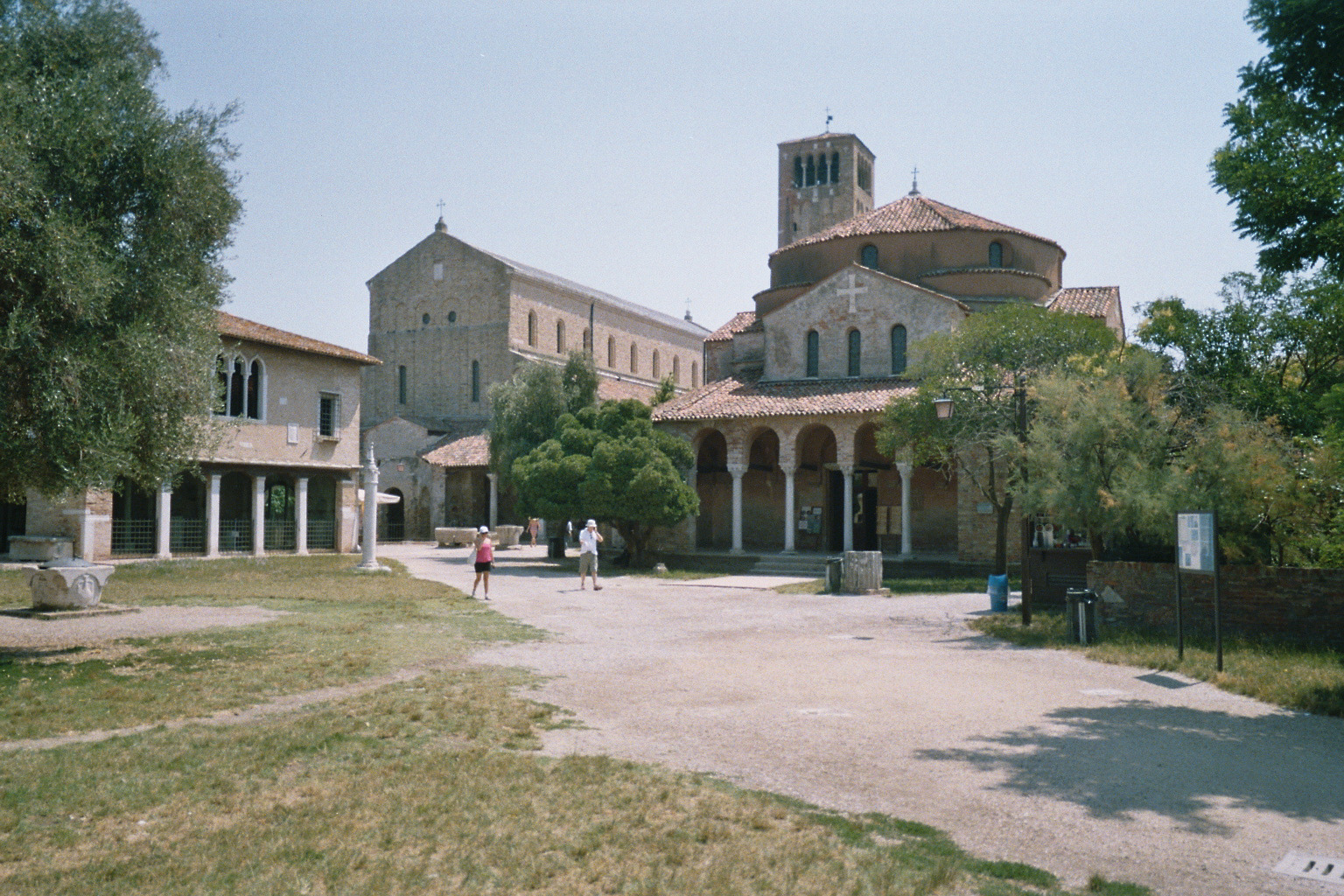
The most striking remnant of Torcello’s past is the Cathedral of Santa Maria Assunta, founded in the seventh century. It stands as one of the oldest religious buildings in the lagoon, its architecture a layered record of the island’s changing fortunes. The exterior is unassuming, its brick facade weathered by centuries of wind and rain, but inside, the space opens up into something far grander. The apse is dominated by a breathtaking mosaic from the twelfth century, a shimmering expanse of gold that depicts the Last Judgment in vivid detail. Saints and angels, their faces serene yet stern, gaze down from the walls, their forms rendered with a skill that still astonishes. The effect is mesmerizing, the kind of art that doesn’t just decorate a space but transforms it. Beside the cathedral, a tall bell tower offers a sweeping view of the lagoon. From its heights, you can imagine Torcello as it once was—a bustling hub of trade and craftsmanship, its canals crowded with boats, its streets alive with the voices of merchants and artisans.
Not far from the cathedral, the smaller Church of Santa Fosca offers a quieter kind of beauty. Built in the eleventh century in the Byzantine style, its simple cruciform shape and low dome give it an intimacy that contrasts with the grandeur of Santa Maria Assunta. Inside, fragments of ancient frescoes cling to the walls, their colors faded but still discernible. The church feels like a place of refuge, its thick stone walls insulating it from the outside world. Nearby, a modest museum houses artifacts unearthed on the island—coins, pottery, tools—each piece a small clue to the lives of those who once called Torcello home. There’s something deeply moving about these objects, not because they’re particularly valuable or rare, but because they speak to the everyday rhythms of a community that has long since vanished.
Walking through Torcello is like stepping into a different era. The paths are narrow and uneven, winding past old houses that have settled into the earth over centuries. Some are little more than ruins, their walls crumbling, their roofs collapsed, while others still bear traces of their former elegance—delicate stone carvings, arched doorways, the occasional patch of fresco peeking through the plaster. The island is lush with vegetation, its gardens overgrown with vines and fruit trees, their branches heavy with figs and pomegranates. The air carries the scent of wild herbs and the faint tang of the sea. There are no shops here, no cafés, no hotels—just a few small restaurants where you can eat simple meals made from local ingredients. The food is unpretentious, the kind of cooking that hasn’t changed much in generations: risotto with lagoon fish, polenta with wild mushrooms, wine from the island’s own vineyards.
Torcello is often called the cradle of Venice, and the description isn’t just poetic. This is where the story of the city on the water truly begins. The architecture, the culture, even the way of life that would later define Venice all have their roots here. In many ways, Torcello is the purest expression of what the lagoon once was—a place where people learned to live in harmony with the water, where trade and faith and art intertwined to create something entirely new. Today, the island feels like a world apart, a place where the noise of modern tourism hasn’t yet intruded. It’s not that Torcello is untouched by time—far from it—but rather that it wears its history lightly, as if the past isn’t something to be preserved behind glass but something that still breathes in the stones and the soil.
Most visitors combine a trip to Torcello with stops at the nearby islands of Burano and Murano, each offering its own distinct character. The journey from Venice takes about an hour by vaporetto, the waterbus that glides across the lagoon. As you leave the city behind, the skyline of domes and bell towers gradually fades into the haze, replaced by the open expanse of water and sky. When you arrive, the first thing you notice is the silence. There are no crowds, no vendors, no sense of being herded from one attraction to the next. The island invites you to wander, to take your time. After visiting the cathedral, you might follow one of the footpaths that lead away from the main square, past abandoned orchards and overgrown gardens. There’s no set route, no map to follow—just the quiet rhythm of your own footsteps.
What makes Torcello so compelling is the way it exists outside of time. There’s no rush here, no sense of urgency, no need to be anywhere else. It’s the kind of place that lingers in your memory long after you’ve left, not because of any single monument or landmark, but because of the way it makes you feel. The island has a weight to it, a sense of history that’s almost tangible. You can feel it in the worn steps of the cathedral, in the way the light filters through the trees, in the stillness of the lagoon at dusk. It’s a place that reminds you that history isn’t just a series of dates and events, but something alive, something that shapes the present in ways we don’t always notice. Torcello doesn’t just preserve the past—it lets you step inside it, if only for a little while.
Day around this place
Where else to go on the same day
Building the day…
Where it is
45.49847, 12.41825


