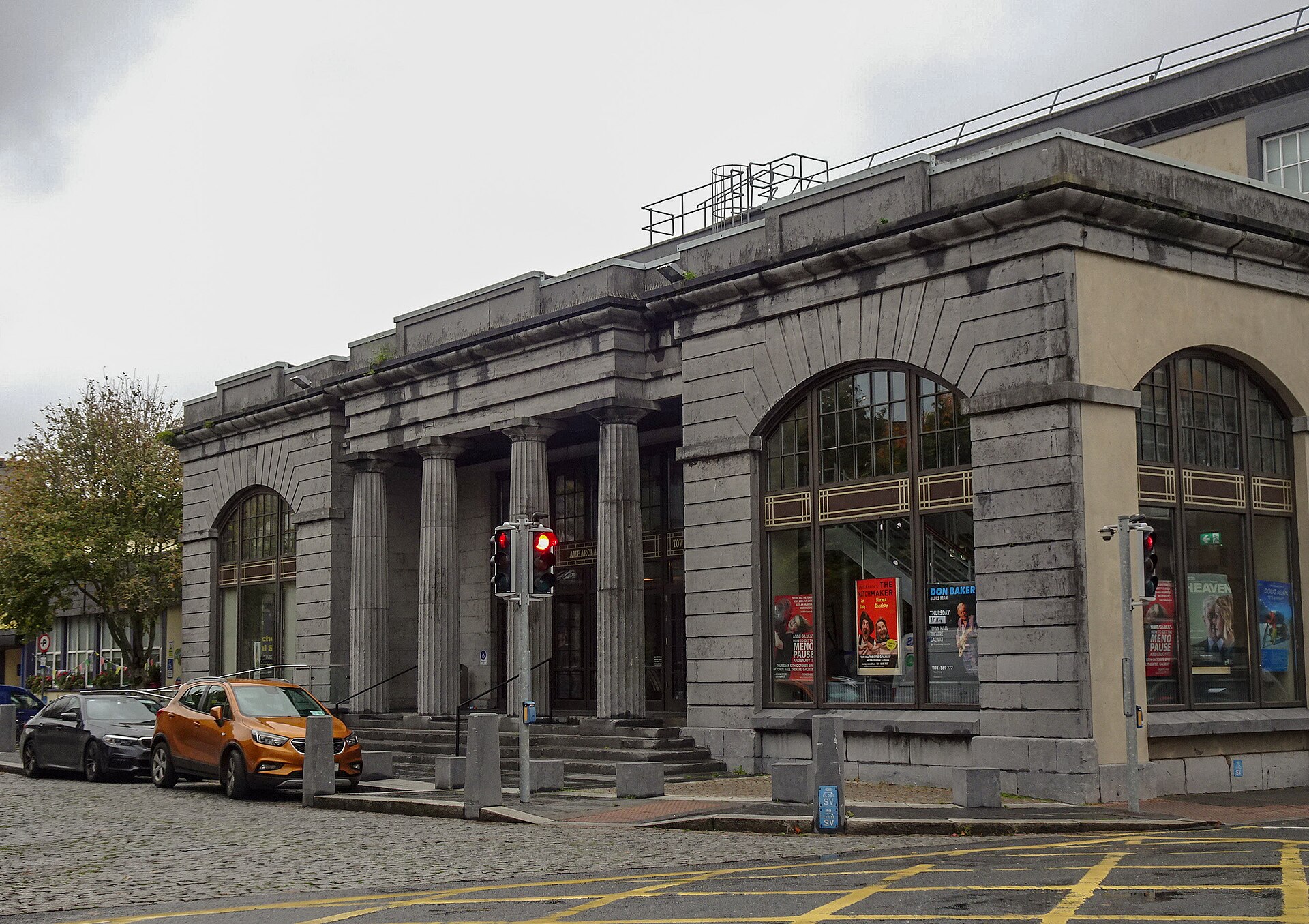
Town Hall Theatre stands where the city’s past and present meet. The streets of the old quarter run into modern cafés and galleries, and the theatre sits at this crossing. Here, traditional Irish music mixes with the voices of passersby and the movement of evening crowds. The building doesn’t just host events—it shares the city’s rhythm with anyone who walks in.
The theatre began in the late 19th century. Galway was growing as a trading port on Ireland’s west coast, and the city wanted a space that matched its confidence. Town Hall Theatre became that space. Its thick stone walls, tall arched windows, and grand façade still show that ambition. Inside, Victorian details remain: ornate plasterwork, polished wooden panels, and sweeping staircases. But the theatre hasn’t stayed the same. Over time, it has been updated with new technology while keeping its original character.
Today, the theatre is a place where Galway’s artistic life is strongest. The programme changes often, with classical concerts, plays, festivals, lectures, and weddings. But one thing stays constant: traditional Irish music. Galway has always been a home for this music, and the theatre often hosts local musicians playing fiddles, flutes, and bouzoukis. Some nights, you’ll hear old tunes passed down through generations. Other nights, those same tunes are played in new ways. The space feels close—warm lighting, wooden seats, the sound of instruments under high ceilings—and you’re part of something that has lasted.
The theatre also holds quieter moments. Writers, poets, and artists meet here to shape Ireland’s cultural landscape. Galway has always drawn creative people, and Town Hall Theatre is where they gather. New books are discussed, local artists show their work, and workshops invite people to join in. For many, the theatre isn’t just a venue. It’s where ideas start, where you might find an interesting talk or feel the city’s artistic pulse.
Festivals make the theatre feel even more alive. Galway’s cultural events often centre here. During the Arts Festival, the building fills with energy—premiere performances, international concerts, and experimental works. The auditorium is full, the foyer buzzes with conversations, and outside, musicians play for crowds on the street. Even if you don’t see a headline show, being there during festival season connects you to something bigger.
The architecture tells its own story. The auditorium, with its balconies and boxes, reminds us of a time when theatre was as much about social status as it was about art. In the 19th century, where you sat—and how much you paid—said a lot about who you were. Those rules are gone, but the space still feels special. Wooden seats, chandeliers, heavy velvet curtains—all of it makes the theatre feel both grand and close. Whether you’re at a world premiere or a local choir performance, the stage always feels important.
Town Hall Theatre shows a different side of Galway. Behind its doors, the city slows down. Art isn’t just entertainment here—it’s part of daily life. You might sit in the café and hear people talking about a play. Or stay after a concert to discuss it with strangers who suddenly feel familiar. It’s a place where connections happen easily, where the line between audience and participant fades.
For visitors, the theatre can be a surprise. It doesn’t offer a set experience. What you find depends on what’s happening when you arrive. You might catch a traditional music session, a talk on Irish literature, or just walk through the foyer, looking at photographs of past events. Either way, the theatre leaves a mark—not as a monument, but as a living space that exists for the people who keep it going. It’s the kind of place you leave feeling like you’ve seen something real, something that continues long after the curtain closes.