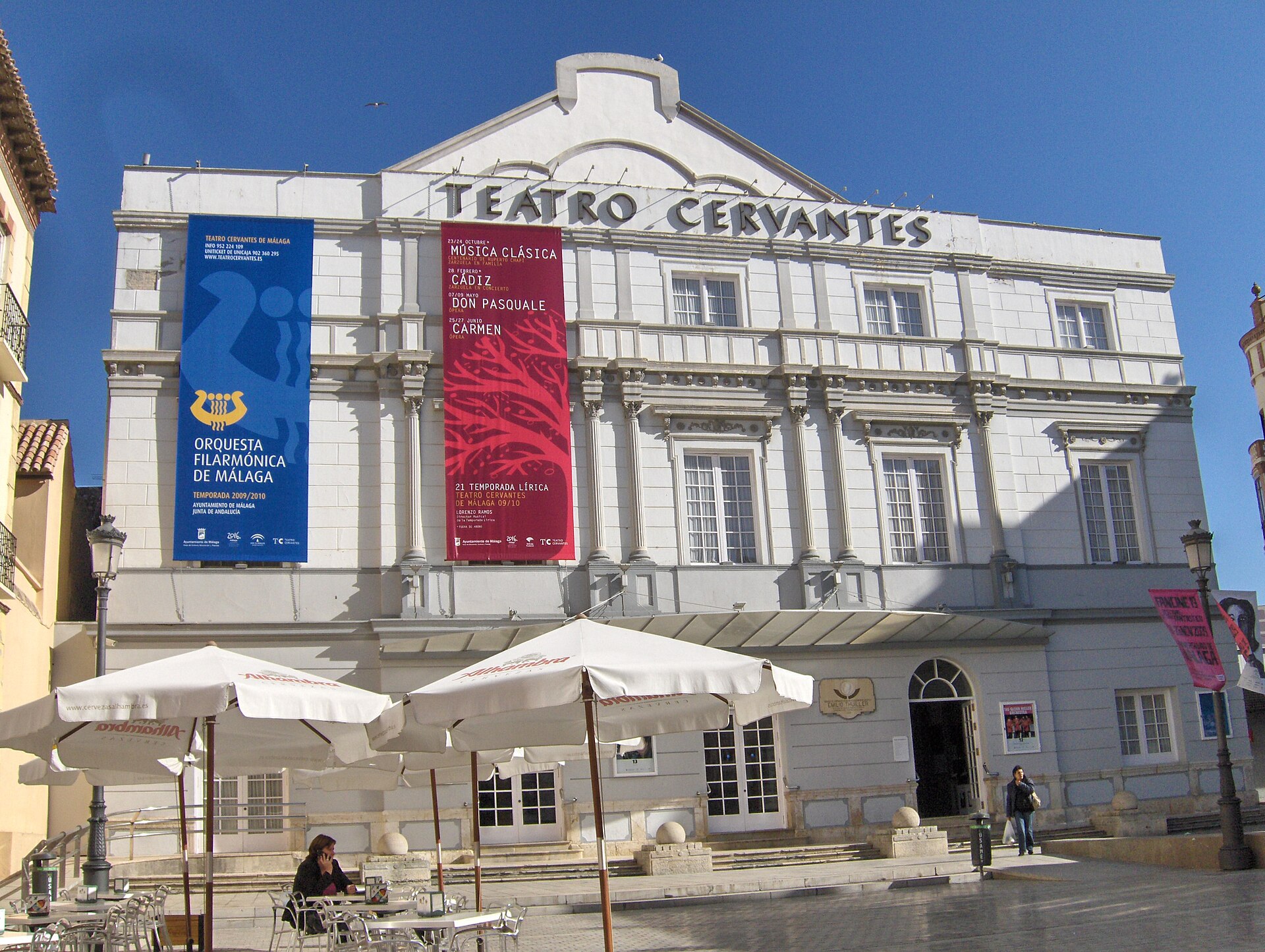
Málaga’s Teatro Cervantes feels like a place where time lingers without ever standing still. Tucked into the heart of the city on Plaza de la Merced, it sits where daily life unfolds in its most vibrant form—tourists wander past, locals pause for coffee at nearby cafés, and in the evenings, musicians and street performers gather, turning the square into an open-air stage. The theater isn’t just a building; it’s a thread woven into the city’s cultural fabric, where history and art blend seamlessly with the rhythm of modern life.
Built in the late 19th century, the theater emerged during a period of transformation for Málaga. The city was expanding rapidly, and public spaces like this one became symbols of progress. When it opened in 1870, it was more than just a venue—it was a promise of culture for a growing community. The architecture reflects the elegance of the era: clean classical lines, intricate detailing, and large windows that flood the interior with Andalusian sunlight. From the outside, it appears understated, but step inside, and you’ll find the kind of grandeur typical of theaters from that time—ornate plasterwork, gilded accents, and chandeliers that cast a warm glow over the audience.
The theater takes its name from Miguel de Cervantes, Spain’s most celebrated writer, though he never set foot in Málaga. The choice of name might have been a nod to the country’s literary heritage or simply a way to lend the venue a touch of prestige. Either way, the theater lives up to its namesake, hosting not only contemporary plays but also classics, including works by Cervantes himself. The repertoire is diverse, ranging from traditional Spanish productions to international collaborations, ensuring there’s something for every taste.
Over the years, the theater has weathered its share of challenges. During the Spanish Civil War, it suffered significant damage but was later restored and modernized. More recent renovations have preserved its historic character while updating its facilities to meet contemporary standards. Today, the auditorium seats around a thousand people, and each performance feels like an event—whether it’s the premiere of a new play or a symphony orchestra concert. The space manages to feel both timeless and current, a rare balance in a world where so many historic venues struggle to stay relevant.
Málaga is a city where art is part of the air you breathe. Picasso was born here, museums and galleries dot the streets, and creativity hums in the background of everyday life. Teatro Cervantes is a vital piece of that cultural puzzle. It may not have the fame of Madrid’s or Barcelona’s grand theaters, but that’s part of its charm. Here, you get a sense of authentic Andalusian culture, where locals come not just for performances but for festivals, lectures, and artist talks. The theater isn’t just a place to watch art—it’s a place to experience it, a gathering spot where different generations and cultures intersect.
Even if you don’t catch a show, the theater is worth a visit. The building itself is striking, especially in the evening when the lights come on and the square buzzes with energy. The area around it is always lively—people snap photos against the historic facade, others sit on benches watching the world go by. In the summer, the square often hosts open-air concerts and film screenings, turning the space into an impromptu stage where the city becomes part of the performance.
Teatro Cervantes isn’t a museum or a typical tourist attraction. It’s a living space that evolves alongside the city. There are no rigid rules here, no scripted experiences. You can drop in for a matinee, or you can simply sit at a café across the street, watching how the mood of the square shifts with the time of day. Málaga is a city that makes you feel at home, and the theater is no exception. It’s open to anyone who wants to connect with art, history, or the pulse of Andalusian life. Whether you’re a visitor or a local, it invites you to be part of something bigger than just a night out.