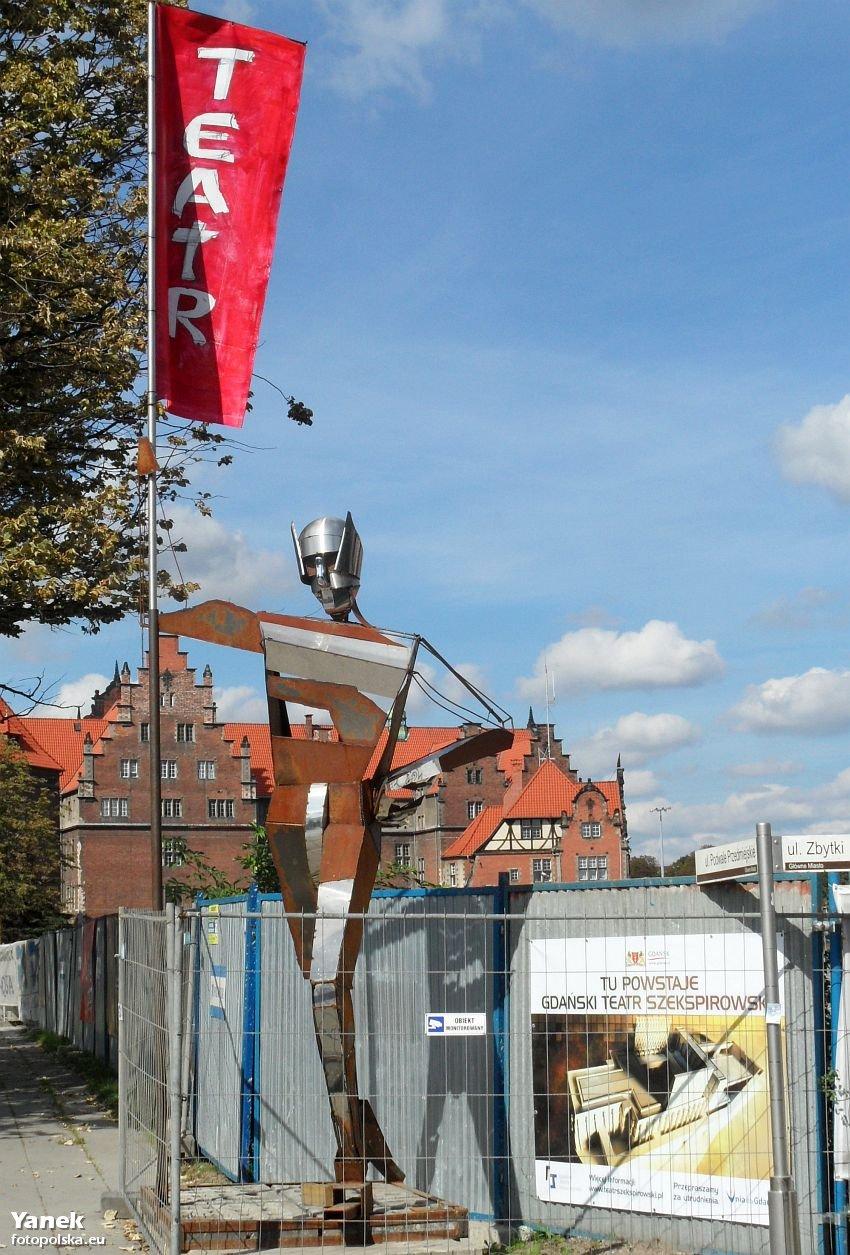
The Gdańsk Shakespeare Theatre is one of those rare places where the past and present don’t just coexist—they engage in quiet conversation. Standing along the Motława River in the heart of the Old Town, its very structure tells a story that began centuries ago. In the 17th century, this was the site of the Fencing School Theatre, one of the first in Europe to stage the works of Shakespeare. The original building burned down in the 19th century, but its legacy lingered, and in the 21st century, the decision was made to revive the space—not as a replica, but as a living tribute to the theatrical traditions that once thrived here.
The modern theatre, which opened in 2014, is a striking blend of old and new. From the outside, it resembles an Elizabethan playhouse, with its red-brick walls and timber balconies evoking the era of Shakespeare’s own theatres. Yet inside, it’s a marvel of contemporary engineering. The stage can transform in minutes, shifting between a traditional proscenium setup and an immersive thrust stage where the audience surrounds the performers—a rarity in today’s theatre world. This flexibility harks back to the original Globe in London, where plays were performed in the round, with spectators standing just feet away from the action.
What makes the Gdańsk Shakespeare Theatre special is its refusal to be confined by expectations. While Shakespeare’s works remain central to its identity, the repertoire extends far beyond them. You might catch a modern Polish play, a classic by Chekhov or Molière, or even an experimental piece that defies easy categorization. Each summer, the theatre hosts an international festival, drawing companies from across Europe and beyond. For a few weeks, Gdańsk becomes a hub of theatrical energy, with performances spilling into the streets and the city’s historic squares.
But the theatre is more than just a stage. It’s a cultural space that invites exploration. The building itself is designed to feel open and accessible, with a café where visitors can linger over coffee, a library stocked with books on theatre and performance, and occasional open-air concerts or small markets in the surrounding area. Exhibitions in the foyer often highlight the history of the theatre or showcase contemporary art, adding another layer to the experience. It’s the kind of place where you might come for a play and end up staying for hours, drawn in by the atmosphere.
The theatre’s story is deeply intertwined with Gdańsk’s own history. In the 17th century, the city was a bustling port, a crossroads of trade and culture where merchants, sailors, and artists from across Europe converged. English theatre troupes frequently performed here, bringing Shakespeare’s works to Polish audiences for the first time. Rebuilding the theatre in the 21st century wasn’t just an architectural project—it was an attempt to reclaim a piece of that cultural heritage, to remind the city of a time when art was woven into the fabric of everyday life.
The architects behind the project took inspiration from both English Renaissance theatres and Gdańsk’s own architectural traditions. The copper roof, for instance, was chosen not just for its durability but because it would develop a patina over time, much like the roofs of the city’s historic buildings. Inside, the wooden balconies and ornate detailing nod to the past, while the lighting and acoustics are thoroughly modern. The result is a space that feels timeless, as if it has always been part of the city’s landscape.
Since its opening, the theatre has become one of Gdańsk’s most recognizable landmarks, standing alongside the Artus Court and the Golden Gate as a symbol of the city’s rich cultural life. It fits seamlessly into the Old Town’s skyline, yet its presence has helped revitalize the area along the Motława. Where there were once empty lots and neglected buildings, there’s now a lively promenade, filled with people strolling, taking photos, or simply enjoying the view. In the evenings, the theatre’s warm glow reflects off the water, adding to the city’s charm.
Visiting the Gdańsk Shakespeare Theatre doesn’t require a ticket to a performance. Even if you’re just passing through, it’s worth stepping inside to soak in the atmosphere. The foyer often hosts small exhibitions, and the café is a quiet spot to read or people-watch. In the summer, the outdoor terraces open up, offering a perfect place to sit with a drink and watch the boats drift by on the river. The theatre feels like a natural extension of the city—a place where locals and visitors alike can pause and reflect.
Gdańsk has always been a city where art and life intersect in unexpected ways. The Shakespeare Theatre is the latest chapter in that story. It’s not a museum, nor is it just a venue for performances. It’s a space that exists to inspire, to challenge, and to remind us that theatre is more than just actors on a stage. It’s about the people who gather there, the conversations that happen in the foyer, the moments of connection that linger long after the curtain falls. In that sense, the theatre is exactly what it was always meant to be—a place where stories come to life.