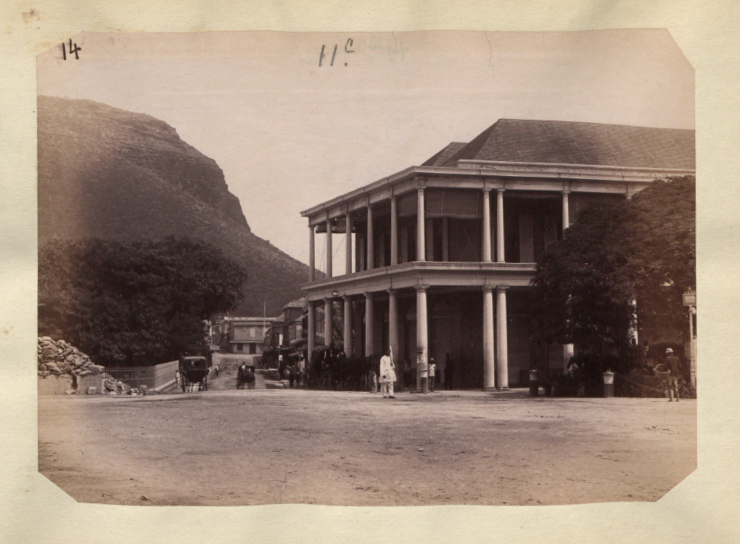
Port Louis has a way of surprising visitors with its quiet corners of history, and the Port Louis Theatre is one of them. Tucked between the bustle of the central market and the colonial facades of the capital, this building doesn’t announce itself with grand gestures. Instead, it sits modestly, as if waiting for someone to notice the stories it holds within its walls. Built in the mid-19th century, the theatre was one of the first permanent performance spaces on the island, a place where the colonial elite once gathered to escape the tropical heat with European plays and operas. Over time, it became more than just a venue—it was a rare public space where different communities, from French settlers to Creole merchants, found common ground in shared entertainment.
The architecture of the theatre reflects the practical elegance of its time. The facade is simple, almost unassuming, with tall windows that once allowed breezes to cool the audience before the days of air conditioning. Inside, the horseshoe-shaped auditorium was designed to create an intimate atmosphere, where every seat had a clear view of the stage. The wooden balconies, though worn by decades of use, still curve gracefully, their details hinting at the craftsmanship of local carpenters who adapted European styles to the realities of a tropical climate. The building has seen its share of wear—hurricanes, neglect, and the slow creep of time—but each layer of paint and repair tells a story of resilience.
For much of its history, the theatre was the cultural heart of Port Louis. In the 19th century, when Mauritius was a British colony with a strong French influence, the stage became a battleground of sorts—not with swords or politics, but with language and identity. French plays dominated the repertoire, a quiet act of defiance against British rule, while local adaptations of Shakespeare and Molière began to emerge, blending European traditions with Mauritian sensibilities. By the early 20th century, the theatre had opened its doors to a wider audience, hosting everything from classical concerts to vaudeville acts, and even the occasional silent film screening. It was here that many Mauritians first experienced the magic of live performance, long before television or the internet.
The theatre’s role in the city’s life has shifted over the decades. After a period of decline in the mid-20th century, when newer cinemas and entertainment venues drew crowds away, it was restored in the 1980s and reopened as a space for both local and visiting performers. Today, it’s a place where you might catch a contemporary Mauritian play, a jazz concert, or a classical recital. The programming is eclectic, reflecting the island’s mix of cultures—African rhythms, Indian classical music, and French chanson sometimes share the same stage. What hasn’t changed is the sense of occasion that lingers in the air when the lights dim and the curtain rises. The acoustics, though not perfect, have a warmth to them, as if the walls themselves are holding onto the echoes of past performances.
Walking into the theatre feels like stepping into a different era. The foyer is small but charming, with black-and-white photographs of past productions lining the walls. Some of the faces in those photos are still familiar in Mauritius—actors, musicians, and directors who shaped the island’s cultural scene. The main auditorium, with its faded velvet seats and chandeliers, hasn’t been modernized beyond recognition. There’s a certain beauty in its imperfections: the way the floorboards creak underfoot, the slight mustiness of old wood, the way the light filters through the high windows in the afternoon. It’s not a grand opera house, but that’s part of its appeal. This is a theatre that has always been about the people who fill it, not just the performances on stage.
The Port Louis Theatre is also a reminder of how culture evolves in a place like Mauritius. The island has always been a crossroads, and its arts reflect that—layered, adaptive, and sometimes contradictory. The theatre has survived because it has never been static. It has absorbed influences from Europe, Africa, and Asia, just as the island itself has. In the 19th century, it was a symbol of colonial sophistication; in the 20th, a space for emerging Mauritian voices; and today, it’s a bridge between the past and the present. You might hear a traditional sega performance one night and a cutting-edge experimental play the next. The building doesn’t dictate what happens inside it—it simply provides the stage.
Visiting the theatre isn’t just about seeing a show, though that’s certainly part of the experience. It’s about sensing the layers of history that have accumulated over nearly two centuries. The building has witnessed the rise and fall of empires, the shifting tides of migration, and the slow forging of a Mauritian identity. It has been a place of escape, of celebration, and sometimes of quiet resistance. Even when the seats are empty, there’s a feeling that the walls are listening, that the stories of those who have passed through its doors are still present in some way.
If you find yourself in Port Louis, the theatre is worth a visit even if there’s nothing on the schedule. The staff are often happy to let curious visitors peek inside, and sometimes you can wander into the auditorium when it’s not in use. Sit in one of the old seats, look up at the ceiling, and imagine the generations of Mauritians who have done the same. The city outside is loud and chaotic, but here, time moves differently. It’s a place where the past isn’t just remembered—it’s still alive, waiting for the next act to begin.