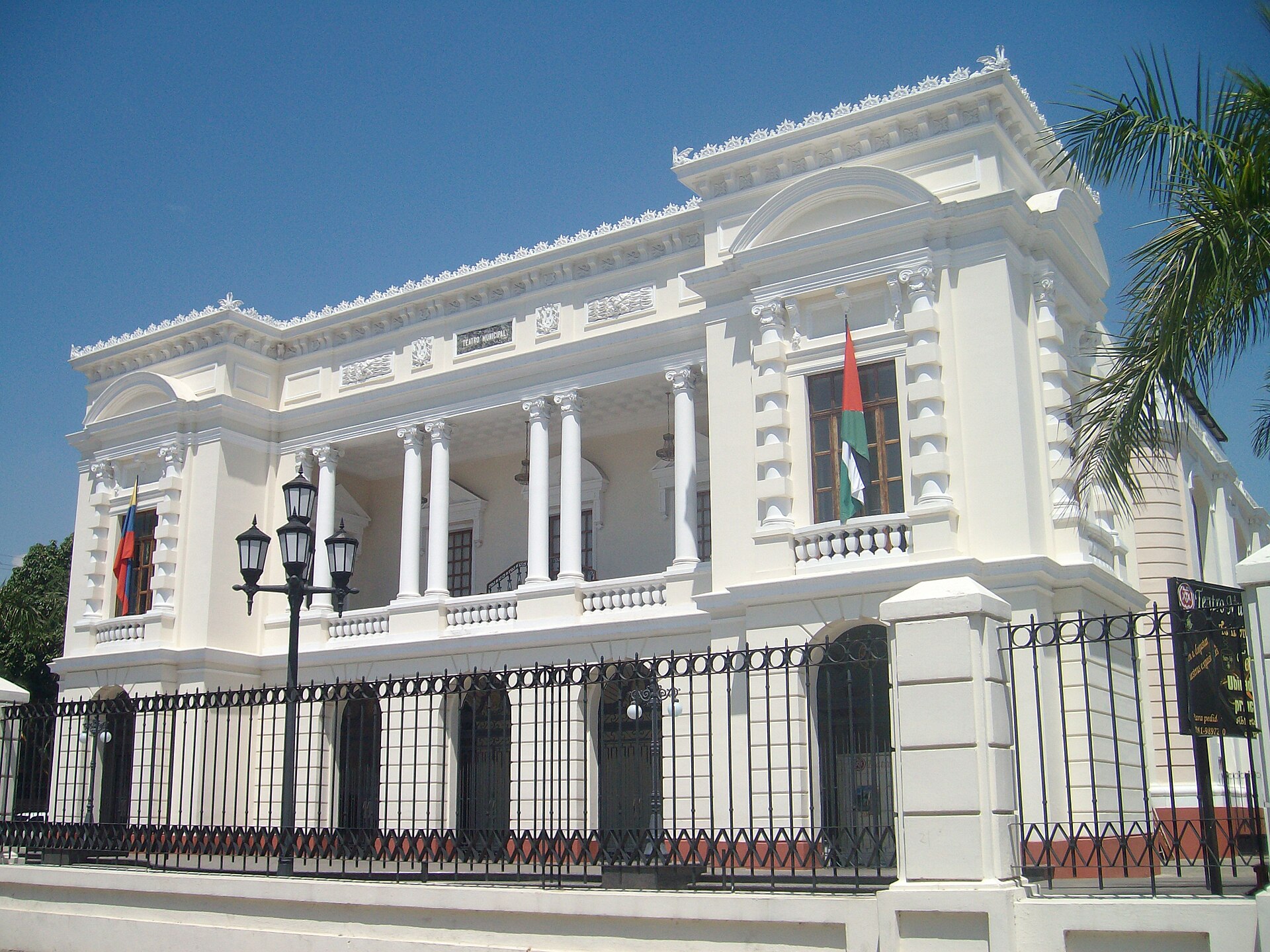
Valencia’s Teatro Municipal is one of those rare places that seems to exist outside of time, a quiet witness to the city’s past. Built in the late 19th century, it wasn’t just another building—it was a statement. Back then, Valencia was flourishing, its wealth tied to coffee plantations and a growing sense of ambition. The theater arrived as a symbol of that prosperity, a place where European elegance met the warmth of local life. It wasn’t just a venue; it was where the city’s cultural pulse beat strongest.
The architecture tells its own story. The neoclassical facade is understated—columns, pediments, and symmetrical windows that give little away. But step inside, and the contrast is striking. The auditorium is a world of gilded balconies, crystal chandeliers, and velvet seats, a space that wouldn’t feel out of place in the grand theaters of Europe. Yet there’s something distinctly Venezuelan about it too—the bold colors, the generous proportions of the foyers, the sense of openness that once welcomed the city’s elite.
When the theater opened in 1895, it was more than just a local event. At the time, Caracas was the undisputed cultural heart of Venezuela, and a theater of this scale in a provincial city was unusual. It quickly became a hub for everything from opera and drama to concerts and even political gatherings. Writers, artists, and industrialists met here, shaping the city’s identity. The stage hosted famous voices, while the audience, dressed in their finest, debated European trends and local gossip alike.
The 20th century brought challenges. Economic booms and busts came and went, but the theater endured, a constant in a changing city. Mid-century renovations preserved its historic character while updating it for modern use. Today, it still hosts performances, festivals, and concerts, though not with the same grandeur as in its heyday. The atmosphere, however, remains—part nostalgia, part quiet dignity.
Walking through the foyers, it’s easy to imagine the rustle of long dresses and the murmur of conversations from another era. The auditorium isn’t always full now, but when the lights dim and the performance begins, the years fall away. For locals, the theater is more than a venue; it’s a connection to the past. It’s where history isn’t just preserved but still alive, breathing through every note and gesture.
From the outside, the building might seem modest next to modern structures, but that’s part of its charm. It doesn’t demand attention; it invites curiosity. In a city where life moves at a slower pace, the theater stands as a reminder that culture isn’t a luxury—it’s essential. It’s a place where people come not just to watch but to feel part of something larger.
Over the years, the theater has adapted—modern lighting, updated acoustics, a broader repertoire—but its essence hasn’t changed. It’s still a place where an evening feels like an escape, where every detail, from the flicker of the lights to the hush of the audience, carries weight. The performances may vary, but the sense of occasion remains.
Teatro Municipal isn’t just a historic landmark; it’s a piece of Valencia’s soul. It has weathered wars, crises, and countless changes, yet it endures. Perhaps that’s why it still matters to the people here. It’s not just a stage; it’s a symbol of resilience, a reminder that culture has the power to unite even in difficult times. For Valencia, the theater isn’t just part of the city’s history—it’s part of its heartbeat.