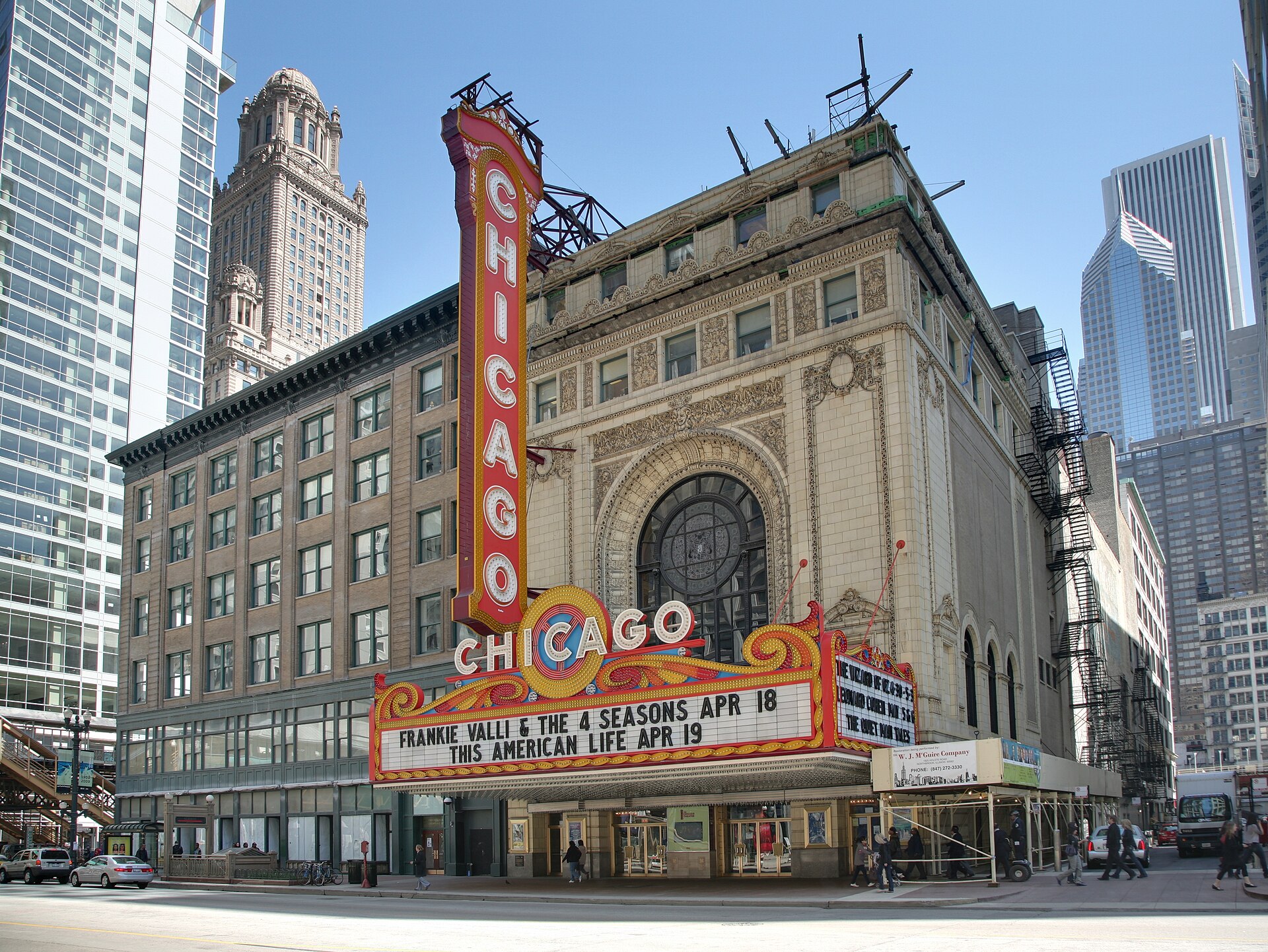
The Chicago Theatre is one of those rare places that feels suspended in time, a relic of an era when cinema was still a fledgling art form capturing the imagination of the masses. Its iconic marquee, crowned with the glowing neon letters spelling out Chicago, has become a symbol of the city itself, instantly recognizable even to those who have never set foot inside. Built in 1921, the theater emerged during a golden age when movie palaces weren’t just venues for entertainment but grand experiences designed to make every visitor feel like royalty. Architects Cornelius and George Rapp drew inspiration from the opulence of Versailles and the Paris Opera, crafting a space that transcended mere architecture to become a work of art in its own right.
Stepping inside, the grandeur of the interior still takes your breath away, even a century later. The lobby is a vision of old-world luxury, with marble columns, crystal chandeliers, and gilded accents that evoke the extravagance of a bygone era. A sweeping staircase leads to the balcony, its wrought-iron railings adding to the sense of elegance, while the ceiling is adorned with frescoes depicting scenes from classical mythology. The main auditorium, with its vast stage and impeccable acoustics, remains one of the finest venues in the world for live performances. Over the decades, it has hosted everything from orchestras and jazz legends to rock stars and pop icons, each performance turning the space into something electric and alive.
The theater’s history is deeply intertwined with that of Chicago itself. In the 1920s, it was the flagship of the Balaban and Katz chain, setting the standard for movie palaces across the country. It was here that audiences first experienced the magic of "talkies," with premieres drawing crowds eager for the next big sensation. During the Great Depression, the theater became a sanctuary for those seeking an escape from hardship, a place where a few hours of entertainment could offer a brief respite from reality. By the mid-20th century, as the golden age of movie palaces faded, the building faced the threat of demolition. Fortunately, a coalition of preservationists and philanthropists stepped in, ensuring its survival. After a meticulous restoration in 1986, the theater reopened as a vibrant cultural hub, hosting concerts, plays, and festivals that continue to draw crowds today.
What makes the Chicago Theatre special is its ability to bridge the past and present. On any given night, the auditorium might resonate with the sounds of a symphony orchestra, the energy of a Broadway-style musical, or the raw power of a contemporary rock band. The atmosphere shifts with each event, yet the theater never loses its essence. It remains a place where history and modernity coexist, where every performance feels like part of something larger than itself. The building doesn’t just host events—it elevates them, its storied past adding depth to every note played or line delivered on its stage.
Even if you don’t catch a show, the theater is worth visiting for its architectural splendor alone. A walk through its halls is like stepping into a time capsule. The original 1920s details—carved wooden panels, stained-glass windows, antique clocks, and even the vintage seating—have been preserved with care. Every corner tells a story, from the intricate plasterwork on the ceilings to the faded posters lining the walls. The theater doesn’t hide its age; it wears it proudly, a testament to how art and architecture can endure across generations.
For Chicago, the theater is more than just a landmark—it’s a piece of the city’s soul. Located at the corner of State and Lake Streets in the heart of downtown, its neon marquee is as much a symbol of Chicago as the skyline or Lake Michigan. Locals often refer to it simply as "The Chicago," a nod to its unique place in the city’s identity. Over the years, it has served as a backdrop for films, music videos, and countless personal memories. For many Chicagoans, their first visit to the theater was a rite of passage, an experience etched in their minds forever.
Visiting the Chicago Theatre isn’t just about admiring a beautiful building; it’s about feeling the pulse of the city, its history, and its culture. There’s no room for indifference here—either the place captivates you, or you’ll never quite grasp its magic. But one thing is certain: this isn’t a venue for those seeking ordinary entertainment. It’s for those who appreciate atmosphere, history, and art, who want to step into a world where every detail whispers of the past and every performance feels like part of something greater. The theater doesn’t just preserve history; it invites you to be part of it.