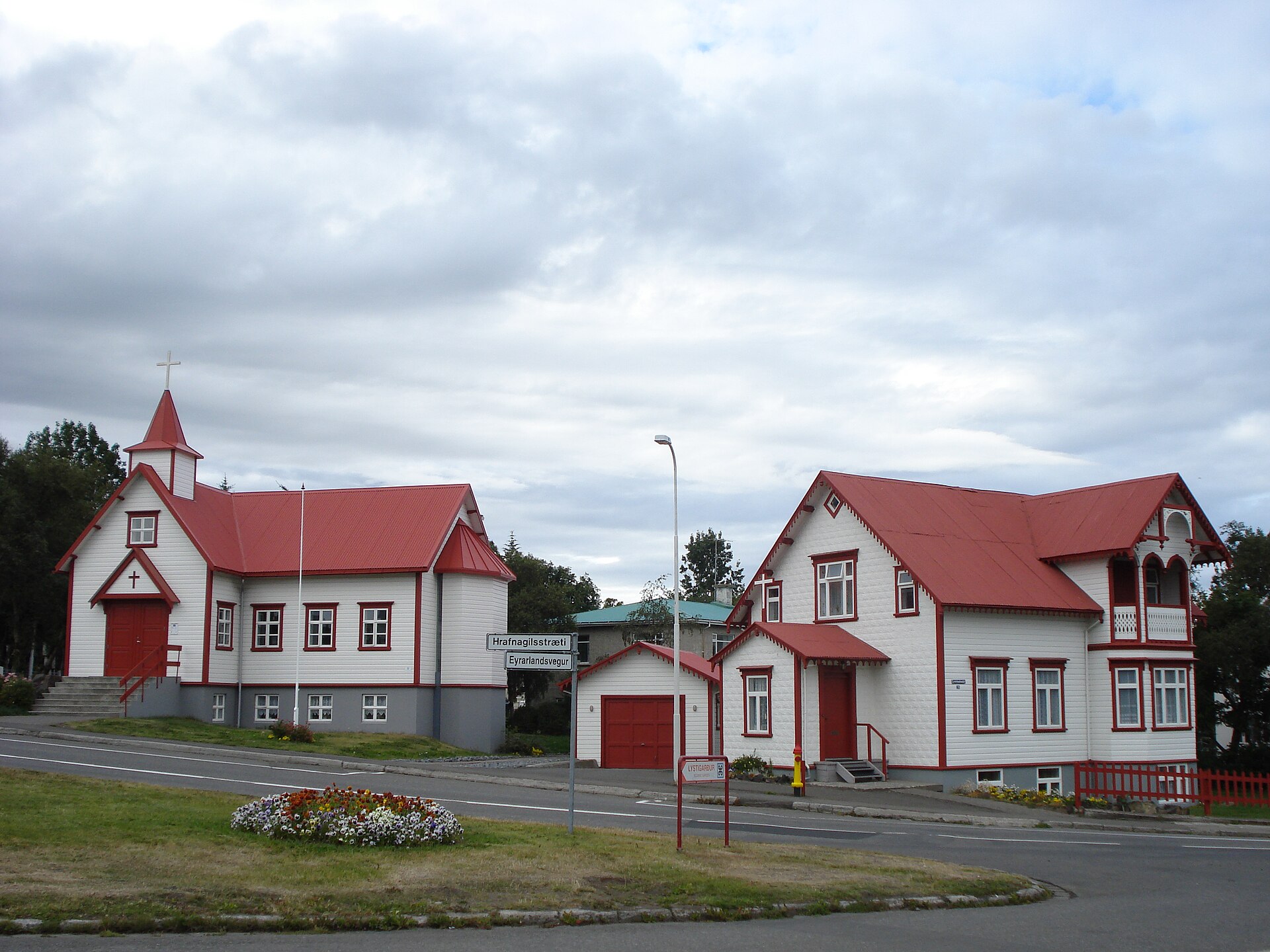
Akureyri’s theater is one of those quiet landmarks that doesn’t announce itself with grand facades or neon signs, yet it holds a place in the town’s rhythm that’s hard to overstate. Built in the early 20th century, the building itself is unassuming—a modest structure of concrete and wood, its design more functional than ornate. But step inside, and the space opens up in a way that feels almost intimate, as if the walls have absorbed decades of whispered conversations, laughter, and the occasional hush of an audience leaning forward in their seats.
The theater wasn’t always here. Before its construction, Akureyri’s cultural life relied on makeshift venues—community halls, school auditoriums, even private homes where plays and concerts were staged when the weather allowed. The idea of a permanent theater took root in the 1920s, when the town was growing beyond its fishing village origins and a new middle class began to emerge. They wanted more than just survival; they wanted art, music, and stories that reflected their own experiences. The theater became a symbol of that shift, a place where the practicality of Icelandic life met the need for something deeper.
Over the years, the theater has hosted everything from local amateur productions to touring companies from Reykjavík and beyond. It’s not a grand opera house, nor does it aim to be. Instead, it’s a space for the kind of performances that feel close to home—folk plays, chamber music, poetry readings, and the occasional experimental piece that might not find a stage elsewhere. The programming often leans toward Icelandic works, though international pieces make their way here too, usually in translation. There’s a sense that the theater exists as much for the community as for the art itself, a place where people come not just to watch, but to be seen.
The building has seen its share of changes. In the 1950s, it was expanded to accommodate a growing audience, and in the 1980s, the interior was modernized, though care was taken to preserve the original character. The stage is small but versatile, with a proscenium arch that gives it a classic feel, while the seating is arranged in a way that keeps the audience close to the action. The acoustics are surprisingly good for a space of its size, a detail that musicians and actors often remark on. It’s the kind of place where a solo violin can fill the room without amplification, or a whispered line carries to the back row.
What makes the theater special isn’t just its history or its architecture, but the way it fits into the life of Akureyri. The town is small enough that most people know someone who’s performed here, or at least know someone who’s been in the audience. It’s not uncommon to run into a neighbor in the lobby, or to hear someone discussing the latest play over coffee the next day. The theater doesn’t have the glamour of Reykjavík’s larger venues, but it has something else—a sense of belonging. It’s a place where art isn’t just consumed, but shared.
In a country where nature often takes center stage, the theater offers a different kind of experience. It’s a reminder that culture isn’t just something that happens in the capital, but something that grows wherever people gather to tell stories. The building itself may not be a masterpiece of design, but it’s a testament to the idea that a community doesn’t need grandeur to create something meaningful. It’s enough to have a space where people can come together, whether to laugh, to think, or simply to sit in the dark for a while and forget about the wind outside.
The theater’s future is as uncertain as anything else in a town that’s always balancing tradition with change. Akureyri has grown in recent decades, attracting new residents and visitors who bring different expectations. Yet the theater endures, not because it’s frozen in time, but because it adapts. Some seasons are stronger than others, some productions resonate more deeply, but the space itself remains a constant—a quiet corner of the town where the past and present coexist. It’s not the kind of place that makes headlines, but for those who know it, it’s indispensable.