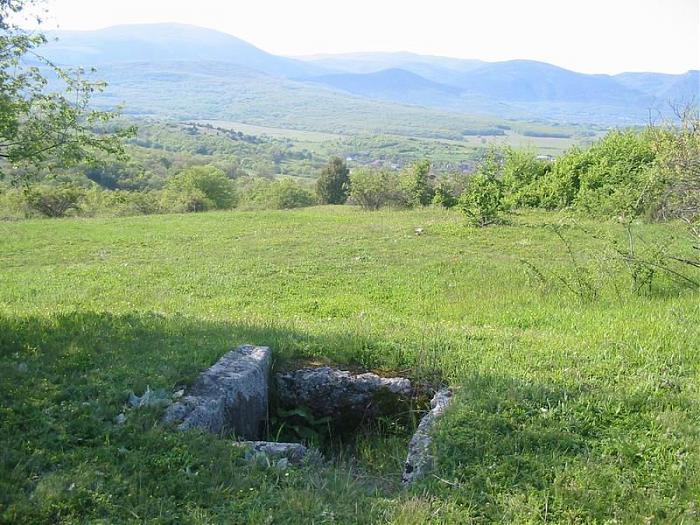
Nestled in the quiet hills near Balaklava, the Taurian stone boxes of Tash-Koy feel like a whisper from another era. These unassuming structures, scattered across gentle slopes, are all that remain of the Tauri, a people who once called the Crimean Peninsula home long before recorded history. The name Tash-Koy itself, meaning "Stone Village" in Crimean Tatar, hints at the site’s past—a place where stone was shaped not just for shelter, but for something far more enduring.
The stone boxes are burial chambers, simple yet deliberate in their construction. Built without mortar, they consist of large limestone slabs fitted together to form rectangular or square enclosures. Inside, the Tauri laid their dead, sometimes alongside everyday objects or weapons, offering a glimpse into their beliefs about the afterlife. These were not grand tombs, but practical, almost humble resting places, reflecting a culture that valued function over ostentation. The Tauri themselves were a mountain-dwelling people, known for their resilience and independence, and these structures are among the few tangible traces they left behind.
Dating back to between the 9th and 3rd centuries BCE, the stone boxes have weathered centuries of change. Some stand nearly intact, their slabs still aligned with quiet precision, while others have succumbed to time, their outlines barely visible beneath layers of earth and wild grasses. What makes Tash-Koy particularly striking is how seamlessly the ruins blend into the landscape. At first glance, they might be mistaken for natural rock formations, but a closer look reveals their human origins. The site doesn’t demand attention—it invites curiosity, rewarding those who take the time to notice.
Unlike the crowded tourist spots of Crimea, Tash-Koy remains largely untouched by modern development. There are no souvenir stands, no guided tour groups, just the quiet hum of the wind and the occasional rustle of dry grass underfoot. In spring, the hills come alive with wildflowers, their delicate blooms contrasting with the rough stone. The air carries the scent of herbs and sun-warmed earth, and in the distance, the silhouette of the Crimean mountains frames the scene. It’s a place where time seems to slow, where the past feels almost tangible.
The obscurity of Tash-Koy is part of its charm. While other Crimean landmarks draw crowds, these stone boxes remain a secret of sorts, known mostly to locals and those willing to venture off the beaten path. That doesn’t mean they lack significance. In fact, their simplicity makes them all the more intriguing. Each box tells a story, not through grand inscriptions or elaborate carvings, but through its very existence—a testament to a people who lived, died, and left behind something that has endured for millennia.
Tash-Koy is not the only place in Crimea where such structures can be found, but it is one of the most concentrated. Some of the boxes here have unusual features, like small niches carved into their walls, their purpose still a matter of speculation. Archaeologists continue to study the site, and with each passing year, new details emerge, adding layers to our understanding of the Tauri. Yet much remains unknown, and perhaps that’s for the best. The mystery is part of what makes the place compelling.
Visiting Tash-Koy requires a certain mindset. This is not a place to rush through, but one to explore slowly, with an eye for detail. The terrain is uneven, the paths unmarked, and the best way to experience it is to wander, letting the landscape guide you. Sturdy shoes are a must, as is a bottle of water, especially in the heat of summer. It’s also worth remembering that these ruins are fragile. Centuries of erosion have taken their toll, and even a careless step could cause damage. Respect for the site means leaving it as you found it, so future visitors can experience the same sense of discovery.
There’s something deeply human about Tash-Koy. It’s not a monument to power or wealth, but to the quiet, everyday rituals of life and death. The stone boxes don’t dominate the landscape—they are part of it, as much a product of the land as the hills and the wildflowers. In a world where so much of history is polished and presented for consumption, this place feels refreshingly unfiltered. It doesn’t offer easy answers, but it does offer something rare: a connection to the past that feels personal, almost intimate.
For those who seek it out, Tash-Koy is more than just a historical site. It’s a reminder of how much of the world’s story remains untold, hidden in plain sight. The Tauri are long gone, but their stone boxes endure, a silent testament to a way of life that once thrived here. In their simplicity, they speak volumes—not through grandeur, but through the quiet persistence of memory. And perhaps that’s the most powerful kind of history of all.