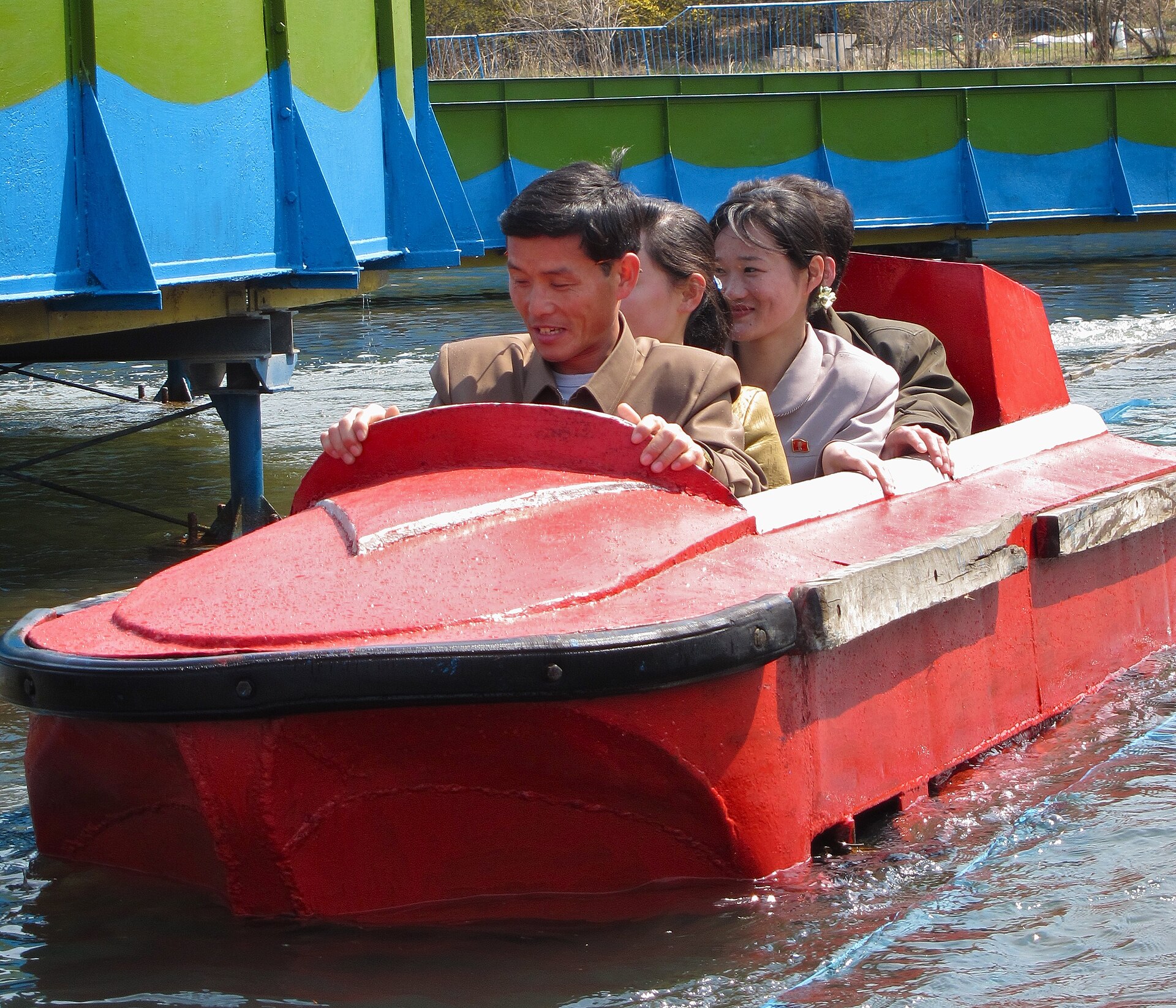
Taesongsan Funfair sits quietly at the foot of Mount Taesong, on the northern edge of Pyongyang. It’s not the kind of place you visit for cutting-edge thrills or slick modern rides. Instead, it feels like stepping into a moment frozen somewhere in the mid-20th century, where the air carries the faint hum of old machinery and the laughter of children echoes against the green hills. Officially open to the public, the park is easiest to reach as part of an organized tour, though locals come here too, especially on weekends and holidays. The rides—brightly painted carousels, a modest roller coaster, a slow-moving Ferris wheel—stand out against the backdrop of the city, their retro designs a reminder of another era.
The park opened in the 1970s, built as a place where leisure and ideology could coexist. It was meant to show the state’s care for its people, a tangible symbol of progress in a country where such things are carefully measured. Many of the attractions still bear the marks of that time, their Soviet-inspired aesthetics now looking quaint rather than modern. Some have been updated in recent years, including a newer roller coaster with a sturdier frame, but the overall feel remains unchanged. The rides work, the paint is chipped in places, and the whole scene has a certain charm that’s hard to find in more polished amusement parks elsewhere.
The layout is simple but effective. A central path leads to a small square where statues and monuments nod to the country’s revolutionary past. There’s a fountain, a few benches, and the occasional group of schoolchildren on a field trip. On weekends, the park comes alive with families, the sound of music drifting between the rides. The atmosphere is relaxed, almost sleepy, with none of the frenetic energy of Western theme parks. Even the lines for the most popular attractions move at a leisurely pace, as if no one is in a hurry to get anywhere.
The Ferris wheel is one of the park’s highlights, offering a rare elevated view of Pyongyang. On clear days, you can see the forested slopes of Mount Taesong stretching out in one direction and the city’s monumental architecture in the other. For most visitors, this is the closest they’ll get to an unobstructed panorama of the capital, since independent exploration of rooftops or high vantage points is rarely permitted. The ride itself is slow, more about the view than the thrill, turning in gentle circles as the city unfolds below.
There are a few small cafes and kiosks scattered around the park, selling basic snacks like ice cream, soda, and pastries. The food is simple, the prices set for locals rather than tourists. For foreign visitors, entry and rides are usually included in the cost of a guided tour, so there’s no need to fumble with unfamiliar currency. This makes Taesongsan one of the few places in Pyongyang where outsiders can blend in, at least for a little while, watching families share snacks or children chase each other between the rides.
The park wasn’t always this accessible to foreigners. For years, it was primarily a local spot, a place where workers and students could unwind. Even now, you’re more likely to see groups of schoolchildren on an outing or families celebrating a holiday than crowds of tourists. But in recent years, the authorities have begun including it in more tour itineraries, offering a glimpse of everyday life in the capital. It’s a rare chance to see how North Koreans spend their free time, away from the grand monuments and official ceremonies.
The architecture is unassuming, even a little worn, but there’s a warmth to it. The bright colors of the rides, the wooden pavilions, and the neatly trimmed lawns create a sense of coziness that contrasts with the imposing scale of Pyongyang’s other landmarks. There are no towering statues or ideological slogans here—just small sculptures of children and workers, and the occasional poster encouraging hard work or study. Even these feel more like relics of tradition than active propaganda, their messages softened by time and familiarity.
For those used to the high-energy amusement parks of other countries, Taesongsan can feel strangely quiet. There’s no blaring music, no flashy advertisements, no rush to get to the next ride. The pace is slow, almost deliberate, as if the park operates on its own unhurried rhythm. But that’s part of its appeal. It’s a place where you can step away from the weight of politics and history, where the simple act of riding a carousel or sharing a snack with locals feels like a small, human connection. In a city often defined by its grandeur and control, Taesongsan offers something different—a moment of ordinary life, unscripted and real.