Perched on a gentle hill in the Palestinian countryside near the village of Kifl Haris, the shrine of Nabi Yusha remains one of those quiet places where time seems to slow down. It isn’t a destination for those seeking grand monuments or bustling crowds, but rather a site of quiet reflection, where the weight of history and faith lingers in the air. The modest white mosque with its green dome stands as a marker of devotion, drawing pilgrims and travelers who come not for spectacle, but for something far more personal—a connection to the past and the stories that have shaped this land.
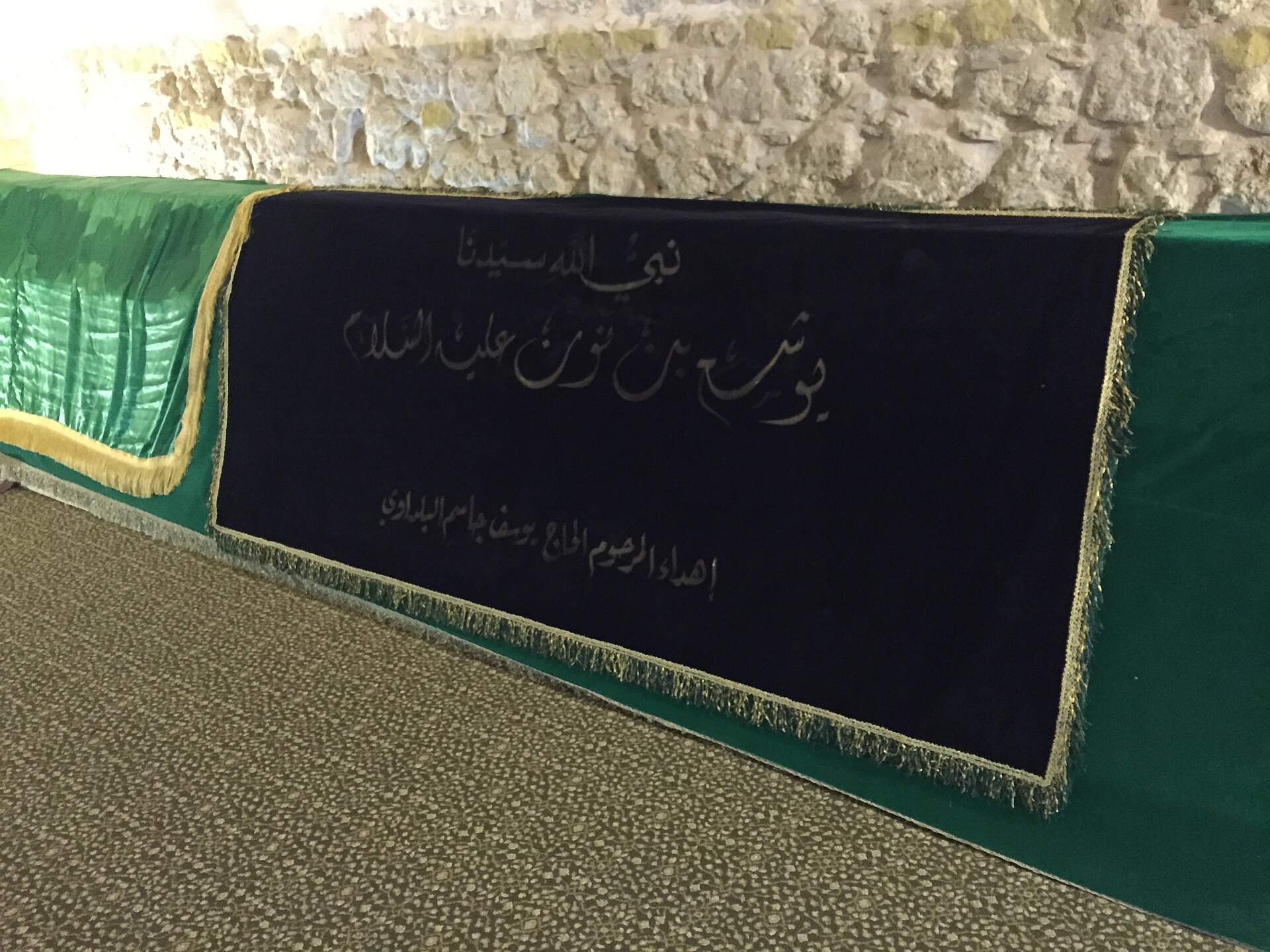
The shrine is believed to house the tomb of Joshua, the biblical figure who succeeded Moses and led the Israelites into the Promised Land. In Islamic tradition, he is revered as Nabi Yusha, a righteous prophet and warrior whose victories were seen as divine favor. The site has long been a place of pilgrimage for Muslims, Jews, and Christians, though each community interprets its significance differently. For Muslims, it is a holy site where prayers are offered; for Jews, a place tied to the biblical narrative; and for Christians, part of the broader sacred geography of the Holy Land. The mosque itself is unassuming, its architecture serving a single purpose: to create a space for contemplation.
Inside, the prayer hall is simple and unadorned. Thick carpets cover the floor, and the mihrab points toward Mecca, its niche framed by soft light filtering through narrow windows. The walls bear only a few Arabic inscriptions, their calligraphy understated rather than ornate. The ceiling is supported by sturdy columns, and the overall effect is one of quiet dignity. Outside, the courtyard is shaded by olive trees, their gnarled branches casting dappled shadows on the ground. There are no grand decorations, no elaborate mosaics—just the essentials of a place meant for prayer and reflection.
The history of Nabi Yusha stretches back millennia. Archaeological evidence suggests the hill has been inhabited since biblical times, with layers of settlement built upon one another over the centuries. In the Middle Ages, Muslim rulers constructed mausoleums over the site, and the current mosque dates to the early 20th century. Yet the shrine’s significance has endured through changing empires and faiths, a testament to its place in the collective memory of the region. It has survived wars, occupations, and shifting borders, remaining a constant in a landscape that has seen so much change.
For the people of Kifl Haris, the shrine is woven into the fabric of daily life. The village itself is a quiet place, where life moves at the pace of the seasons. Families tend olive groves and fig trees, herds of sheep and goats graze on the surrounding hills, and evenings are spent in conversation under the shade of ancient trees. The shrine is more than a historical site—it is a living part of the community. Locals come to pray, to seek solace, or simply to sit in silence. During religious festivals, pilgrims arrive from across Palestine and beyond, filling the mosque and courtyard with voices and movement. But even on ordinary days, the place retains its peaceful atmosphere, a refuge from the noise of the world.
The view from the hill is one of the shrine’s quiet pleasures. On clear days, the surrounding valleys stretch out in a patchwork of olive groves and vineyards, their green hues contrasting with the earthy tones of the hills. In the distance, the faint outline of Jerusalem can sometimes be seen, adding another layer of meaning to the site. The air is crisp, carrying the scent of wild herbs and the occasional sound of church bells from nearby villages. It’s a landscape that feels timeless, where the boundaries between past and present blur.
Visiting Nabi Yusha is less about ticking off a tourist attraction and more about stepping into a different rhythm. There are no guided tours or strict schedules, just an unspoken understanding of respect. Shoes are removed before entering the mosque, and women often cover their heads, though no one enforces these customs rigidly. Inside, visitors can sit on the carpets, listen to the murmur of prayers, or simply be still. The locals are hospitable, offering tea or coffee to those who linger, but they don’t intrude. The space is open to all, yet it also allows for solitude.
What makes Nabi Yusha special is its lack of pretense. There are no souvenir stalls, no flashy signs, no attempts to commercialize the experience. Instead, there is authenticity—a sense that this place exists for its own sake, not for the benefit of outsiders. For those who come seeking more than just a photo opportunity, it offers something rare: a chance to step away from the noise of modern life and engage with something deeper. Whether it’s the quiet beauty of the landscape, the weight of history, or the simple act of sitting in a place where others have prayed for centuries, Nabi Yusha has a way of leaving a lasting impression.
It’s not a place for everyone. Those expecting grand architecture or dramatic stories might leave disappointed. But for those who appreciate the quiet power of sacred sites, it offers a glimpse into the enduring nature of faith and tradition. In a world where so much is fleeting, Nabi Yusha stands as a reminder of what remains.