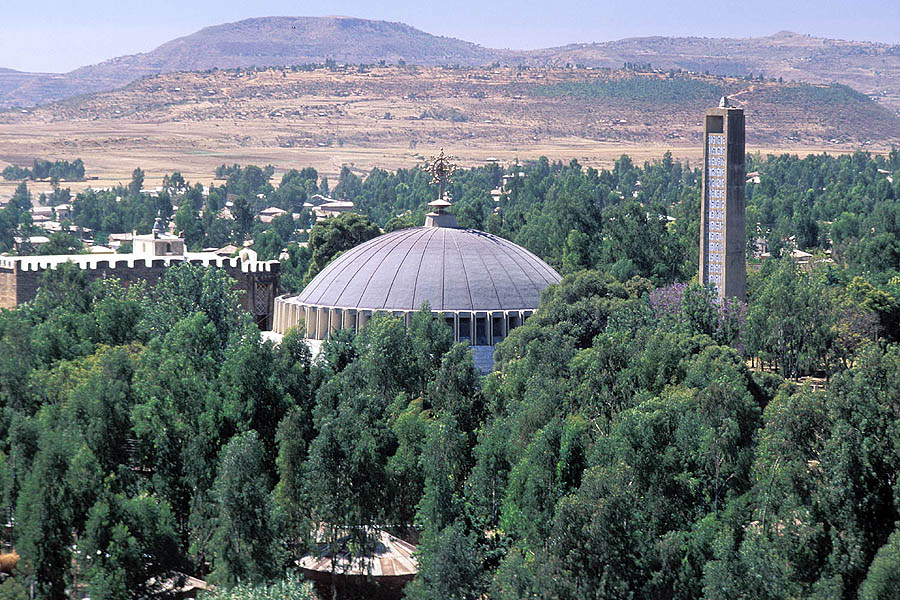
Aksum’s towering stelae rise from the earth like the ribs of some ancient giant, their weathered surfaces bearing the weight of centuries. These monumental obelisks, carved from single slabs of granite, stand as silent witnesses to a kingdom that once dominated the trade routes between Africa and the Mediterranean. The tallest of them, now fallen and broken into pieces, once reached over thirty meters into the sky—an engineering feat that would have been staggering for its time. Even in their fractured state, the stelae command attention, their intricate carvings hinting at a civilization that valued both power and artistry.
The stelae were erected between the 3rd and 4th centuries AD, during the height of the Aksumite Empire, which stretched across what is now northern Ethiopia, Eritrea, and parts of Sudan. They served as markers for underground tombs, though their exact purpose remains a subject of debate. Some scholars suggest they were symbols of royal authority, while others believe they represented a connection between the earthly and divine realms. The most elaborate stelae are adorned with false doors and windows, mimicking the multi-story palaces of Aksum’s elite. The craftsmanship is remarkable—each detail was chiseled by hand, a testament to the skill of the artisans who worked without the aid of modern tools.
The largest stela, known as the Obelisk of Axum, was looted by Italian forces in 1937 and taken to Rome, where it stood for decades before being returned to Ethiopia in 2005. Its absence left a visible gap in the landscape, a reminder of how easily history can be disrupted. The stela’s return was a moment of quiet triumph for Aksum, though the damage from its removal and the passage of time is irreversible. Today, it lies reassembled near its original site, its once-smooth surface now marred by cracks and erosion. Still, it remains the most striking of the group, its sheer scale making it difficult to imagine how it was ever moved, let alone raised upright.
The stelae field is not just a collection of ancient monuments; it is a burial ground. Beneath the ground lie the tombs of Aksumite kings and nobles, their chambers filled with offerings of gold, silver, and pottery. Excavations have revealed intricate jewelry, coins bearing the likenesses of rulers, and even fragments of textiles—rare survivals from a time when Aksum was a center of wealth and influence. The tombs suggest a society that believed in an afterlife, where the dead were sent off with the trappings of their earthly status. Walking among the stelae, it’s impossible not to feel the presence of those who once ruled here, their legacy etched into the stone.
Aksum itself is a city layered with history. Long before the stelae were raised, it was a hub of trade, connecting the African interior with the Red Sea and beyond. The kingdom minted its own coins, adopted Christianity in the 4th century, and became one of the first sub-Saharan civilizations to develop a written script. The stelae are just one part of this rich tapestry, but they are perhaps the most visible. They stand in contrast to the modern city that has grown around them—low-slung buildings of stone and corrugated metal, where donkeys still pull carts through dusty streets. The juxtaposition is striking: a reminder that while empires rise and fall, the land endures.
Visiting the stelae is not a polished tourist experience. There are no grand entrances or interpretive centers, just a quiet field where the past feels close enough to touch. The site is open to the elements, and the stelae bear the marks of time—lichen clings to their surfaces, and the ground around them is uneven, worn down by centuries of footsteps. In the early morning or late afternoon, when the light is soft, the shadows cast by the stelae stretch long across the earth, as if reaching back toward the people who once gathered here. It’s a place that invites contemplation, where the silence is broken only by the occasional rustle of wind through the grass.
The stelae are not just relics of the past; they are part of a living culture. For Ethiopians, Aksum is a sacred place, tied to the legend of the Queen of Sheba and the Ark of the Covenant, which is said to be housed in a nearby chapel. The stelae themselves are sometimes referred to as the "thrones of the kings," a nod to their royal associations. While the historical accuracy of these legends is debated, they add a layer of mystique to the site, weaving together history and myth in a way that feels uniquely Ethiopian. The stelae stand as a bridge between the tangible and the intangible, between what is known and what is believed.
There is something humbling about standing in the presence of these ancient stones. They were carved and raised by people who had no concept of the modern world, yet their work has endured for over a thousand years. The stelae remind us that civilizations are not defined solely by their monuments, but by the ideas and beliefs that sustain them. Aksum’s empire may have faded, but its stelae remain, a testament to a time when this corner of Africa was a crossroads of cultures, a place where the known world met the unknown. Today, they stand as a quiet challenge to the passage of time, their silent forms asking us to remember what came before.