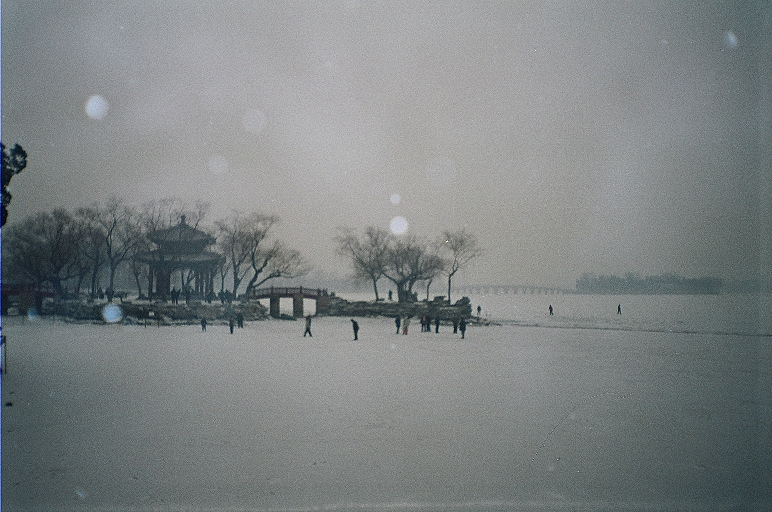
The Old Summer Palace, known as Yuanmingyuan, is where Chinese history feels particularly sharp. Today, only ruins remain, but even these fragments tell a story of grandeur and loss. Once one of the most extravagant imperial complexes in China, it blended traditional Chinese architecture with European influences brought by Jesuit missionaries. Construction spanned over a century and a half, beginning in the 18th century, and the palace served as a summer retreat for Qing dynasty emperors. Here, foreign envoys were received, lavish banquets held, and state affairs conducted away from the bustle of the Forbidden City.
The architectural ensemble of Yuanmingyuan was a marvel of its time. It included hundreds of pavilions, gardens, lakes, and artificial hills, creating an illusion of boundless space. A highlight was the Western Mansions—palaces designed in European style by Italian and French architects, surrounded by fountains, marble statues, and meticulously arranged flowerbeds. These stood alongside traditional Chinese gardens, where natural harmony took precedence over symmetry. Water played a central role in the layout, with canals, ponds, and streams connecting different parts of the complex, evoking a sense of movement and life.
Fate dealt the palace a cruel blow. In 1860, during the Second Opium War, Anglo-French forces looted and burned Yuanmingyuan. The fire raged for three days, destroying most of the structures. What survived was either dismantled for building materials or carried off abroad. Today, artifacts from the palace—porcelain, paintings, furniture—can be found in European museums, but the ruins themselves remain, a stark reminder of both past splendor and historical brutality. In China, the site is often called a monument to national humiliation, and visiting it inevitably stirs reflections on the country’s past.
Modern Yuanmingyuan is a vast park where locals and tourists wander among overgrown hills and the remnants of columns. The ruins of the Western Mansions stand out against the landscape: crumbling arches, fragments of walls, and staircases evoke a sense of abandoned grandeur. In some areas, the stone foundations of pavilions remain, and traces of mosaic floors or carved ornaments can still be glimpsed. Small museums within the park display artifacts uncovered during excavations, but the true draw is the atmosphere of the place itself.
Visiting the Old Summer Palace is less about sightseeing and more about stepping into history. There’s no tourist hustle here—paths wind through trees, and the silence is broken only by rustling leaves and the occasional murmur of visitors. On weekends, the park comes alive with families picnicking, children flying kites, and elderly locals practicing tai chi in open spaces. Yet even on busy days, the ruins retain their haunting presence, a reminder of time’s relentless passage and the fragility of greatness.
Yuanmingyuan is often compared to Versailles, and the comparison is apt. Both were built as symbols of absolute power, astonishing contemporaries with their scale and opulence. But while Versailles remains largely intact, the Old Summer Palace stands as a monument to destruction. This makes it all the more compelling for those drawn not just to beauty, but to the drama of history. Here, you can spend hours wandering the paths, trying to imagine the palace in its prime.
In recent decades, Chinese authorities have made efforts to partially restore Yuanmingyuan. Some pavilions have been reconstructed, and informational displays describe lost structures. Yet a full restoration seems unlikely—too much was lost forever. Perhaps that’s for the best; the ruins possess their own power, prompting reflection on how quickly what seems eternal can vanish.
For many Chinese, the Old Summer Palace is more than a tourist attraction—it’s a place of memory. Events commemorating the Opium Wars are held here, and school groups visit to learn about a time when China was forced to submit to foreign powers. Yet the park also remains a popular spot for leisure, offering an escape from the city’s frenzy. This blend of the personal and the historical makes Yuanmingyuan unique, where past and present intertwine in unexpected ways.
When visiting the Old Summer Palace, it’s worth remembering that this is not just another tourist site, but a place rich with meaning. There are no flashy attractions or entertainment shows, and that’s precisely what makes it special. Walking among the ruins invites contemplation of how swiftly the world changes, and how even the mightiest empires are not immune to decline. In this sense, Yuanmingyuan is not only a monument to the past, but a reminder of the fragility of all things.