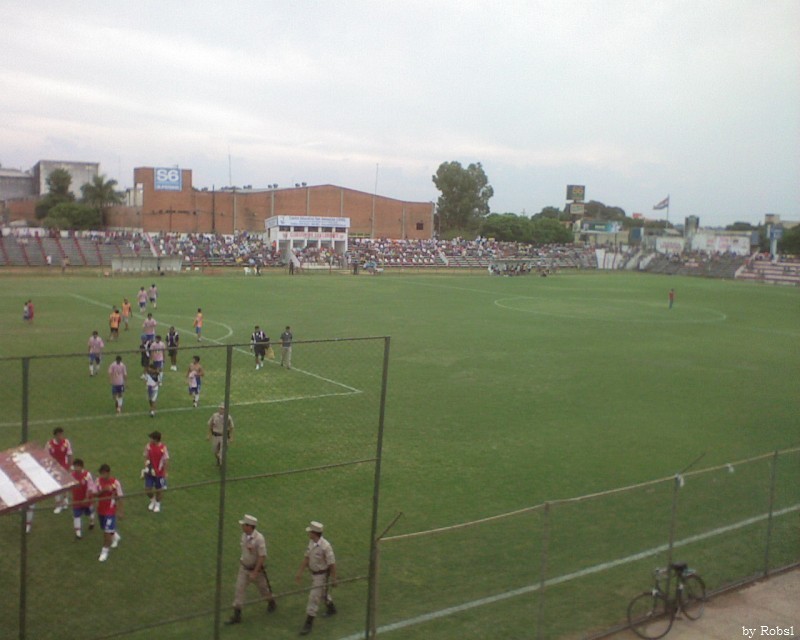
San Lorenzo isn’t the kind of city that makes headlines, but it has its own quiet rhythm, and the Estadio Gunther López is part of that pulse. Tucked away in this unassuming Paraguayan town just outside Asunción, the stadium doesn’t draw international crowds or host glamorous tournaments. Instead, it’s the kind of place where football isn’t just a game—it’s a way of life, woven into the fabric of everyday existence. Here, matches feel less like spectator events and more like community gatherings, where families come together, kids kick their first balls, and local teams play not for fame, but for the sheer love of the sport.
The stadium’s name honors a figure from the city’s sporting past, someone whose legacy is tied not to grand achievements, but to the steady, unglamorous work of keeping football alive in a place where it matters deeply. San Lorenzo itself grew up as an industrial and commercial hub, and football became one of the threads holding its people together. The Estadio Gunther López emerged during the city’s early years, when its identity was still taking shape, and over time, it became more than just a venue—it became a landmark, a meeting point, a piece of the city’s collective memory.
There’s nothing flashy about the stadium’s design. No towering stands, no cutting-edge facilities, no VIP sections or giant screens. It’s built for function, not spectacle: a simple pitch, modest seating, and just enough infrastructure to keep things running. But that simplicity is precisely what makes it feel authentic. This isn’t a place for tourists or corporate sponsors; it’s a place for locals, where the atmosphere is unfiltered, the cheers are genuine, and the stakes are personal. You won’t find luxury here, but you will find something rarer—a sense of belonging.
In Paraguay, football is more than a national pastime; it’s a cultural force, a language spoken in every corner of the country. Even in smaller cities like San Lorenzo, the sport carries weight, and stadiums like this one play their part in that story. The Estadio Gunther López hosts local league matches, amateur tournaments, and youth competitions, but its real significance lies in what happens off the pitch. For many here, it’s where they first experienced the thrill of a live game, where they played their earliest matches, where they learned what it means to support a team. It’s a place where the next generation of players and fans is shaped, not by professional contracts or media attention, but by the raw, unpolished joy of the game.
On match days, the stadium hums with life. Vendors set up stalls selling cold drinks and snacks, children dart between the stands, and groups of friends settle in to debate the latest results or gossip about the local teams. Even when there’s no game, the place isn’t empty—it’s used for training sessions, school events, and occasional concerts or festivals. The stadium has become part of the city’s daily rhythm, a space that adapts to whatever the community needs, whether that’s sport, celebration, or simply a place to gather.
The history of the Estadio Gunther López mirrors the history of San Lorenzo itself. The city has evolved, and so has the stadium, though it has never lost its connection to the past. What might have started as little more than a patch of dirt with makeshift seating has grown into a more permanent structure, but it still carries the spirit of those early days. It’s not a venue for national team matches or high-profile events, but for the local clubs that call it home, it’s indispensable—a place where they can prove themselves in front of their own people.
Beyond football, the stadium serves a broader role in the community. In Paraguay, sports venues often double as social hubs, and the Estadio Gunther López is no exception. It’s hosted veterans’ gatherings, charity events, and even political rallies, blurring the line between sport and civic life. This isn’t just a place to watch a game; it’s a public space where the city’s social fabric is strengthened, where people come together not just as spectators, but as neighbors.
For outsiders, the stadium might seem unremarkable, just another local ground in a country full of them. But for those who live in San Lorenzo, it’s something more—a place where the real Paraguay shines through. This isn’t the polished, commercialized football you see on television; it’s the grassroots version, the kind that thrives in neighborhoods and small towns, where the passion is real, the stakes are personal, and the game belongs to the people who play and watch it.
In the end, the Estadio Gunther López is less about architecture and more about the lives that unfold within its walls. For some, it’s a place of nostalgia, where childhood memories were made. For others, it’s a training ground, a stage for their own sporting dreams. And for many, it’s simply a familiar corner of the city, a spot to meet friends, share a drink, and feel connected to something bigger. In a world where football is increasingly dominated by money and spectacle, places like this remind you that at its heart, the game is still about community, about the people who keep it alive, and about the simple joy of playing and watching together.