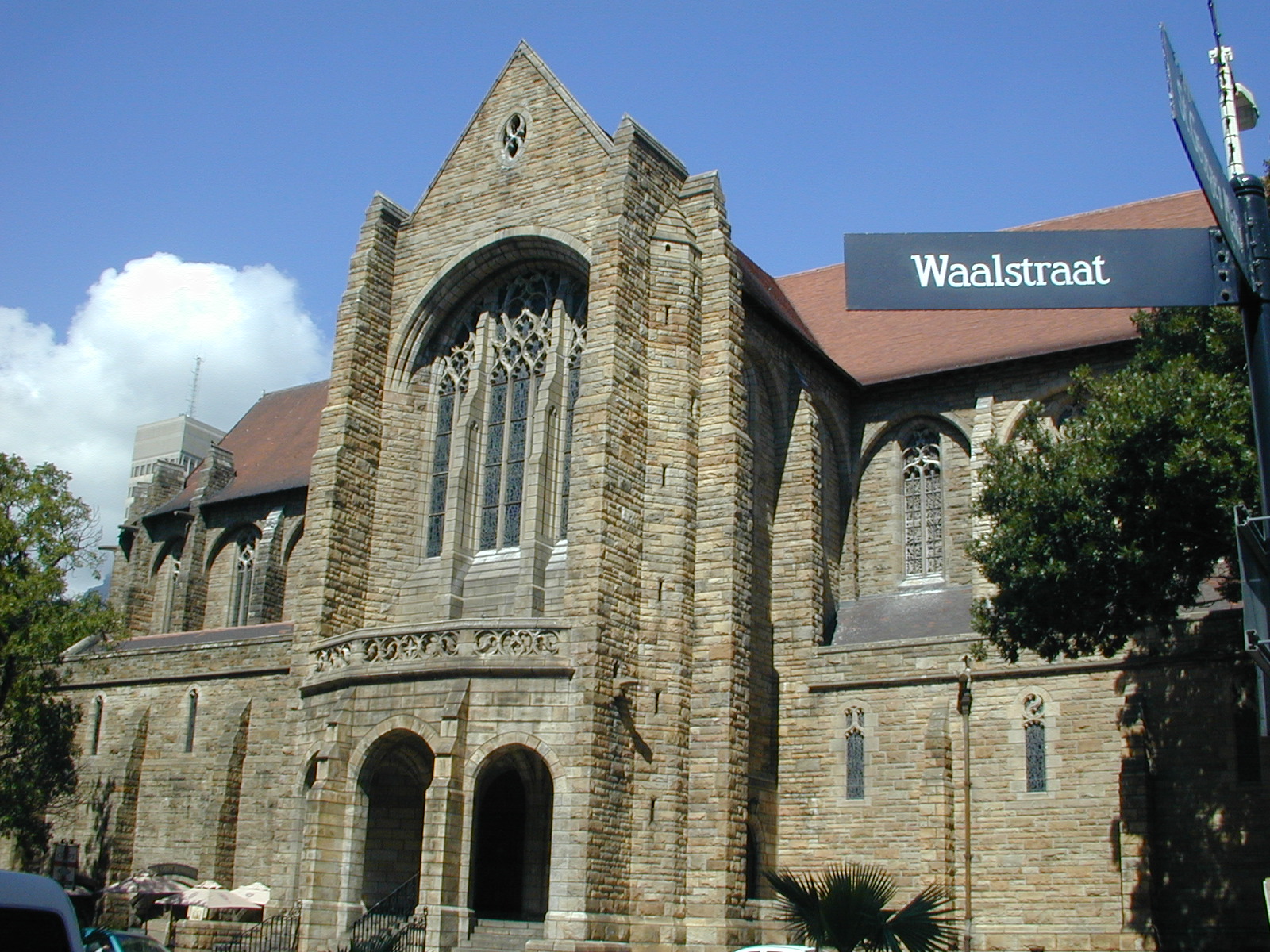
St. George’s Cathedral stands at the heart of Cape Town, where the city’s daily rhythm intersects with its most defining moments. Built in the mid-19th century, it has long been more than a place of worship—it is a symbol of resilience, a witness to struggle, and a quiet force in the fight for justice. Its spire rises above the surrounding streets, a familiar landmark where Wale and Hof meet, visible from blocks away. The architecture blends Gothic influences with local character, its sandstone walls and soaring arches creating a space that feels both grand and intimate.
The cathedral replaced an earlier church that could no longer accommodate Cape Town’s growing congregation. Construction began in 1901, designed by Herbert Baker, an architect whose work left its mark across South Africa and beyond. Baker sought to merge European traditions with the spirit of the place, using local materials and craftsmanship. The result is a building that feels rooted in its surroundings—its pointed windows, heavy wooden doors, and vaulted ceilings evoke a sense of timelessness, as if the walls themselves have absorbed the city’s history.
Few figures are as closely tied to the cathedral’s legacy as Archbishop Desmond Tutu. During the 1980s, when apartheid’s grip was at its tightest, St. George’s became a sanctuary for those resisting oppression. Tutu turned the cathedral into a hub of activism, where prayers and protests intertwined. His sermons here were not just spiritual guidance but calls to action, urging nonviolent resistance and reconciliation. The cathedral’s doors stayed open when others closed, offering refuge to those who needed it most. For many, it was a place where hope felt possible, even in the darkest times.
Inside, the cathedral’s beauty is understated but striking. The altar is adorned with mosaics depicting scenes from the life of St. George, while stained-glass windows cast a soft, colored light across the stone floors. One side chapel holds a memorial to those who lost their lives in the struggle against apartheid, their names etched into the walls—a quiet reminder of the cost of freedom. The space is neither ornate nor austere, but something in between, a balance of reverence and humility.
Unlike many historic sites, St. George’s is not a relic of the past. It remains a living part of the city, where services, concerts, and community gatherings still take place. On Sundays, the pews fill with worshippers, while on weekdays, visitors can wander in to sit in silence or admire the architecture. Occasionally, guided tours offer insights into the cathedral’s history, though the building speaks for itself in many ways. The Christmas services, with their candlelit processions and carols, are a particularly moving experience, drawing crowds from across the city.
The area around the cathedral is steeped in history. Nearby, the South African Parliament stands as a symbol of the country’s democratic journey, while Greenmarket Square, just a short walk away, was once a stage for protests and rallies. Walking these streets, it’s easy to sense the layers of the past beneath the present. The cathedral itself feels like a bridge between eras, a place where the weight of history is palpable but not overwhelming.
For many Capetonians, St. George’s is more than a landmark—it’s a part of their lives. It’s where families celebrate baptisms and weddings, where people gather to mourn, and where individuals find solace in difficult times. Even those who don’t consider themselves religious often feel drawn to its quiet presence. There’s something about the way the light filters through the windows or the way the stone walls seem to hold centuries of whispered prayers that invites reflection.
Beyond its architectural and historical significance, the cathedral stands as a testament to the power of perseverance. It reminds visitors that change is possible, even when the odds seem insurmountable. Today, with apartheid a chapter of the past, St. George’s continues to serve as a place of remembrance and healing. It doesn’t demand attention like a tourist attraction might; instead, it offers a space to pause, to listen, and to remember what truly matters. Whether you come for the history, the architecture, or simply the quiet, the cathedral leaves an impression that lingers long after you’ve stepped back onto the bustling streets of Cape Town.